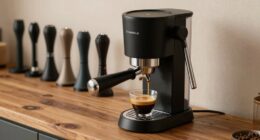
If your coffee tastes sour, bitter, or weak, start by checking your equipment calibration—misadjustments in grinder or brewer settings can cause these issues. Adjust your grind size to match your brewing method, ensuring it’s neither too fine nor too coarse. Monitor and maintain consistent water temperature within 195°F to 205°F, and tweak brew time if needed. Small calibration fixes often improve flavor; explore further tips to perfect your extraction.
Key Takeaways
- Check and adjust water temperature to stay within 195°F to 205°F for optimal extraction.
- Ensure grinder is calibrated correctly to achieve proper grind size for your brewing method.
- Modify extraction time; shorten for over-extraction (bitter) or lengthen for under-extraction (weak).
- Maintain equipment calibration and clean devices regularly to prevent flavor inconsistencies.
- Use a reliable thermometer and monitor brewing parameters to maintain consistent extraction conditions.
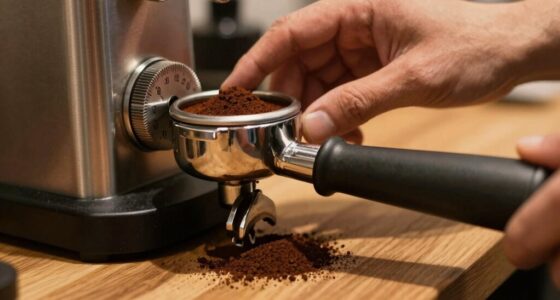
Have you ever faced issues during extraction that seem to stall your progress? It’s frustrating when your brew turns out sour, bitter, or just too weak, especially when you’re certain you followed all the steps. Often, these problems stem from equipment calibration or water temperature inconsistencies. Making sure your equipment is properly calibrated is vital. If your grinder isn’t calibrated correctly, it could be grinding too fine or too coarse, which directly impacts extraction. A grinder set too fine can lead to over-extraction, resulting in a bitter taste, while too coarse can cause under-extraction, leaving your brew weak. Regularly calibrate your grinder to match the beans and desired flavor profile. Similarly, your brewing device, whether a French press, espresso machine, or pour-over, needs proper calibration of its parts and settings to guarantee consistency. Small adjustments can make a big difference in flavor and strength, so take the time to fine-tune your equipment periodically. Ensuring your equipment calibration is accurate can help prevent common extraction issues and improve overall flavor. Water temperature plays a key role in extraction quality. If your water is too hot, it can extract tannins and chlorogenic acids, leading to a sour or bitter profile. Conversely, if it’s too cold, the extraction process might be incomplete, producing a weak, underdeveloped flavor. The ideal water temperature for most extraction methods is between 195°F and 205°F (90°C to 96°C). Use a reliable thermometer to monitor water temperature, especially if you’re brewing manually. Many brewing devices have temperature controls, but they need to be checked regularly to guarantee accuracy. If your water temperature isn’t consistent, you’ll notice the flavor profile fluctuating, making it difficult to get the same great cup every time. Another aspect to think about is the timing of your extraction. Too short, and you risk under-extraction, which leaves the brew weak and sour; too long, and you might extract undesirable bitter compounds. Adjust your brewing time according to your equipment calibration and water temperature. For example, if your water is too hot or your grind is too fine, shortening the brew time can prevent over-extraction. Conversely, if the water temperature is lower, extending the brew time helps extract more flavor. Ultimately, troubleshooting extraction issues involves paying close attention to the calibration of your equipment and maintaining consistent water temperature. Regularly check and adjust your grinder, ensure your brewing device’s components are in good shape, and use a thermometer to keep water temperature in the perfect range. By doing so, you’ll consistently produce a balanced, flavorful cup, free from unwanted sourness, bitterness, or weakness.
Frequently Asked Questions
How Does Water Temperature Affect Extraction Quality?
Water temperature considerably impacts extraction quality. When you use the right water temperature, it helps optimize grind size and brewing time, ensuring better flavor balance. Too hot or cold water can cause sour or bitter tastes, especially depending on bean origin. Adjusting pressure and temperature helps prevent weak or over-extracted flavors, giving you a richer, more balanced cup. Always aim for the ideal temperature to enhance your overall extraction process.
What Grinder Settings Optimize Extraction?
You should calibrate your grinder to guarantee ideal grind consistency, as this directly impacts extraction quality. Fine-tune your settings to match your beans and brewing method; too fine can cause over-extraction, while too coarse leads to under-extraction. Regularly check and adjust your grinder calibration to maintain uniform particle size, which helps you achieve a balanced, flavorful cup with proper extraction. Consistent grind settings are key to avoiding sour, bitter, or weak flavors.
Can Brewing Time Influence Sour or Bitter Flavors?
Yes, brewing time considerably influences flavor balance. If you brew for too long, it can extract bitter compounds, making your coffee taste overly bitter. Conversely, a short brewing duration might result in sour, under-extracted flavors. Adjusting your brewing time helps you find the right balance, ensuring your coffee isn’t too sour or bitter. Experiment with timing until you achieve a harmonious flavor profile that suits your preferences.
How Does Coffee Bean Origin Impact Extraction?
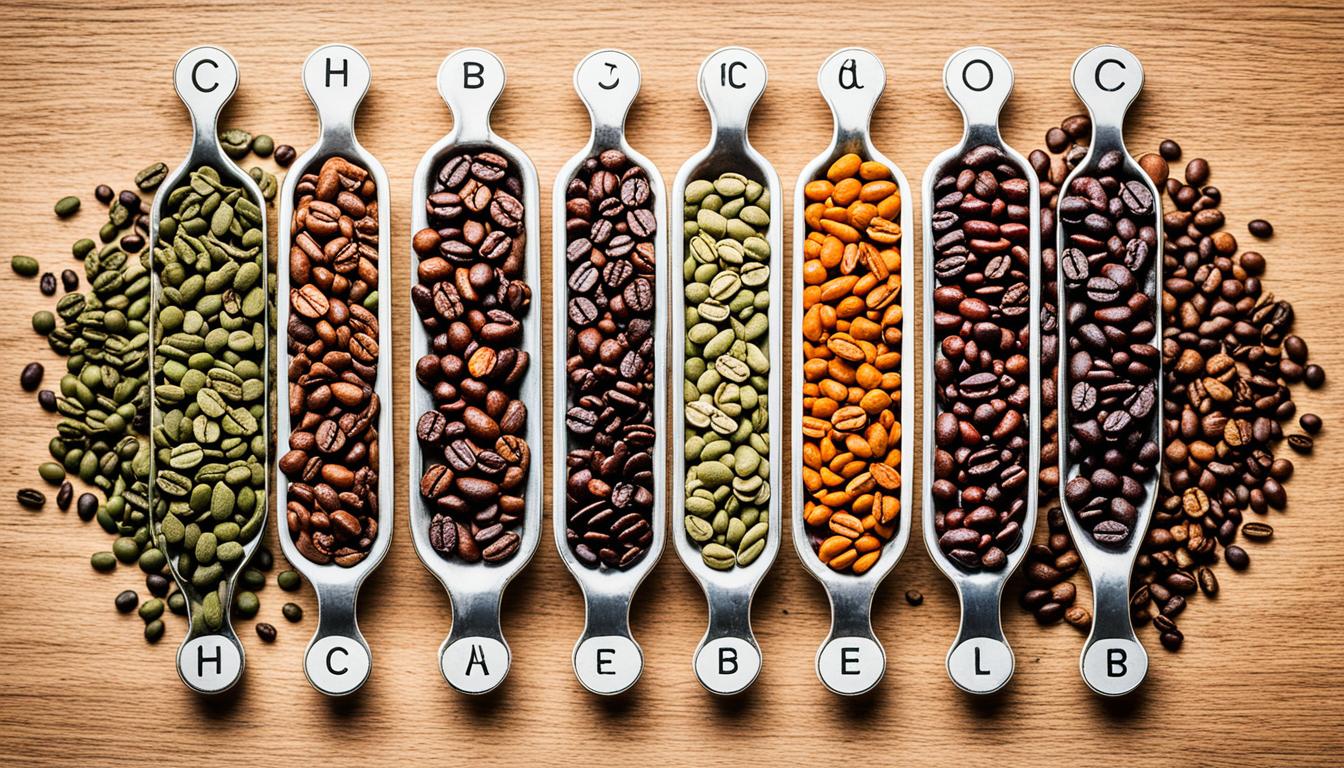
Your coffee bean origin markedly impacts extraction because different regions produce beans with distinct flavor profiles. For example, African beans often have fruity, bright notes, while South American beans tend to be milder and nutty. These inherent qualities influence how you should extract the coffee, affecting flavor clarity and balance. By understanding the bean origin, you can adjust your grind size, brew time, and temperature to optimize extraction and highlight the desired flavor profile.
What Role Does Pressure Play in Espresso Extraction?
Pressure plays a vital role in espresso extraction by influencing pressure dynamics and extraction balance. When you adjust the pressure, you control how water interacts with coffee grounds, affecting flavor and strength. Higher pressure increases extraction, pulling more solubles, while lower pressure can cause under-extraction. Maintaining ideal pressure guarantees you get a balanced shot, with rich flavors and appropriate strength, avoiding sourness or bitterness caused by uneven pressure.
Conclusion
Remember, brewing coffee is like tuning an instrument—you hold the power to adjust each element until harmony is achieved. When your brew tastes sour, bitter, or weak, think of it as a signal from the symphony of variables needing fine-tuning. Embrace the dance of grind size, water temperature, and brew time, for each tweak brings you closer to that perfect melody—the rich, balanced cup that sings with every sip. Keep experimenting, and let your coffee’s true flavor blossom.