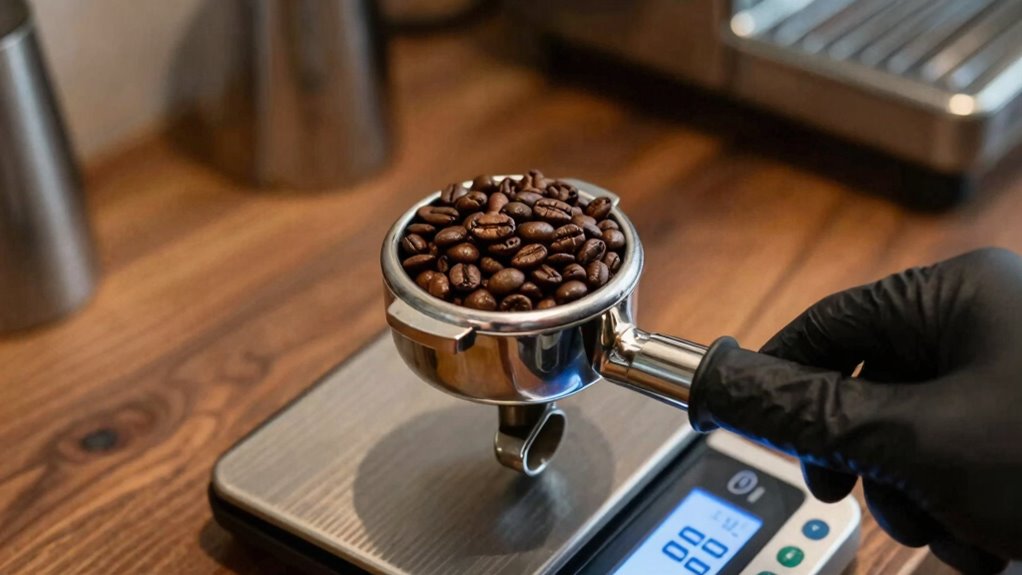

Strength refers to how bold or full-bodied your coffee feels, while extraction is about how well flavors and compounds are pulled from the grounds. You might have strong coffee that’s not flavorful if it’s under-extracted, or bitter and harsh if over-extracted. Adjusting factors like grind size and brew time helps balance these, but confusing the two can lead to poor results. Keep exploring to discover how to perfect your brew and get that ideal flavor profile.

Get coffee and tea gear delivered free with Prime
- Fast, free delivery on millions of items
- Prime Video, Amazon Music and more included
- Member-only deals all year
Key Takeaways
- Strength refers to the perceived body or concentration, while extraction measures flavor and compound development during brewing.
- Well-extracted coffee balances flavor complexity without excessive bitterness or dullness.
- High strength does not always mean good flavor; proper extraction is key to taste.
- Adjust brewing variables like grind size and time to optimize both strength and extraction.
- Over-extraction causes bitterness; under-extraction results in flat, sour flavors.
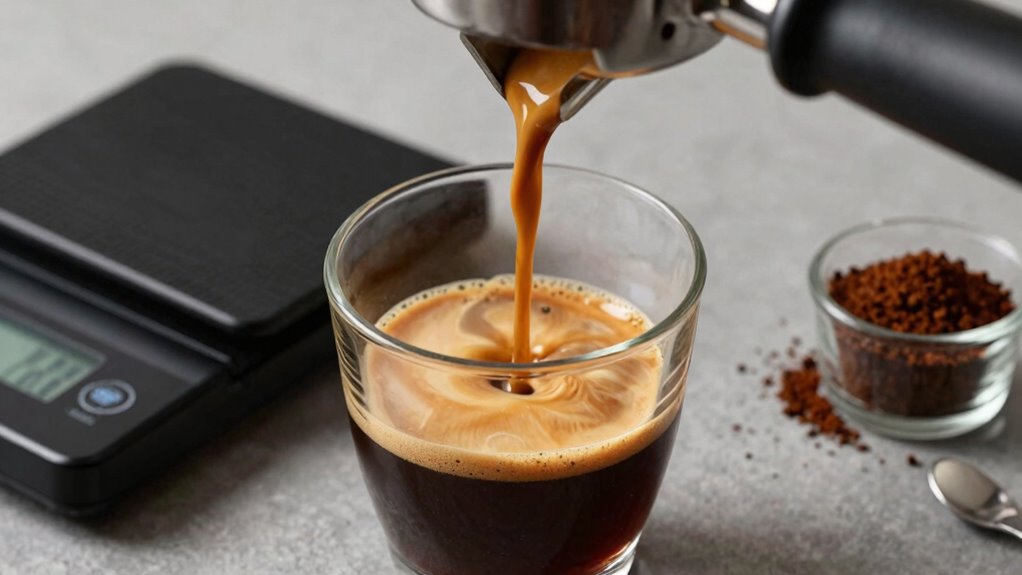
Have you ever wondered how strength and extraction methods influence the quality of your coffee? Understanding these concepts can dramatically change how you approach brewing and how much you enjoy each cup. Strength usually refers to the perceived intensity or body of the coffee—how bold or full-bodied it feels—while extraction describes how much flavor and compounds are pulled from the coffee grounds during brewing. Getting these two mixed up can lead to confusion, especially when trying to craft the perfect brew.
Understanding strength and extraction is key to brewing balanced, flavorful coffee.
When you focus on strength, you’re often thinking about how much coffee you use relative to water or how long you brew. For example, a stronger coffee isn’t necessarily more flavorful; it might just be more concentrated, with a heavier mouthfeel. On the other hand, extraction is about how well those flavors—from the subtle fruitiness to the bitter notes—are pulled out of the beans. The key is that a well-extracted coffee will have a balanced flavor profile, with flavor nuances shining through, rather than just tasting bitter or over-strong.
Brewing techniques play a crucial role here. For instance, a French press tends to produce a richer, fuller-bodied coffee because it extracts more compounds from the grounds, emphasizing strength and body. Conversely, pour-over methods allow for more control over extraction, helping you highlight flavor nuances by adjusting variables like grind size, water temperature, and pour rate. If you over-extract, the coffee can become bitter and harsh, masking the delicate flavors. Under-extraction, however, results in sour, weak, or flat-tasting coffee, depriving you of those subtle notes that make specialty beans special.
Understanding the difference between strength and extraction helps you tweak your brewing techniques to achieve the perfect cup. If your coffee feels too heavy or overwhelming, you might need to adjust parameters to reduce strength or prevent over-extraction. Adjusting brewing variables can significantly influence both strength and extraction, allowing you to fine-tune your results. Additionally, being aware of extraction efficiency can help you understand how different grind sizes and brewing times impact flavor development. If it tastes flat or bland, it could be under-extracted, meaning you need to refine your method to draw out more flavor nuances. The goal isn’t simply to make the coffee stronger but to optimize extraction so that the full spectrum of flavors is balanced and vibrant.
Additionally, knowing how extraction impacts flavor can guide you in choosing the right brewing equipment and settings for different coffee beans.
In essence, mastering the balance between strength and extraction allows you to craft coffee that’s both rich and nuanced. Focus on your brewing techniques—adjust grind size, brew time, and water temperature—and pay attention to how these changes influence flavor nuances. When you do, you’ll find yourself brewing coffee that’s not just strong but also complex, vibrant, and a true reflection of the beans’ potential.
coffee grinder for pour-over brewing
As an affiliate, we earn on qualifying purchases.
As an affiliate, we earn on qualifying purchases.
Frequently Asked Questions
How Does Grind Size Affect Coffee Strength?
You’ll notice that grind size directly influences coffee strength by affecting extraction. A finer grind increases surface area, making it easier to extract flavors quickly, resulting in a stronger brew if over-extracted. Consistent grind size guarantees even extraction, preventing weak or bitter flavors. Fresh coffee beans also boost strength, as they contain more flavorful oils. So, adjust your grind size carefully, keep it consistent, and use fresh beans for a robust, well-balanced cup.
Can You Have High Strength but Low Extraction?
Yes, you can have high strength but low extraction. Think of it as a bold, intense flavor balance with a high caffeine content, yet lacking the full range of dissolved compounds that create complexity. This means your coffee might taste strong and punchy, but it won’t have the nuanced flavors you’d get from better extraction. So, you get the caffeine kick without the full spectrum of taste and aroma.
What’s the Ideal Brew Time for Optimal Extraction?
The ideal brew time for maximum extraction typically ranges from 4 to 5 minutes, depending on your method. This duration helps develop a balanced flavor profile, highlighting clarity and richness. To achieve consistent flavor and brew, stick to your timing, as over- or under-extraction can cause uneven flavors. Regularly adjusting grind size and brew time ensures you maintain the right balance, leading to better flavor and greater brew consistency.
How Does Water Temperature Influence Extraction?
Think of water temperature as the maestro conducting your coffee symphony. When it’s just right—around 195-205°F—it reveals water chemistry’s secrets, extracting rich flavors without bitterness. Too hot, and your brewing equipment might over-extract, muddling the taste; too cold, and it leaves behind the best notes. Adjust temperature carefully, and you’ll craft a balanced cup that sings with vibrant complexity.
Does Stronger Coffee Always Mean Better Flavor?
Stronger coffee doesn’t always mean better flavor. You might find it overpowering or bitter if the strength overwhelms the delicate balance of flavors. To achieve flavor consistency, focus on proper extraction and use fresh beans, which offer vibrant, nuanced tastes. Remember, a well-balanced, flavorful coffee depends on the right strength, extraction, and freshness, not just a higher concentration of coffee grounds.
Conclusion
Understanding strength and extraction is like tuning a musical instrument—you need the right balance to hit the perfect note. If you mix them up, your coffee might taste like a discordant melody. Remember, strength is the volume, while extraction is the harmony of flavors. Master these concepts, and every cup becomes a symphony you conduct with confidence. So, play your coffee right, and let each sip sing with clarity and richness.
Halloween Picks
halloween
As an affiliate, we earn on qualifying purchases.