To brew the perfect coffee water, start with fresh, clean water, ideally filtered for the best flavor. Heat it to between 195°F and 205°F (90°C to 96°C), just below boiling, to guarantee maximum extraction without scorching your coffee. Use medium grind for drip coffee or adjust based on your brewing method. Getting your water temperature and grind size just right will make a noticeable difference, and if you keep exploring, you’ll master even better results.
Key Takeaways
- Use fresh, filtered water to ensure optimal flavor extraction and prevent off-tastes.
- Maintain water temperature between 195°F to 205°F (90°C to 96°C) for ideal brewing results.
- Aim for a water-to-coffee ratio of approximately 16:1 for balanced strength.
- Adjust grind size based on your brewing method to optimize extraction and flavor.
- Consistently measure and control water quality and temperature for reliable, better-tasting coffee.
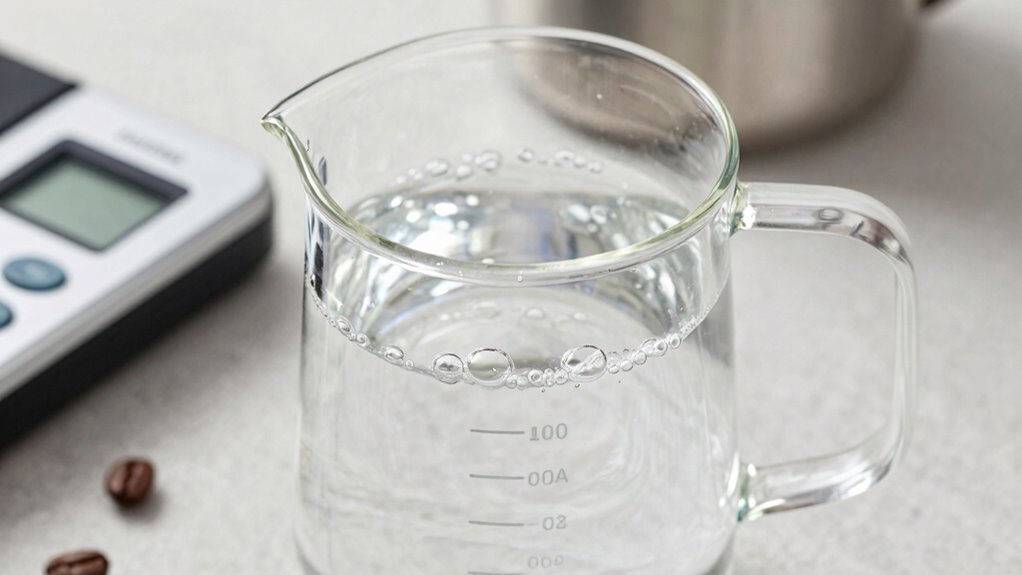
To make the perfect coffee, start with the right water. The quality of your water plays a vital role in extracting the best flavors from your beans. But beyond just using fresh, clean water, you need to pay attention to how you prepare it for brewing. Two key factors that influence the outcome are brew temperature and grind size. These elements determine how well the coffee grounds interact with the water, affecting the overall taste and aroma of your cup.
First, focus on the brew temperature. The water temperature should be just right—around 195°F to 205°F (90°C to 96°C)—to extract the ideal flavors without risking over-extraction or bitterness. If the water’s too hot, it can scorch the grounds, leading to a bitter, burnt taste. Too cool, and the extraction won’t be complete, leaving your coffee weak and underwhelming. To achieve the right temperature, you might use a kettle with a temperature control or simply bring water to a boil and let it sit for about 30 seconds before pouring. This slight cooling ensures you hit that perfect brewing window.
Aim for 195°F to 205°F water; precise temperature prevents bitterness and ensures optimal flavor extraction.
Next, pay attention to grind size, which directly influences how the water interacts with the coffee during extraction. For drip coffee makers, a medium grind works best. If you’re using a French press, opt for a coarse grind, and for espresso, go fine. The goal is to match the grind size to your brewing method to guarantee proper extraction. An overly fine grind can lead to over-extraction, making your coffee bitter and over-strong. Conversely, a grind that’s too coarse might cause under-extraction, resulting in a weak, flavorless brew. Adjust your grind size to find that sweet spot where the flavors are balanced and the coffee feels smooth on your palate.
Combining the correct brew temperature with the proper grind size ensures your coffee grounds extract just the right amount of flavor, aroma, and body. It’s a delicate balance, but once you master these two variables, you’ll notice a significant improvement in every cup. Consistency is key—measure your water temperature and grind size carefully each time you brew, and you’ll develop a reliable routine that leads to better-tasting coffee. Remember, the perfect cup isn’t just about the beans; it’s about how you prepare the water and grounds. Fine-tuning these details puts you on the path to brewing coffee that truly satisfies your palate.
Frequently Asked Questions
Does Mineral Content Affect Coffee Flavor Significantly?
Yes, mineral content profoundly affects coffee flavor due to mineral influence on extraction and taste. High mineral levels can enhance or mute certain flavors, influencing the overall flavor impact. You’ll notice a brighter, more vibrant cup with balanced minerals like calcium and magnesium, while too many minerals can cause off-flavors. Adjusting mineral content in your water helps you fine-tune your coffee’s flavor profile for a better, more consistent brew.
How Do I Adjust Water for Different Coffee Brewing Methods?
To adjust water for different brewing methods, start by changing the water temperature and brew ratio. For pour-over or Aeropress, use hotter water around 195-205°F for better extraction, while cold brew needs lower temperatures and longer steep times. Adjust the brew ratio by adding more or less water relative to coffee grounds to balance strength. Experiment with these variables to find the perfect flavor for each method.
Can I Use Bottled or Filtered Water Instead of Tap Water?
Yes, you can use bottled water or filtered water instead of tap water for your coffee. Bottled water often has a consistent mineral content, which can enhance flavor. Filtered water removes impurities and chlorine that might affect taste. Just make certain the water’s mineral balance suits your brewing method, and avoid overly soft or purified water lacking minerals, as they can result in flat-tasting coffee.
How Often Should I Test My Water’s Mineral Levels?
You should test your water’s mineral levels at least once every three to six months to guarantee quality. Regular water testing helps you monitor key minerals like calcium, magnesium, and total dissolved solids, which directly impact your coffee’s taste. If your water source changes or you notice a taste difference, do mineral monitoring sooner. Consistent testing keeps your brewing water ideal, ensuring consistently great coffee.
What Are Common Mistakes When Preparing Perfect Coffee Water?
You might stumble by neglecting water temperature and pH, which can subtly undermine your perfect cup. Aim for water around 195-205°F and a balanced pH to release rich flavors. Avoid rushing the process or using stale water, as these small missteps can mute your brew’s potential. Paying close attention to these details guarantees your coffee’s true character shines through, transforming each cup into a delightful experience.
Conclusion
Remember, great coffee starts with great water. While this recipe offers a simple way to elevate your brew, don’t forget that even the perfect water can’t transform bad beans. It’s a reminder that perfection isn’t just about ingredients—it’s about the care and intention you bring to each cup. Like life, your coffee’s quality depends on the details you choose to nurture, blending simplicity with passion for truly exceptional results.