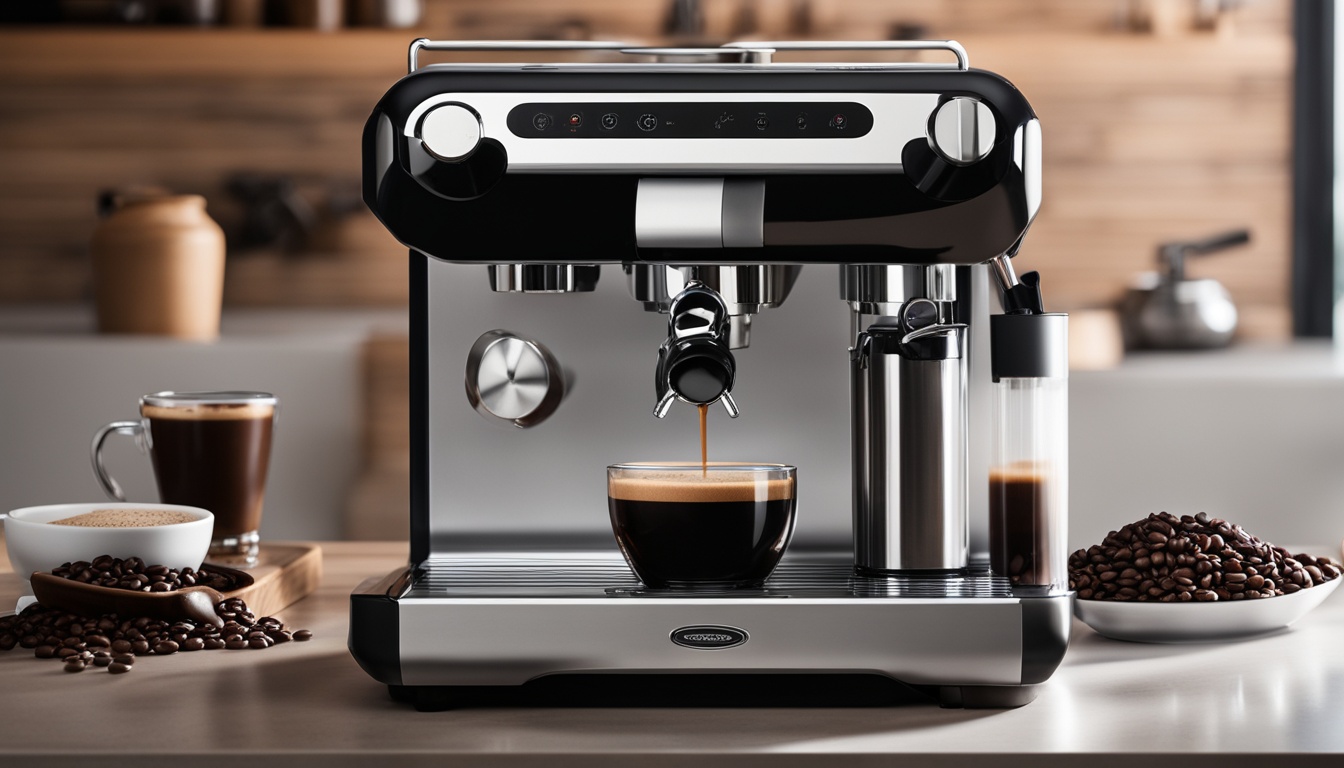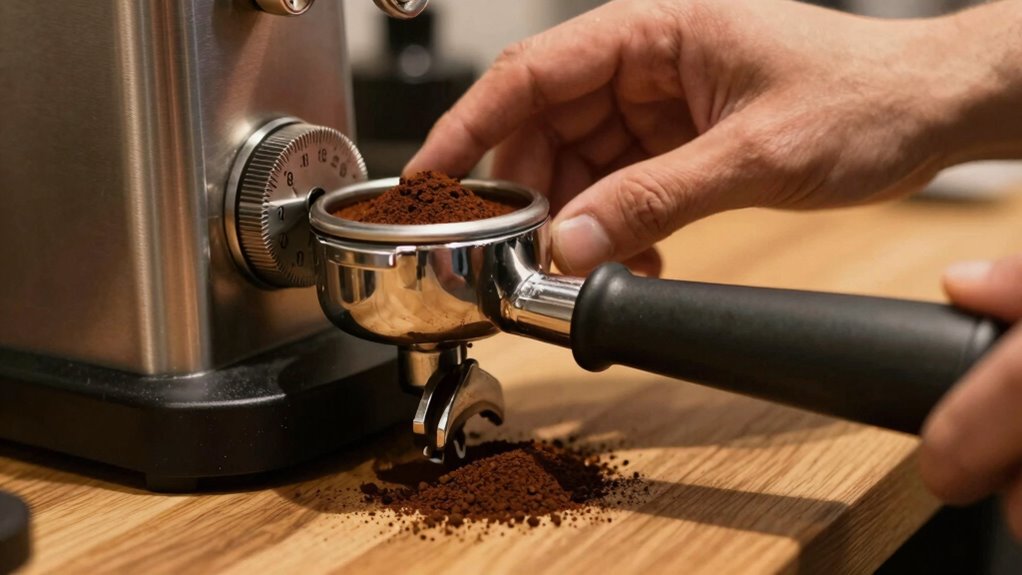

To dial in light roast espresso, start by making small, incremental adjustments to your grinder, aiming for a finer grind since light roasts are denser. Watch your shot time—target around 25-30 seconds—and look for rich crema and balanced flavor. Keep consistent grind size to guarantee reliable results, and tweak as needed to refine extraction. If you want to master these variations and access the full potential of your light roasts, there’s more to explore.
Key Takeaways
- Start with a finer grind than darker roasts, adjusting in small increments to find optimal extraction time (25-30 seconds).
- Watch for extraction signs: rich caramel crema and balanced flavor, then fine-tune the grind accordingly.
- Maintain consistent grind size to ensure reliable flavor extraction and shot quality over multiple pulls.
- Loosen the grind if shots are too fast; tighten if water flows too slowly, to achieve ideal timing.
- Keep detailed notes of adjustments to replicate the perfect grind setting for your light roast espresso.
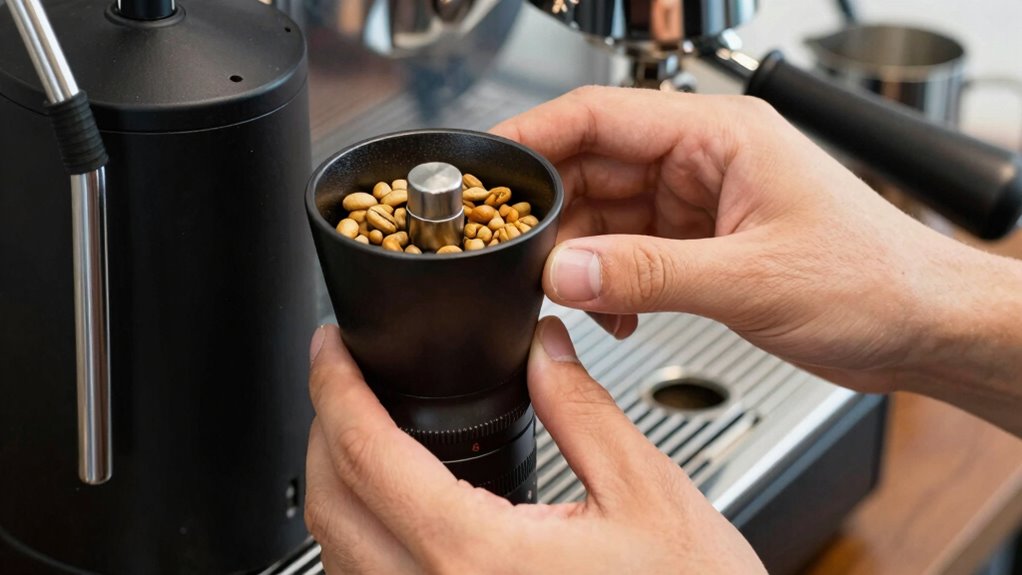
Adjusting your espresso grinder for light roast beans is essential to unleash their full flavor potential. Light roasts tend to be denser and less oily than darker roasts, which means they require a more precise approach to grind size. Achieving grind size consistency is crucial because even slight variations can significantly impact extraction. If your grind is too coarse, the water will flow too quickly, resulting in under-extracted, sour-tasting espresso. Conversely, if it’s too fine, the water struggles to pass through, leading to over-extraction and bitter flavors. To get it right, you need to fine-tune your grinder settings meticulously, paying close attention to consistency from shot to shot. This consistency ensures that your flavor extraction techniques work effectively, allowing you to dial in the perfect shot every time.
When adjusting your grinder for light roasts, start with small incremental changes rather than large jumps. Light roasts often require a finer grind than darker roasts because of their density and lower solubility. As you tweak, observe the extraction time—aim for around 25-30 seconds—and look for signs like a rich, caramel-colored crema and a balanced, aromatic flavor profile. If your shot pulls too quickly, tighten the grind; if it takes too long, loosen it slightly. Keep notes of your adjustments, so you can replicate the ideal setting consistently. This process emphasizes the importance of grind size consistency, ensuring that each shot maintains the same parameters for maximum flavor extraction. Additionally, grind consistency is vital for maintaining the quality of each espresso shot over time.
Incorporating proper flavor extraction techniques involves more than just grinder adjustments. It’s about controlling variables such as tamping pressure, water temperature, and shot timing to complement your grind setting. When your grind is dialed in correctly, these techniques become more effective, allowing you to highlight the nuanced flavors of light roast beans. Practice patience and make small tweaks—this iterative process is key to mastering the art of light roast espresso. Remember, the goal is to create a uniform grind that promotes even extraction, which allows the complex, bright flavors of the light roast to shine through. With consistent grind size and proper extraction techniques, you’ll unlock the full potential of your beans, resulting in a vibrant, flavorful espresso that truly captures the essence of the roast.
Frequently Asked Questions
How Often Should I Recalibrate My Grinder for Light Roast Espresso?
You should recalibrate your grinder every 1-2 weeks to maintain flavor consistency with light roast espresso. Regular grinder maintenance, like cleaning and checking for wear, helps you keep the grind size precise. Light roasts are more delicate, so small adjustments matter. If you notice shifts in flavor or extraction issues, recalibrate sooner. Consistent calibration ensures your espresso remains bright, balanced, and flavorful every time you brew.
Can Different Grinder Brands Affect the Adjustment Process?
Ever wonder if your grinder brand impacts your adjustment process? It definitely can. Different brands often have unique mechanisms, affecting grinder brand consistency and how easily you can fine-tune your grind size. Compatibility with adjustment tools varies too, so you might need specific tools for each brand. Always check your grinder’s manual or consult the manufacturer to guarantee smooth adjustments—this can make all the difference in dialing in that perfect shot.
What Are Signs My Grind Size Is Incorrect for Light Roast Espresso?
If your grind size is wrong for light roast espresso, you’ll notice blooming issues like uneven expansion and over or under-extraction. The espresso might taste sour or bitter, and you’ll struggle with extraction consistency. Adjust your grind finer if the shot pulls too quickly or becomes sour, and coarser if it’s slow or bitter. Keep fine-tuning until blooming is even and extraction flows smoothly for a balanced shot.
How Does Ambient Temperature Impact Grinder Adjustments?
Imagine your grinder as a delicate dance partner—ambient temperature is the music that influences every move. Higher ambient temperatures can cause your grinder to produce a finer consistency, making adjustments tricky. Conversely, cooler temps may lead to coarser grounds. Keep an eye on ambient temperature because it directly impacts grinder consistency. Regularly recalibrate your grinder to maintain precise grind size, ensuring your espresso remains balanced and flavorful.
Are There Specific Grinder Settings for Different Light Roast Beans?
You should adjust your grinder settings based on the specific light roast beans you’re using, as their bean freshness impact demands different grind consistency. For fresher beans, go slightly coarser to prevent over-extraction, while older beans might need a finer grind. Always fine-tune your settings in small increments, tasting after each adjustment, to find the perfect balance that highlights the delicate flavors of light roasts.
Conclusion
Remember, a tiny tweak can make all the difference in your light roast espresso. Keep experimenting with your grinder adjustments until you find that perfect balance. Don’t be afraid to fine-tune your grind size or tamp pressure—patience is key. As the saying goes, “Practice makes perfect.” With persistence and attention to detail, you’ll consistently pull brighter, more flavorful shots that truly showcase your light roast’s potential.