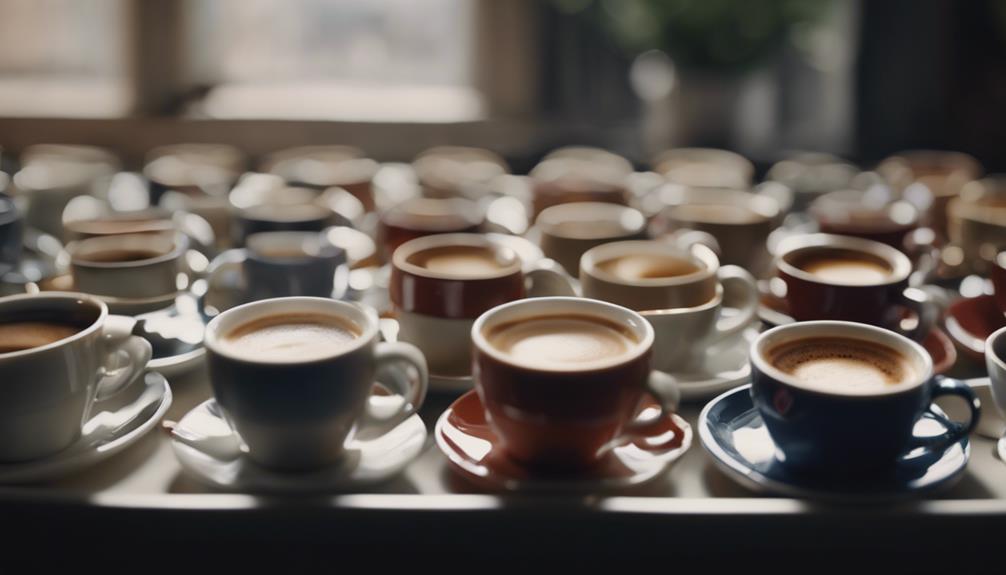
To create latte art like hearts, tulips, and rosettas, you need to master pouring techniques that control milk flow and pattern formation. Start with silky microfoam and practice steady, gentle pours, adjusting speed to form each design. Hearts are made with quick flicks, tulips involve layered pours, and rosettas use zigzag motions. Perfecting these takes patience and practice, and if you keep exploring, you’ll discover how to turn each cup into a stunning visual masterpiece.

Get coffee and tea gear delivered free with Prime
- Fast, free delivery on millions of items
- Prime Video, Amazon Music and more included
- Member-only deals all year
Key Takeaways
- Master steady, gentle pouring techniques to create distinct heart, tulip, and rosetta patterns.
- Use layering and controlled flow to build complex designs like tulips and rosettas.
- Tilt the cup appropriately and manipulate pour speed for precise pattern formation.
- Practice quick flicks and zigzag motions to craft detailed, appealing latte art shapes.
- Develop consistency through patience and repetition to enhance design clarity and complexity.

Have you ever wondered how baristas create those stunning patterns on your latte? It’s a skill that combines artistry with precision, rooted deeply in coffee culture. When you step into a café, you might just see a simple cup of coffee, but behind the scenes, baristas are performing a delicate dance of technique and creativity. Mastering latte art requires more than just pouring milk; it’s about developing refined barista skills that turn a plain drink into a visual masterpiece. These skills involve understanding the perfect milk texture, controlling pouring speed, and knowing how to manipulate the flow to create intricate designs.
Coffee culture celebrates these artistic touches because they elevate the entire experience. When a barista skillfully pours a heart, tulip, or rosetta, they’re not just decorating a drink—they’re expressing their craftsmanship and passion for coffee. This attention to detail fosters a sense of community and shared appreciation for the craft. As a customer, you get to enjoy more than just a caffeine boost; you get to witness a form of visual storytelling that connects you with the barista’s dedication.
Learning to create latte art begins with understanding milk steaming. You need to achieve a silky, microfoam that blends smoothly with espresso. This microfoam is essential because it’s what allows you to pour with control, forming the basis for those beautiful patterns. Once you’ve mastered steaming, the next step is pouring technique. You start with a steady hand, pouring from a height to spread the milk evenly, then gradually lower the pitcher to direct the flow. This is when your barista skills come into play—how you tilt, when you accelerate or slow down, and how you manipulate the pour all influence the final design.
Creating a heart involves a gentle, steady pour and a quick flick at the end, while tulips require layering multiple pours to build up the petals. Rosettas demand a careful zigzag motion, giving the illusion of fern-like leaves. It’s a skill that takes practice, but once you get the hang of it, you’ll see how each pour becomes an act of creative expression.
In the end, latte art isn’t just about aesthetics; it’s a reflection of the barista’s mastery of their craft. It embodies a love for coffee and a desire to delight customers beyond taste. With patience and practice, you can develop your own barista skills and start creating those beautiful patterns that make every coffee moment special.
As an affiliate, we earn on qualifying purchases.
Frequently Asked Questions
What Tools Are Essential for Creating Latte Art?
To create beautiful latte art, you need a good steaming pitcher for milk frothing and control. A thermometer helps maintain the right temperature, ensuring smooth, velvety foam. You’ll also want a steady hand and precise pour techniques to form hearts, tulips, and rosettas. A steady surface and a clean cup are essential, too, so your designs come out sharp and clear. Practice makes perfect with these essential tools and skills.
How Long Does It Take to Master Latte Art?
It typically takes several months of consistent practice to master latte art, but it varies based on your dedication. You’ll need to perfect your milk texture and pouring techniques, which are essential for creating clean, defined designs. As you practice daily, you’ll notice improvement in control and precision. Stay patient, experiment with different styles, and focus on developing a steady hand. Over time, your latte art will become more intricate and impressive.
Can Latte Art Be Done With Cold or Only Hot Milk?
You can do latte art with cold milk, but it’s much harder because cold milk doesn’t create the ideal milk foam consistency needed for smooth, detailed designs. Hot milk, steamed properly, develops a silky microfoam that’s perfect for pouring hearts, tulips, and rosettas. Cold milk tends to be too thin and watery, making it challenging to achieve the same precision and clarity in your latte art.
How Does Milk Temperature Affect Latte Art Quality?
Milk temperature markedly impacts your latte art quality. When you master milk frothing techniques and milk temperature control, you can create smooth, velvety microfoam essential for pouring intricate designs. Too hot or cold milk hampers the foam’s texture, making it harder to pour clean hearts, tulips, or rosettas. Keep the milk around 140-150°F, ensuring your frothing techniques produce a glossy, consistent microfoam for stunning latte art.
Are There Any Health Benefits Associated With Latte Art Practice?
Surprisingly, practicing latte art offers health benefits like boosting your mental well-being and honing motor skills. Ironically, the time spent perfecting those intricate designs can reduce stress, improve focus, and enhance hand-eye coordination. While it’s not a cure-all, engaging in this craft encourages mindfulness and patience. So, next time you create a heart or tulip, remember you’re nurturing both your art and your health.
Conclusion
Just as a master painter transforms a blank canvas into a vibrant masterpiece, your latte art turns simple crema into fleeting works of heart, tulip, and rosetta. Each pour is a brushstroke, fleeting yet meaningful, reminding you that beauty often lies in the delicate, transient moments. Embrace the process, knowing that like art, your skill will blossom with patience. In every cup, you craft a story, a fleeting masterpiece that warms both the soul and the senses.
Fall Picks
fall essentials
As an affiliate, we earn on qualifying purchases.