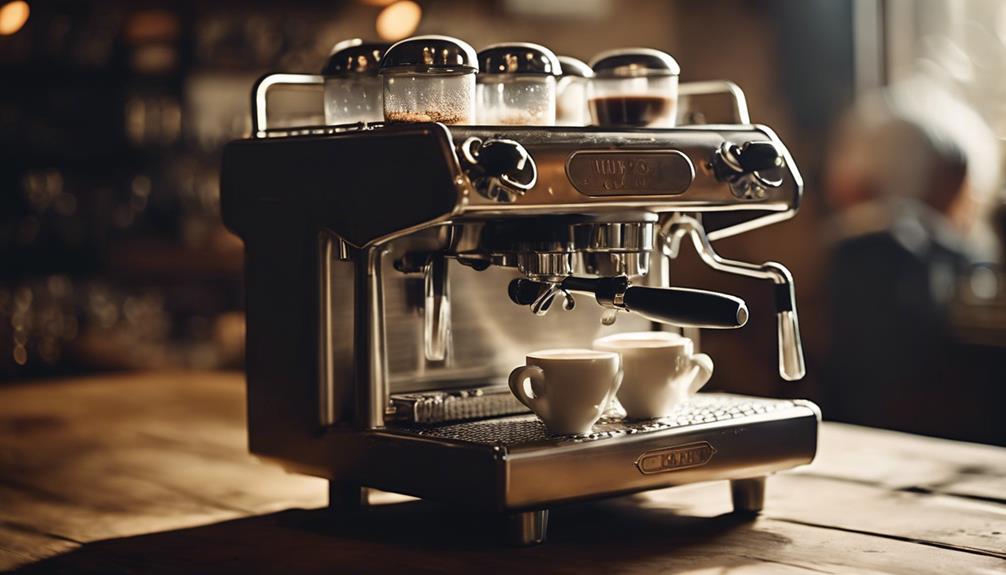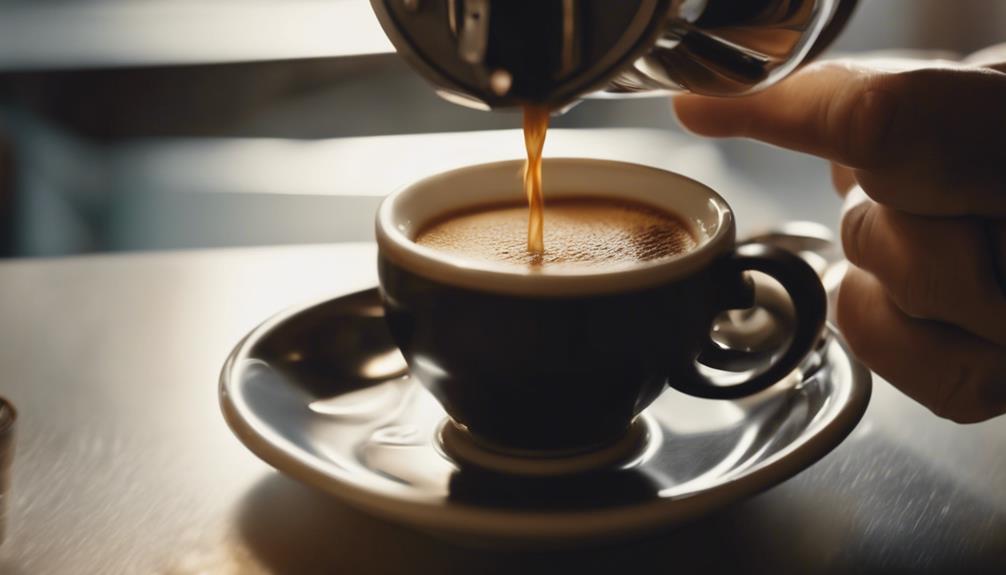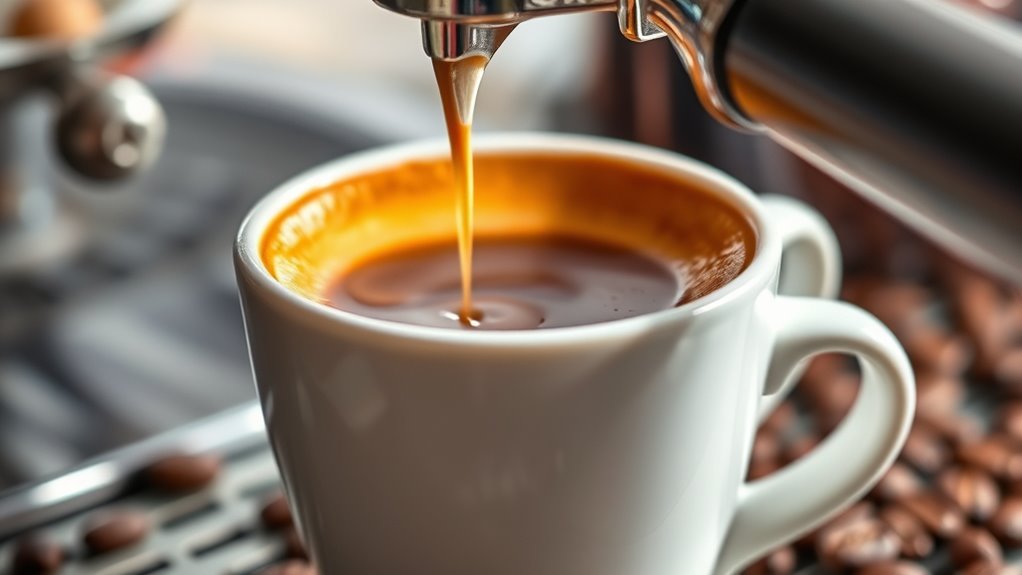

To fix sour, bitter, or hollow espresso, focus on adjusting your grind size and tamp pressure carefully. A coarser grind can cause sour shots; make it finer to improve extraction. If your shot tastes bitter, try a slightly coarser grind or lighter tamp. For hollow or weak flavor, use a finer grind with proper tamping. Small, consistent tweaks help balance extraction. Keep experimenting with these adjustments, and you’ll gain better control over your espresso’s flavor profile.

Get coffee and tea gear delivered free with Prime
- Fast, free delivery on millions of items
- Prime Video, Amazon Music and more included
- Member-only deals all year
Key Takeaways
- Adjust grind size: coarser for sour shots, finer for bitter or over-extracted flavors.
- Ensure tamp pressure is about 30 pounds for even water flow and proper extraction.
- Check for over- or under-extraction signs to tweak grind size and tamp accordingly.
- Use fresh beans and proper machine maintenance to improve overall shot quality.
- Make small, incremental adjustments and document changes to identify optimal settings.
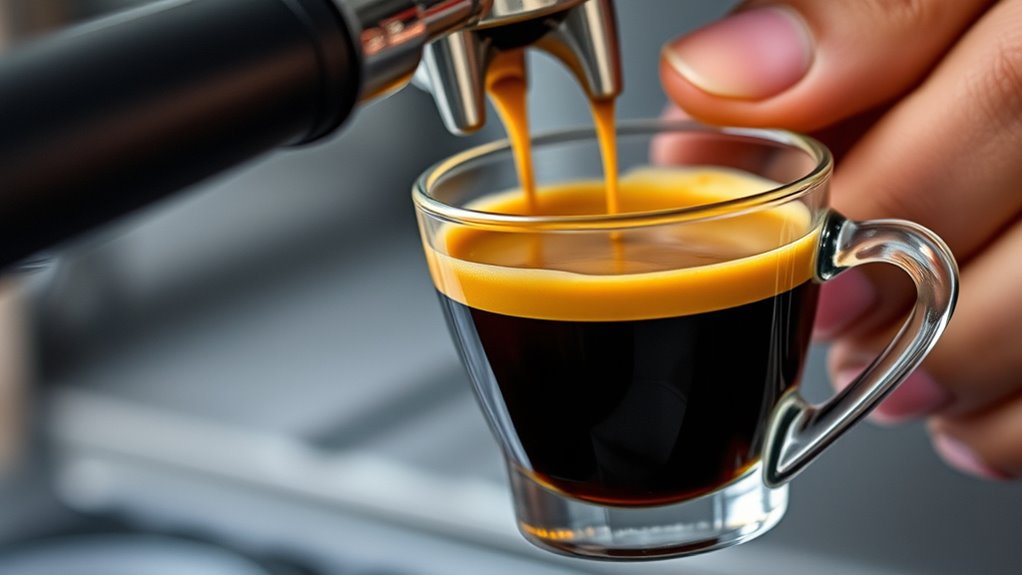
Are you struggling to get that perfect shot of espresso? If your brew tastes sour, bitter, or hollow, don’t worry—these issues often come down to a few key factors you can easily adjust. One of the most common areas to check is your grind size. If your grind is too coarse, water flows through too quickly, resulting in a weak, sour shot because the coffee doesn’t have enough contact time to extract the full flavor. Conversely, if your grind is too fine, the water struggles to pass through, leading to over-extraction. This can produce a bitter, harsh taste. To fix this, experiment with your grind size, making small adjustments until you find that sweet spot where the espresso is balanced and rich. It’s a delicate process, but a consistent grind size tailored to your machine and beans makes a significant difference. Additionally, considering AI-driven diagnostics can help optimize your espresso brewing process by analyzing variables like grind size and tamp pressure for better consistency.
Another vital aspect is tamp pressure. When you tamp, you’re pressing the coffee grounds into a compact puck, and the amount of pressure you apply impacts how water flows during extraction. If you tamp too lightly, water will channel through the coffee unevenly, resulting in under-extraction—often causing a sour or weak flavor because not enough of the coffee’s oils and flavors are dissolved. On the other hand, pressing too hard can cause over-extraction, making your espresso bitter and overly intense. The key is to apply firm, even pressure—about 30 pounds of force—so that the coffee is evenly compacted. This ensures uniform water flow and proper extraction. Use a consistent tamping technique each time to maintain control over the process, and your shots will become more predictable and flavorful.
Beyond grind size and tamp pressure, temperature, freshness of beans, and machine maintenance also play roles, but these two factors are fundamental. Start by adjusting your grind size in small increments and keep track of how each change affects the taste. Simultaneously, focus on applying consistent tamp pressure—consider using a tamper with a pressure gauge if needed. With patience and practice, you’ll find the perfect combination that produces a balanced, flavorful espresso. Remember, troubleshooting isn’t about making huge changes all at once; it’s about fine-tuning each step to achieve that ideal shot. Once you master these basics, you’ll enjoy a rich, satisfying espresso every time.
espresso grind size adjustment tool
As an affiliate, we earn on qualifying purchases.
As an affiliate, we earn on qualifying purchases.
Frequently Asked Questions
Can Grind Size Affect Espresso Sourness or Bitterness?
Yes, grind size impacts espresso sourness and bitterness. If your grind is too coarse, water flows quickly, causing under-extraction and increased sourness. Conversely, a too-fine grind slows extraction, leading to over-extraction and bitterness. Adjusting your grind size helps you control these flavors, ensuring a balanced shot. Experimenting with finer or coarser settings lets you fine-tune your extraction, giving you better control over sourness and bitterness in your espresso.
How Does Tamping Pressure Influence the Shot Quality?
You might notice that applying the right tamping pressure can unexpectedly transform your espresso shot. When you focus on your tamping technique and guarantee pressure consistency, you promote even extraction, which reduces sourness or bitterness. Consistent tamping helps control water flow through the coffee, leading to a more balanced shot. So, pay attention to your tamping pressure—small adjustments can make a big difference in shot quality.
What’s the Ideal Water Temperature for Brewing Espresso?
You should aim for a water temperature around 195-205°F to guarantee ideal extraction consistency. This range helps bring out the best flavors without making your espresso sour or bitter. Too hot, and you risk over-extraction, resulting in a bitter taste; too cold, and you’ll get under-extraction, leading to sourness or a hollow shot. Maintaining this temperature range guarantees a balanced, flavorful espresso every time.
How Often Should I Descale My Espresso Machine?
You should descale your espresso machine every 1 to 3 months, depending on your water hardness and usage. Regular descaling helps prevent mineral buildup, which can negatively affect water flow and espresso quality. If you notice slower extraction or a change in taste, it’s a sign you need to descale sooner. Follow your machine’s instructions and use the recommended descaling solution to keep it running smoothly.
Does Coffee Bean Freshness Impact Shot Flavor?
You’ll notice that coffee bean freshness considerably impacts shot flavor—fresh beans produce brighter, more balanced espresso. Studies show that beans lose about 30% of their aroma within two weeks of roasting. Proper coffee storage, like airtight containers away from light, preserves freshness longer. Roasting levels also matter: lighter roasts retain more delicate flavors, while darker roasts offer bolder, richer shots. Keep beans fresh to enjoy ideal flavor in every shot.
Conclusion
Don’t let sour, bitter, or hollow espresso ruin your day. With a few simple tweaks—like adjusting grind size or tamp pressure—you can enjoy a perfect shot every time. Some might think troubleshooting takes too much effort, but once you understand your machine and ingredients, it becomes second nature. Keep experimenting, stay patient, and soon you’ll be brewing espresso that’s smooth, balanced, and truly satisfying. Your ideal cup is just a few adjustments away!
Halloween Picks
halloween
As an affiliate, we earn on qualifying purchases.