Get ready to amp up your energy levels: a standard 1-ounce serving of espresso contains approximately 63 milligrams of caffeine. While this is less compared to a typical 8-ounce cup of brewed coffee, it’s important to note that espresso’s concentrated brewing method delivers a stronger kick per ounce. Various factors such as the type of coffee bean, roast level, and grind size can all influence the caffeine content of your espresso shot. If you’re curious about how to make the most of that caffeine boost, you’re in the right spot – there’s a lot to discover when it comes to brewing techniques and what distinguishes the ideal espresso shot.

Get coffee and tea gear delivered free — and shop member deals
- Fast, free delivery on millions of items
- Access to Prime Big Deal Days deals on October 6–7
- Prime Video, Amazon Music and more included
Key Takeaways
- A single 1-ounce shot of espresso typically contains around 63 milligrams of caffeine.
- Arabica beans have a higher caffeine concentration than other types of coffee beans, affecting the caffeine content in espresso.
- The grind size of the coffee beans also impacts the caffeine level, with a finer grind size increasing extraction efficiency.
- The brewing method and pressure, ideally around 9 bars, can also influence the amount of caffeine extracted into the espresso.
Caffeine Content in Espresso
On average, you can expect to get around 63 milligrams of caffeine in a standard 1-ounce shot of espresso. This amount of caffeine is quite concentrated, especially when compared to brewed coffee, which averages about 95 milligrams per 8-ounce cup.
However, it's worth noting that caffeine content can vary depending on the type of espresso machine and brewing methods used. For instance, a double shot of espresso, also known as a doppio, typically contains around 125 milligrams of caffeine, greatly increasing your caffeine intake per serving.
Arabica beans, known for their high-quality flavor, also tend to have a higher concentration of caffeine. When using an espresso machine, the grind size and brewing method can also impact the caffeine levels in your shot.
Finer grinds, for example, can enhance extraction efficiency, resulting in a stronger and more caffeinated shot. So, the next time you order a shot of espresso, keep in mind the amount of caffeine you're getting, and adjust your brewing methods accordingly to suit your taste and caffeine needs.
Factors Affecting Caffeine Levels
You'll find that several key factors contribute to the varying levels of caffeine in your espresso shot, including the type of coffee bean, roast level, grind size, brewing method, and amount of coffee grounds used.
The type of coffee bean you use greatly influences the caffeine content, with some beans naturally containing higher levels than others. The roast level also plays a role, as lighter roasts preserve more caffeine compared to darker roasts.
A finer grind size increases the surface area for extraction, leading to more effective caffeine transfer during brewing. The brewing method, specifically the pressure and temperature used, is also essential. For espresso, the ideal pressure is around 9 bars and the temperature should be between 190°F to 205°F.
Finally, the amount of coffee grounds used in the espresso shot directly impacts caffeine levels; using more grounds will result in a higher caffeine content per ounce of espresso.
Espresso Vs Regular Coffee
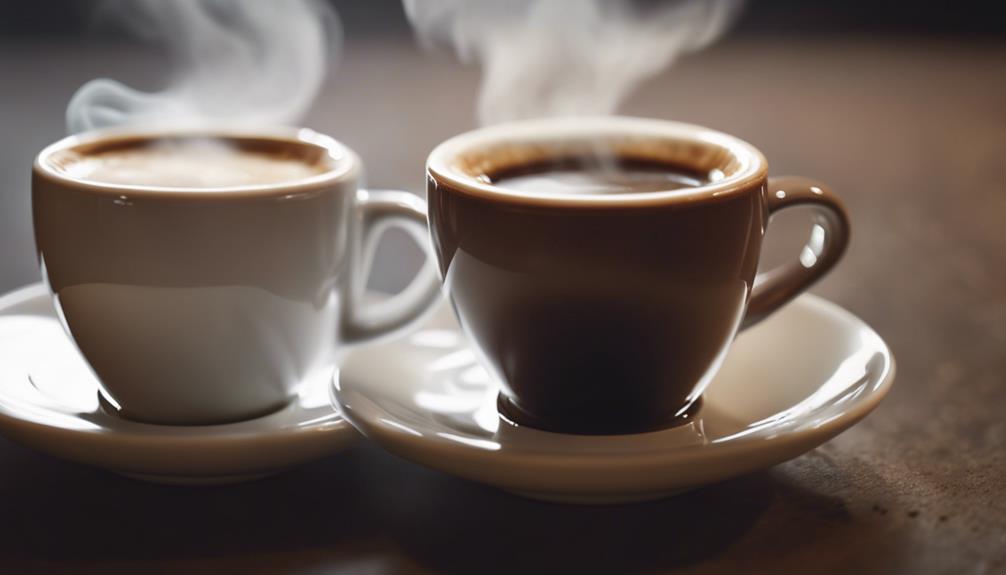
When comparing your daily pick-me-up, it's essential to understand the key differences between espresso and regular coffee.
You might assume that a cup of coffee packs more caffeine than a shot of espresso, but that's not entirely true. While a standard 1-ounce shot of espresso contains approximately 63 mg of caffeine, an 8-ounce cup of brewed coffee averages around 96 mg.
However, the caffeine concentration per ounce is higher in espresso due to its unique brewing method. A double shot of espresso (2 ounces) still provides less caffeine than a standard cup of brewed coffee, but the flavor and caffeine content are more concentrated.
The brewing method used for espresso, which involves finely-ground coffee and high pressure, results in a more intense flavor and higher caffeine concentration per ounce compared to regular coffee brewing methods.
Health Implications of Caffeine
As you savor your daily shot of espresso, it's important to consider the broader health implications of caffeine, particularly since moderate consumption can have several benefits. For instance, caffeine's stimulant effects on the central nervous system can improve cognitive function and mental alertness. Additionally, it can enhance physical performance by increasing adrenaline levels and mobilizing body fat for energy use.
| Benefits | Effects | Amount |
|---|---|---|
| Cognitive Function | Improved mental alertness | 1-2 cups |
| Physical Performance | Increased adrenaline, fat mobilization | 1-2 cups |
| Antioxidants | Reduced inflammation, disease risk | Present in espresso |
| Safe Consumption | Up to 400mg/day, 6 shots | Healthy adults only |
However, it's important to be mindful of excessive caffeine intake, which can lead to negative health effects like anxiety, disrupted sleep patterns, and digestive issues. To reap the benefits, aim for moderate caffeine consumption, and enjoy your espresso in balance with a healthy lifestyle.
Brewing Techniques and Grind Size
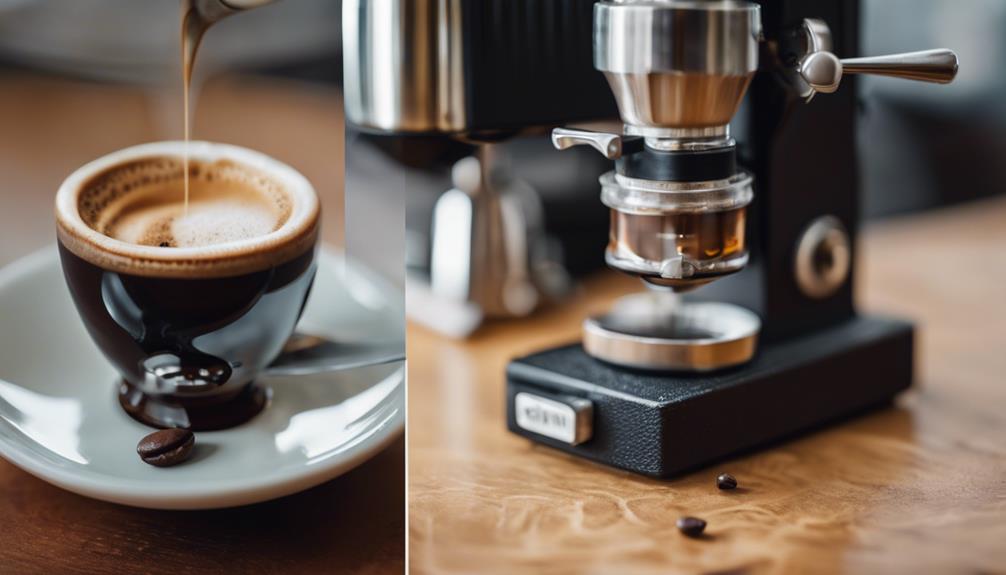
Fine-tuning your brewing techniques and grind size is vital to releasing the perfect shot of espresso, where every detail counts in maximizing caffeine extraction and flavor.
When it comes to grind size, you'll want to aim for a fine grind, similar to table salt, to guarantee peak caffeine extraction. Consistency is key, as an inconsistent grind can lead to under- or over-extraction, affecting the flavor.
During brewing, you'll want to maintain a water temperature between 190°F and 205°F to effectively extract caffeine and flavors. Pressure also plays an important role, with an ideal brewing pressure of around 9 bars, which aids in maximizing caffeine transfer from the coffee grounds.
Aim for an extraction time of 25 to 30 seconds, as the majority of caffeine is released within the first minute of brewing.
Frequently Asked Questions
How Much Caffeine Is in a Single Shot of Espresso?
You're wondering how much caffeine is in a single shot of espresso? Well, typically, you can expect around 63-75 milligrams of caffeine in a standard 1-ounce shot, but this amount can vary depending on the coffee bean and brewing method. If you’re wondering how many shots of espresso you can safely consume in a day, it’s generally recommended to limit your intake to around 4 shots, or approximately 300 milligrams of caffeine. However, everyone’s tolerance to caffeine is different, so it’s important to pay attention to how your body reacts to the amount of caffeine you consume. Some people may be able to handle more shots of espresso without experiencing negative side effects, while others may need to limit their intake even further. It’s always best to consult with a healthcare professional if you have concerns about your caffeine intake.
Is 2 Shots of Espresso a Lot of Caffeine?
Imagine downing two back-to-back energy drinks – that's roughly the caffeine kick you get from two shots of espresso. While it's within the FDA's daily limit, it may still be too much for you, depending on your individual tolerance. Caffeine affects people differently, so it’s important to pay attention to how your body reacts to it. Some individuals may feel jittery or anxious after consuming two shots of espresso, while others may not notice much of a difference. It’s also important to consider how you consume caffeine – for example, sipping on a shot of espresso over the course of a few minutes may have a different effect than quickly downing it. It’s always best to listen to your body and consume caffeine in moderation.
Is 1 Shot of Espresso Equal to 1 Cup of Coffee?
You wonder if one shot of espresso equals one cup of coffee, but surprisingly, it doesn't – a single shot has about 63mg of caffeine, while a standard cup of coffee contains around 95mg.
Why Is Espresso Stronger Than Coffee?
You're wondering why espresso is stronger than coffee? Well, it's because the brewing process maximizes caffeine extraction, and the fine grind of espresso grounds allows for more efficient caffeine transfer, making it a more potent pick-me-up.
Conclusion
As you wrap up your espresso-fueled journey, remember that every shot is a delicate dance of flavors and caffeine. As you savor each sip, be mindful of the balance between the bold taste and the potential health effects of espresso. While a moderate amount of caffeine can provide a boost of energy and improve mental alertness, excessive consumption can lead to negative side effects such as insomnia, stomach issues, and increased heart rate. It’s important to listen to your body and enjoy your espresso in moderation to fully appreciate its rich and complex characteristics.
The perfect blend can energize your day like a spark plug igniting an engine, but too much can leave you revving out of control.
So, savor each sip, and let the rich aroma guide you towards a balanced buzz.
With the right dosage, you'll be firing on all cylinders, ready to tackle anything that comes your way!
Halloween Picks
halloween
As an affiliate, we earn on qualifying purchases.