
To master espresso, focus on controlling shot time, yield, and ratio. Aim for 25-30 seconds per shot, with a yield of about 1 to 1.5 ounces. Use a balanced ratio around 1:2 for ideal flavor—too high or low can lead to bitterness or weakness. Adjust grind size and tamping to fine-tune water flow and extraction. Keep practicing, and you’ll discover how consistency makes all the difference in brewing perfect espresso.
Key Takeaways
- Proper espresso extraction typically takes 25-30 seconds, indicating optimal flavor and crema development.
- A standard single shot yields about 1 to 1.5 ounces of espresso, with a 1:2 coffee-to-espresso ratio.
- Controlling grind size and tamping influences flow rate, extraction time, and yield.
- Over-extraction causes bitterness; under-extraction results in weak, sour flavors.
- Achieving the right balance between time, yield, and ratio ensures a well-rounded, flavorful espresso shot.
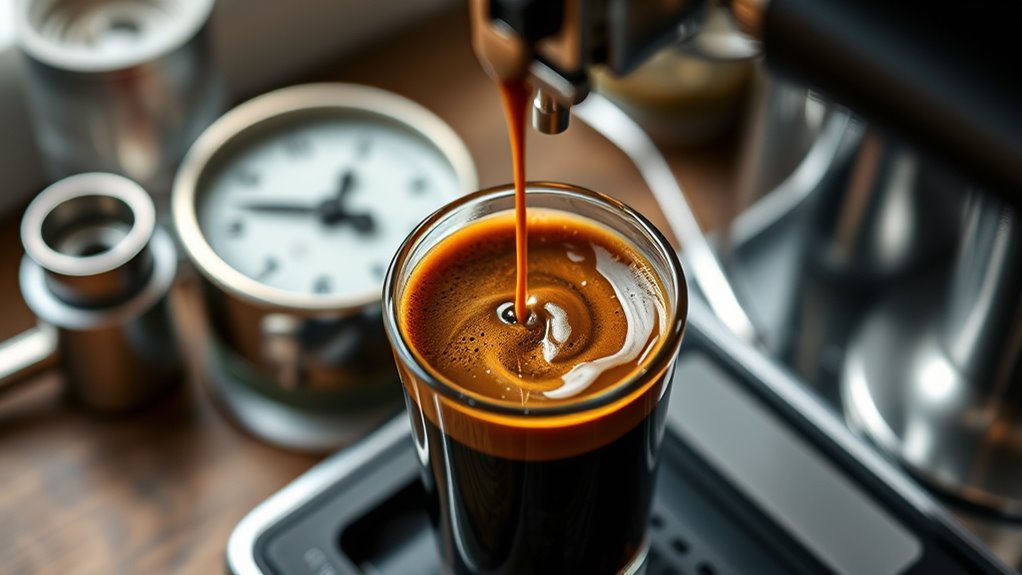
Ever wondered what makes espresso so rich and bold? It all comes down to the right brew methods and the precise coffee grind you use. When making espresso, the grind size is essential; it needs to be fine enough to create enough resistance for water to extract the flavors properly. Too coarse, and the water will flow through too quickly, resulting in a weak shot. Too fine, and the water might get stuck, causing over-extraction and bitterness. Your choice of brew methods heavily influences how you should grind your coffee. For espresso, pressure-driven methods like using an espresso machine are standard, requiring a consistent, fine grind that allows for proper extraction within a short time frame. This guarantees the water, under high pressure, interacts with the coffee evenly, pulling out the rich oils and flavors that define a good shot. Proper water temperature is also crucial to achieve optimal extraction and flavor. Timing is equally critical. Typically, an espresso shot takes about 25 to 30 seconds to brew, but this can vary based on your grind size, tamping pressure, and machine. A shot that brews too quickly might be under-extracted, lacking depth and complexity. Conversely, one that takes too long could be over-extracted, resulting in a bitter taste. The timing controls how much solubles are extracted from the coffee grounds, directly influencing the shot’s strength and flavor profile. Watching the flow rate and color of the espresso as it pours helps you gauge whether your parameters are spot-on. A good rule of thumb is to aim for a rich, caramel-colored crema, indicating proper extraction. The yield, or the amount of liquid espresso you produce, is usually around 1 to 1.5 ounces for a single shot. This amount is fundamental because it balances the concentration of flavors without becoming overly intense or too dilute. Adjusting your grind and tamping pressure can help you control this yield more accurately. Too much coffee or too tight tamping will restrict water flow, decreasing yield, while too loose or coarse grounds might increase it, leading to a weak shot. Striking the right ratio between coffee and water ensures you’re extracting the perfect flavor while maintaining strength and richness. Many baristas aim for a ratio around 1:2—meaning for every gram of coffee, they aim to produce twice that weight in espresso. This ratio helps create a balanced shot that’s neither too bitter nor too weak. Mastering these elements—brew methods, coffee grind, timing, and yield—will help you craft espresso that’s bold, flavorful, and perfectly balanced. It’s a precise art, but with practice and attention to detail, you can consistently pull shots that impress every time.
Frequently Asked Questions
How Does Altitude Affect Espresso Extraction?
Altitude effects your espresso extraction by changing bean density and how water interacts with the grounds. At higher altitudes, beans are less dense due to lower pressure and temperature, causing faster extraction times. You might need to adjust grind size, making it slightly finer, to counteract this. By doing so, you guarantee proper extraction, balancing flavor and strength, regardless of altitude.
What Are Common Mistakes in Measuring Espresso Yield?
You often make mistakes measuring espresso yield by not using a consistent coffee grinder setting, which leads to uneven extraction. Also, inconsistent tamping pressure can cause variation in shot volume. To improve, guarantee your grinder is calibrated regularly and apply steady tamping pressure each time. This helps you accurately track yield and achieve the desired flavor profile, making your espresso more reliable and enjoyable.
How Can I Adjust Grind Size for Different Beans?
To adjust your grind size for different beans, start by considering their freshness; fresher beans often need a slightly coarser grind, while older beans may require a finer one. Experiment by making small adjustments—if your shot pulls too quickly, coarsen the grind; if it’s slow or under-extracted, make it finer. Always taste and observe your extraction to dial in the perfect grind size for each bean.
What Equipment Best Maintains Consistent Timing?
You should use a high-quality, calibrated espresso grinder to maintain consistent timing. It guarantees grind consistency, which directly impacts extraction time. Additionally, invest in a good tamper to apply uniform tamping pressure every shot. Consistent grind size and tamping pressure help achieve steady extraction times, resulting in better espresso quality. Regularly cleaning your equipment also prevents build-up that can disrupt timing, keeping your shots consistent and balanced.
How Does Humidity Influence Espresso Brewing?
Ever notice how a humid day seems to change your espresso? Humidity impact is real; higher moisture levels can cause your coffee grounds to clump, leading to uneven extraction. This affects flavor and consistency. When humidity is high, you might need to adjust your grind size or store beans in airtight containers. Being aware of moisture levels helps you maintain ideal brewing conditions, ensuring your espresso always hits the mark.
Conclusion
Remember, espresso is as much an art as it is a science. Mastering timing, yield, and ratio will elevate your brew, turning a simple shot into a rich, flavorful experience. Don’t forget, “practice makes perfect,” so keep experimenting and adjusting until you find what works best for you. With patience and attention, you’ll craft espresso that’s truly worth savoring every time. Happy brewing!