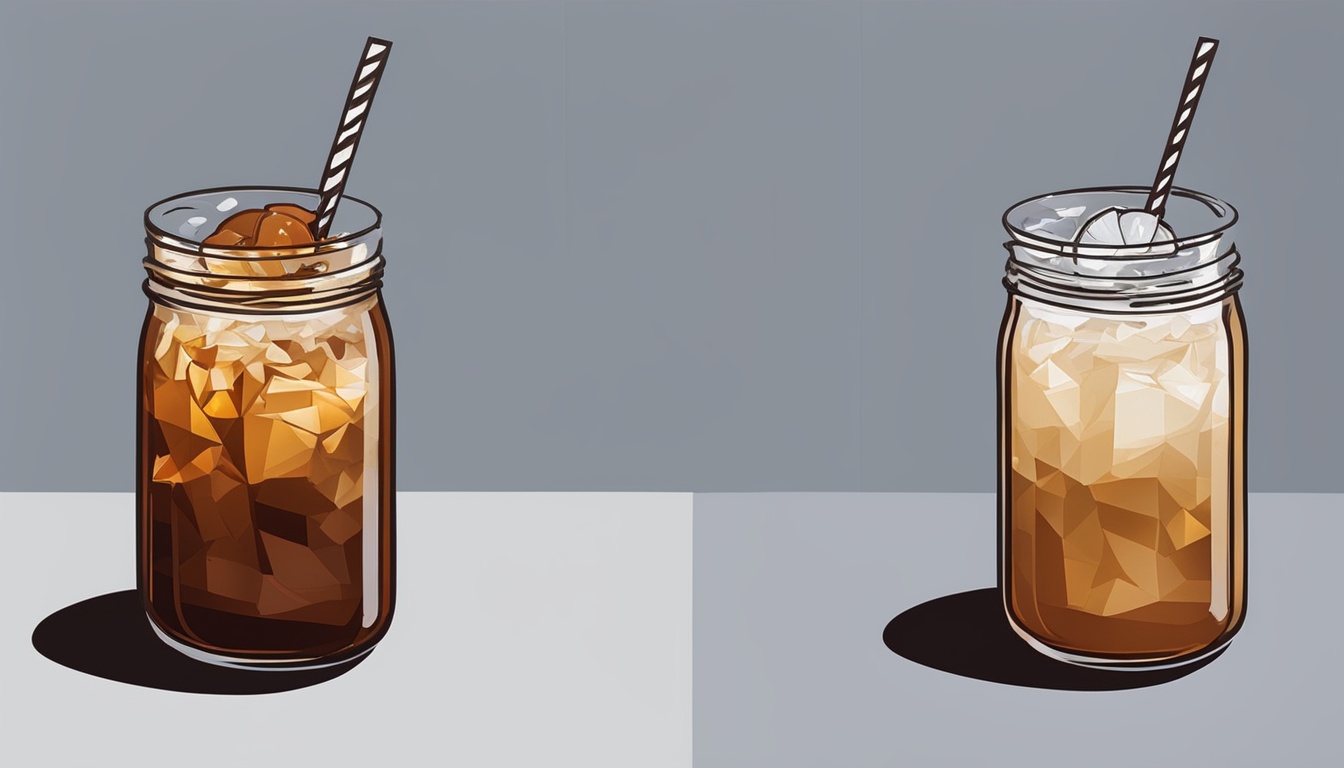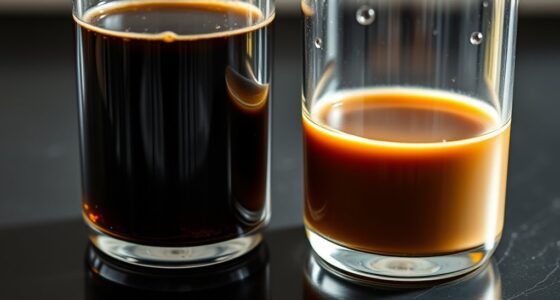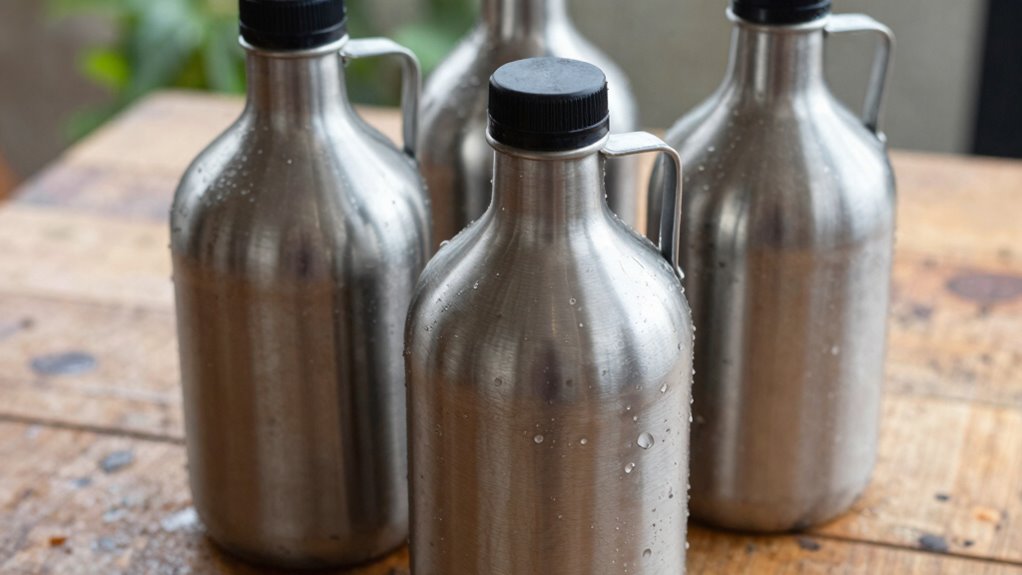

Growlers protect your cold brew from light, air, and oxidation, helping to keep it fresh longer and lock in delicate aromas and flavors. They create a tight seal that minimizes exposure to outside elements so your brew stays vibrant. However, once opened, oxidation begins quickly, and flavor decline continues over time. To keep enjoying peak flavor, proper cleaning and quick consumption are key. If you want to learn more about maximizing cold brew freshness, keep exploring these tips.

Get coffee and tea gear delivered free with Prime
- Fast, free delivery on millions of items
- Prime Video, Amazon Music and more included
- Member-only deals all year
Key Takeaways
- Growlers protect cold brew from light, air, and oxidation, helping preserve freshness and delicate flavors.
- They do not prevent spoilage indefinitely; cold brew should be consumed within 24-48 hours of opening.
- Proper cleaning and sealing are essential to prevent bacteria growth and maintain flavor quality.
- Growlers are suitable for short-term storage but not ideal for long-term preservation.
- Regular maintenance and immediate cleaning after use ensure sustained cold brew freshness.
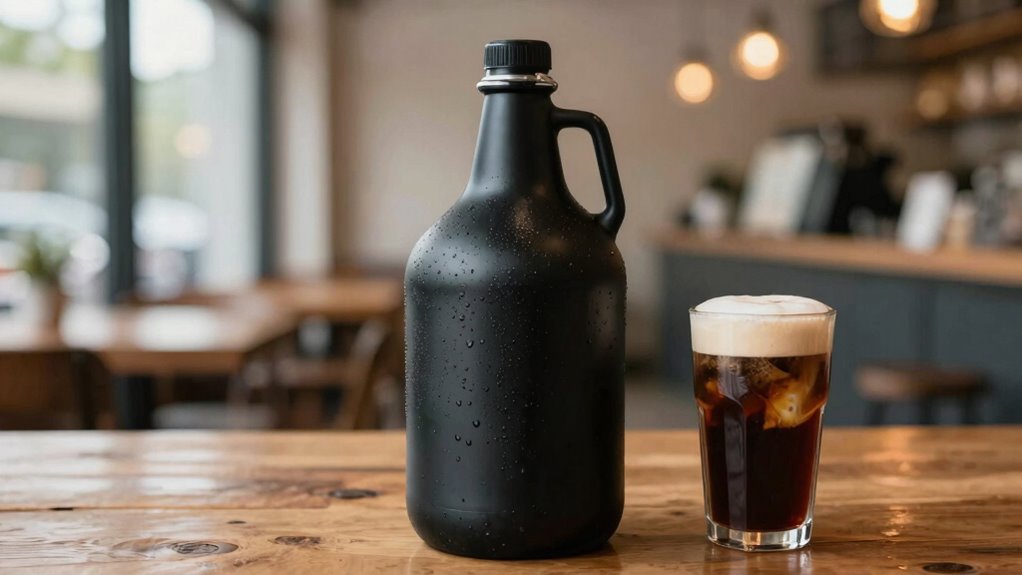
If you’re a cold brew enthusiast, investing in a growler can be a game-changer for storing and enjoying your favorite coffee at its freshest. Growlers are fantastic for cold brew storage because they keep your brew cool and shield it from exposure to light and air, which can degrade flavor and aroma over time. When you fill a growler properly, you lock in some of the coffee’s delicate notes and prevent oxidation, helping your cold brew stay fresh longer. To maximize these benefits, you need to pay attention to growler cleaning. Regularly cleaning your growler ensures that no residual oils, mold, or bacteria build up, which could spoil your brew or alter its taste. Use warm water and a brush to scrub the inside thoroughly, and consider a mild soap or specialized bottle cleaner. Rinsing well afterward is essential to prevent soap residues from affecting your next batch. Additionally, some enthusiasts recommend occasional deep cleaning with vinegar or a baking soda solution to eliminate stubborn odors or mineral deposits. Proper storage practices also help maintain your cold brew’s quality by minimizing exposure to factors that can accelerate flavor loss. Implementing biodiversity-friendly cleaning products can further support sustainable practices and reduce environmental impact.
However, while growlers protect your cold brew from light, air, and temperature fluctuations, they don’t make the brew last indefinitely. The moment you open the growler, oxygen enters, and the cold brew begins to oxidize, gradually diminishing its flavor profile. That’s why it’s best to consume the contents within a few days of filling the growler, ideally within 24 to 48 hours for peak freshness. Even with a tight-sealing lid, some air exchange can occur over time, especially if the seal isn’t perfect. So, don’t rely on a growler as a long-term storage solution—use it to enjoy your cold brew at its peak and then rinse and clean it thoroughly before refilling. Proper storage practices are essential to maintaining the quality of your cold brew over time.
It’s also worth noting that proper growler cleaning isn’t just about maintaining hygiene; it’s about preserving the quality of your cold brew. A dirty growler can harbor bacteria or mold, which could impact the taste or even pose health risks. So, make it a routine to clean your growler immediately after use, rather than letting residues sit. Use warm water and a brush designed for bottles, avoiding abrasive scrubbers that could scratch the glass or stainless steel. Dry it thoroughly before sealing and storing again. When you combine good cold brew storage practices with regular growler cleaning, you ensure each pour tastes just as fresh and vibrant as the first. Proper growler maintenance is essential to keep your cold brew tasting its best.
cold brew growler with leak-proof lid
As an affiliate, we earn on qualifying purchases.
As an affiliate, we earn on qualifying purchases.
Frequently Asked Questions
How Long Can Cold Brew Stay Fresh in a Growler?
You can typically keep cold brew fresh in a growler for about 2 to 4 days. After that, the shelf life decreases due to oxidation effects, which can cause the flavor to degrade and make it taste stale. To maximize freshness, keep the growler sealed tightly and stored in a cool, dark place. Drinking it sooner guarantees you enjoy the best flavor and aroma, avoiding the negative impact of oxidation.
Are Growlers Suitable for Carbonated Cold Brew?
Growlers aren’t ideal for carbonated cold brew because they struggle with carbonation retention. The sealing isn’t airtight enough to keep the bubbles in, leading to loss of fizz over time. If you want to keep your cold brew carbonated, look for specialized bottles with better sealing mechanisms designed for carbonation. Otherwise, your cold brew will go flat faster, and you’ll lose that invigorating, bubbly texture.
How Often Should I Clean My Growler?
Your growler needs cleaning after every use, or at least weekly if you’re storing cold brew for a while—this keeps it spotless and odor-free. Neglecting cleaning can turn it into a breeding ground for bacteria, creating a smell so strong, it’ll punch you in the nose. Regular cleaning frequency guarantees odor removal and keeps your cold brew tasting fresh. Use warm water and mild soap for best results.
Can Growlers Be Used for Hot Beverages?
You shouldn’t use growlers for hot beverages because they lack proper hot beverage insulation and thermal retention. Growlers are designed mainly for cold drinks like cold brew, so they won’t keep your hot beverages warm for long. If you want to enjoy hot drinks on the go, look for a thermos or insulated bottle specifically made for thermal retention. Using a growler for hot liquids could also lead to damage or lingering odors.
What Materials Are Best for Cold Brew Growlers?
Imagine you’re hauling your cold brew in a stainless steel growler on a hot day. Stainless steel is your best choice because of its material durability and insulation effectiveness. It keeps your brew cold longer, resists dents, and prevents flavor transfer. Plus, it’s easy to clean. So, for maintaining freshness and durability, stainless steel growlers are ideal, ensuring your cold brew stays crisp and flavorful until you’re ready to enjoy it.
Conclusion
Just like a trusty growler keeps your cold brew fresh, life’s simple tools often protect what matters most. I once saw a friend’s homemade brew spoil because of a loose seal—reminding me that even the best beans need proper care. Your growler shields your cold brew from oxygen, but it can’t guard against every challenge. Stay attentive, and enjoy every sip, knowing you’ve done your part to preserve the flavor and freshness.
Fall Picks
fall essentials
As an affiliate, we earn on qualifying purchases.