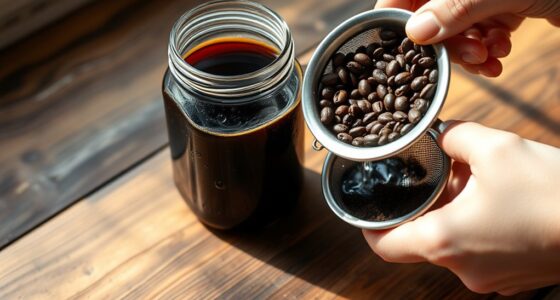
To maximize flavor in decaf cold brew without adding caffeine, use fresh, high-quality beans and a coarse grind. Steep for 12-24 hours at room temperature or in the fridge to develop rich, nuanced notes. Choose a gentle decaffeination method like the Swiss Water Process to preserve flavor. Adjust steeping time and water quality for your taste, and consider add-ins like vanilla or salt for depth. For expert tips, explore more about the perfect balance in your brew.
Key Takeaways
- Use high-quality, freshly roasted beans and a proper grind size to enhance flavor in decaf cold brew.
- Opt for longer steeping times (12-24 hours) to develop rich, complex flavors despite lower caffeine content.
- Choose decaffeination methods like Swiss Water Process that preserve natural flavor compounds and aroma.
- Incorporate flavor enhancers such as vanilla, a pinch of salt, or spices to deepen the taste profile.
- Ensure water quality and proper extraction techniques to maximize flavor without increasing caffeine levels.

Decaf cold brew has become a popular choice for coffee lovers who want to enjoy the rich flavor and smooth texture of cold brew without the caffeine boost. When making decaf cold brew, your goal is to maximize flavor extraction while reducing caffeine content effectively. This process requires understanding how flavor compounds are extracted from coffee beans and applying caffeine reduction techniques to achieve a satisfying, flavorful drink without the jitters or sleepless nights.
Flavor extraction in cold brew is influenced by several factors, including grind size, steeping time, and water temperature. To get the most out of your beans, you want a coarse grind that allows water to flow freely around the coffee grounds, promoting even extraction. Steeping for 12 to 24 hours at room temperature or in the fridge gives enough time for the coffee to develop its full flavor profile. Since cold water extracts flavors more slowly than hot water, patience is key; this slow process ensures you capture the nuanced notes of your beans, from fruity and floral to chocolatey and nutty.
When it comes to caffeine reduction techniques, your focus is on removing or neutralizing caffeine without sacrificing flavor. Decaffeination methods like Swiss Water Process, CO2 extraction, and direct solvent processes are popular because they selectively target caffeine molecules. The Swiss Water Process, for example, uses water and osmosis to extract caffeine while maintaining the beans’ original flavor compounds. This method is especially favored for its ability to preserve more of the beans’ natural qualities, giving you a richer, more authentic decaf cold brew experience.
In your preparation, you can also tweak variables to enhance flavor extraction while ensuring caffeine remains low. Using high-quality, freshly roasted beans will give your cold brew more vibrant flavors. Additionally, incorporating a longer steeping time can help draw out more aromatic oils and soluble compounds, compensating for the lower caffeine content. Some baristas recommend adding a small pinch of salt or a splash of vanilla extract to deepen the flavor profile, making up for any subtle dullness caused by caffeine removal. Exploring headphones like Bluetooth options or wired connectors can also improve your listening experience as you relax with your coffee, making your overall moment more enjoyable.
Ultimately, the secret to a great decaf cold brew lies in balancing these techniques. By carefully selecting your decaffeination process, paying attention to grind size, steeping duration, and water quality, you can craft a cold brew that’s rich in flavor yet low in caffeine. This way, you enjoy a smooth, flavorful drink that energizes your senses without the jitters, all while fully appreciating the complex notes that make cold brew so beloved.
Frequently Asked Questions
How Does Decaf Cold Brew Retain Its Rich Flavor?
Decaf cold brew retains its rich flavor through careful decaffeination methods like Swiss Water or CO2 extraction, which remove caffeine while maintaining the beans’ natural oils and flavors. Additionally, flavor preservation techniques such as cold brewing, using high-quality beans, and proper storage help sustain its robust taste. These methods ensure you enjoy a smooth, flavorful cold brew without the caffeine, delivering a satisfying coffee experience every time.
What Are the Best Beans for Decaf Cold Brew?
You should choose high-quality Arabica beans for decaf cold brew, as they offer better flavor preservation. Look for beans sourced from reputable farms with sustainable practices, ensuring freshness and quality. To maximize flavor, opt for decaf beans processed with gentle methods like Swiss Water or carbon dioxide extraction, which preserve the beans’ natural oils and taste. Proper storage also helps maintain the beans’ rich, complex flavors.
Does Decaf Cold Brew Contain Any Residual Caffeine?
Decaf cold brew typically contains minimal residual caffeine, usually less than 5 milligrams per serving, due to the decaffeination process. This process, which often uses water, solvents, or carbon dioxide, aims to remove most caffeine but can leave behind tiny caffeine residuals. If you’re highly sensitive, check with the producer for specific caffeine levels, but generally, decaf cold brew provides a coffee experience with very little caffeine.
How Long Can Decaf Cold Brew Be Stored?
You can store decaf cold brew for up to two weeks in the refrigerator. For the best shelf life, keep it in an airtight container to prevent it from absorbing other odors. Store tips include keeping it chilled and avoiding prolonged exposure to light or heat, which can degrade flavor. If it develops an off smell or appearance, it’s best to discard it to guarantee quality and safety.
Can Decaf Cold Brew Be Customized With Flavors?
Did you know that over 60% of coffee drinkers prefer flavored options? You can easily customize your decaf cold brew with flavor infusion by adding syrup options like vanilla, caramel, or hazelnut. This enhances your drink without affecting its caffeine content. Feel free to experiment with different combinations to find your perfect blend, making each sip uniquely yours and tailored to your taste preferences.
Conclusion
Now that you’ve mastered decaf cold brew, you can enjoy rich, smooth flavor without the caffeine buzz. Think of it as your secret treasure chest, hiding a gem of taste in every sip—like finding a vintage map leading to a hidden oasis in the desert. Whether you’re relaxing at home or sharing with friends, your perfect brew awaits. So go ahead, brew boldly, and savor every drop—your coffee adventure just got a whole lot cooler.