For cold brew, you should use a coarse grind, similar to chunky sea salt. This size allows water to flow slowly, extracting flavors evenly without overdoing it, which keeps your brew balanced and smooth. If your grind is too fine, it may lead to bitterness, while too coarse can make your brew weak. Getting this right guarantees a flavorful cold brew; keep going, and you’ll discover how to perfect your process.
Key Takeaways
- Coarse grind, similar to chunky sea salt, is ideal for cold brew to ensure slow, even extraction.
- Proper grind size prevents over-extraction, which can cause bitterness and muddled flavors.
- Uniform, consistent particles improve flavor clarity and result in a smoother, richer cold brew.
- Fine or powdered grinds increase extraction rate, risking a bitter, over-extracted brew.
- High-quality burr grinders help achieve uniform grind size, optimizing extraction and flavor balance.
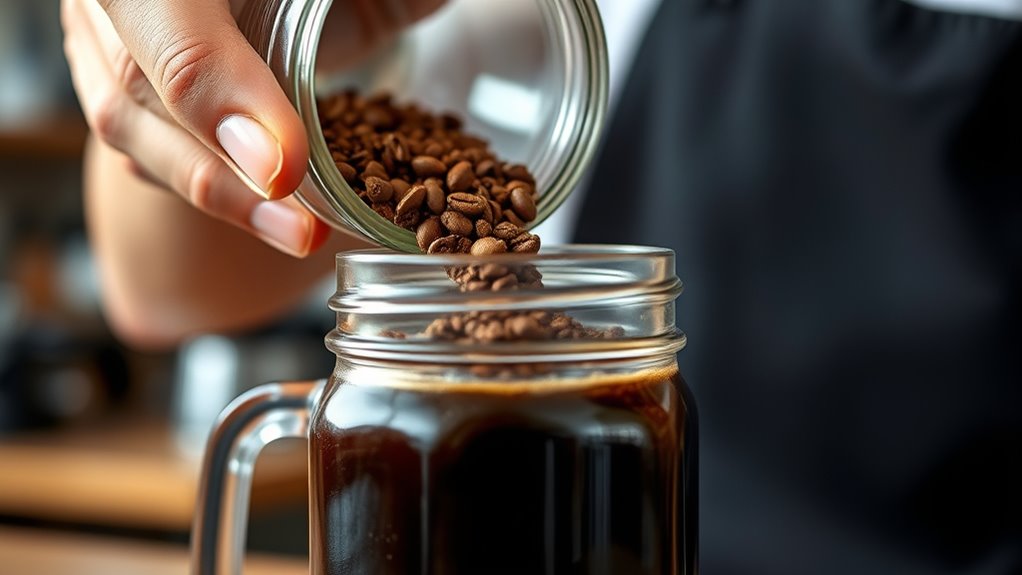
Have you ever wondered what grind size yields the best cold brew? The answer isn’t just about personal preference; it’s about how the grind size affects brew strength and grind consistency, two essential factors that determine the quality of your cold brew. When you start with the right grind, you’re setting yourself up for a smoother, more flavorful coffee experience. The key lies in understanding how different grind sizes influence extraction during the long cold brew process.
For cold brew, a coarse grind is generally recommended. Think of it like chunky sea salt—large, uneven pieces that allow water to flow through slowly yet evenly. This size creates the ideal conditions for extracting a rich, balanced flavor without overdoing it. If your grind is too fine, similar to powdered sugar, the extraction becomes too intense, leading to a brew that’s bitter or overly strong. Conversely, if it’s too coarse, like gravel, you might end up with a weak or under-extracted brew that lacks depth. The goal is to achieve a grind consistency that allows for an even extraction, which is why consistency in your grind size matters just as much as selecting the right size.
A coarse grind, like chunky sea salt, ensures even extraction and rich flavor in cold brew.
Brew strength is directly influenced by grind size because it controls how quickly or slowly water interacts with the coffee grounds. A consistent grind ensures uniform extraction, meaning every particle releases flavor at a similar rate. This prevents uneven flavors and bitterness, which can happen when some grounds are over-extracted while others are under-extracted. When you use a consistent grind, you’re more likely to get a smooth, well-rounded cold brew with the desired strength without the need for excessive brewing time or additives.
Additionally, a high-quality grinder can produce more uniform particles, making the extraction process more predictable and the flavor profile more refined. Furthermore, grind consistency impacts the overall brewing process. When your grinder produces uniform particles, you’ll notice a more predictable extraction time and a cleaner, more refined taste. Inconsistent particle sizes cause the water to extract certain flavors too quickly from smaller particles while leaving larger ones under-extracted. This imbalance can make your cold brew taste muddled or flat. Investing in a good burr grinder that produces a consistent coarse grind can make a big difference, ensuring each batch of cold brew is as delicious and balanced as possible.
Frequently Asked Questions
How Does Grind Size Affect Cold Brew Extraction Time?
Your grind size directly impacts cold brew extraction time; a coarser grind slows down extraction, resulting in a smoother, less intense brew. Conversely, a finer grind speeds up extraction, producing a stronger, more robust flavor. Adjusting the grind size helps you control brew strength and extraction efficiency. If you want a balanced cold brew, opt for a medium-coarse grind to find the sweet spot between brewing time and flavor.
Can I Use a Medium Grind for Cold Brew?
Yes, you can use a medium grind for cold brew. Imagine you’re brewing a batch and notice the extraction is too weak; a slightly coarser, consistent grind could enhance coffee solubility and extraction. Medium grind ensures grind consistency, which helps optimize extraction time and flavor. While fine grinds may over-extract, medium provides a balanced approach, making it a versatile choice for cold brew enthusiasts seeking smooth, flavorful results.
Does Grind Size Influence Cold Brew Flavor Intensity?
Yes, grind size influences cold brew flavor intensity. A coarser grind enhances flavor clarity and reduces bitterness, giving you a smoother, more balanced taste. Conversely, a finer grind can make the brew more intense but may introduce unwanted bitterness. By choosing the right grind size, you control how clean or robust your cold brew tastes, ensuring you get the flavor profile you prefer while managing bitterness effectively.
What’s the Ideal Grind Size for Quick Cold Brew Recipes?
For quick cold brew recipes, you should use a medium-coarse grind size. This allows water to flow through the coffee evenly, ensuring proper extraction during the blooming process. Consistent grind size is vital, so avoid uneven grounds that can lead to over- or under-extraction. A medium-coarse grind balances flavor and brew time, giving you a smooth, rich cold brew even in a shortened brewing period.
How Do I Adjust Grind Size for Different Cold Brew Methods?
Adjusting your grind size depends on your cold brew method and equipment. For finer grinds, favor faster, fuss-free French presses or immersion brewers, ensuring compatibility with your coffee bean quality. Coarser grinds suit slow, steady drip or cold drip setups, preventing over-extraction. By balancing bean quality and brewing gear, you fine-tune your grind size, fostering flavorful, flawless cold brews tailored to your taste and equipment’s capabilities.
Conclusion
So, now that you know the best grind size for cold brew, go ahead—embark on your caffeine quest. Just remember, using the wrong grind is like trying to make a gourmet meal with ketchup and hope. Don’t sabotage your brew with a coarse grind or drown it in fine dust. Get it right, or settle for mediocre coffee. Because, really, who wants to waste their precious beans on a failed cold brew experiment?