
The biggest mistakes that make your coffee beans go stale fast include storing them in poorly sealed containers or the original packaging, exposing them to light, heat, or moisture, and keeping them in warm or fluctuating temperatures. Avoid using plastic bags that don’t seal tightly or storing beans in the fridge or freezer for too long, as these can harm flavor. If you want to keep your coffee fresh longer, understanding these pitfalls is key—learn more to preserve that perfect cup.
Key Takeaways
- Using non-airtight containers exposes coffee to air, moisture, and odors, accelerating staling.
- Storing coffee in direct sunlight or transparent containers causes light-induced flavor deterioration.
- Keeping coffee in original packaging after opening allows air and light exposure, speeding up staling.
- Storing coffee in the refrigerator or freezer can cause condensation and flavor damage if not done properly.
- Handling coffee improperly, such as leaving it open or in warm, humid areas, shortens shelf life and flavor freshness.

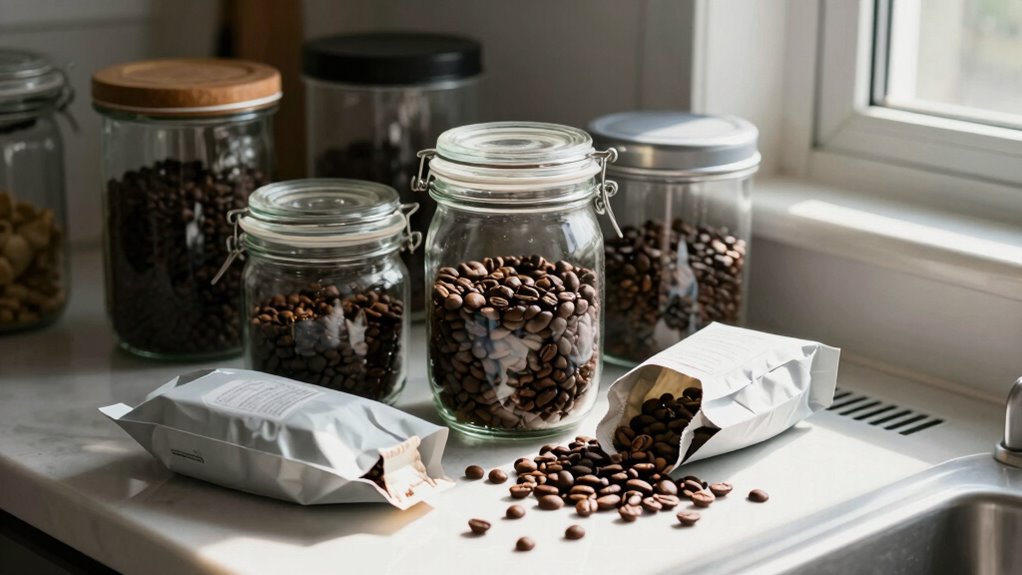
Storing your coffee improperly can quickly diminish its flavor and freshness. One of the most common mistakes people make is leaving their beans or grounds in containers that aren’t airtight. Coffee is highly porous, meaning it easily absorbs moisture, odors, and air, all of which accelerate staling. To keep your coffee fresh longer, you should transfer it into airtight containers. These containers form a tight seal that prevents air from sneaking in and oxidizing the beans, preserving their aroma and flavor. Avoid using flimsy plastic bags or containers that aren’t designed for storage because they can allow air and moisture to seep through, quickly ruining the coffee. Opt for high-quality, airtight containers made of opaque materials, as they block out light and help maintain the coffee’s integrity.
Sunlight exposure is another major factor that degrades coffee quality. When coffee is exposed to sunlight, the ultraviolet rays cause chemical changes that break down its delicate oils and aromatic compounds. This process accelerates the staling process and can lead to a flat, dull flavor. Many people store their coffee on countertops or near windows without realizing that the ambient light and heat contribute to its rapid deterioration. To avoid this, always keep your coffee in a dark, cool place, away from direct sunlight. An opaque, airtight container stored in a pantry, cupboard, or drawer is ideal. This not only keeps out light but also minimizes temperature fluctuations that can cause condensation inside the container, further spoiling your coffee. Additionally, proper storage can help extend the shelf life of your coffee by maintaining its optimal conditions.
Another mistake is leaving coffee in the original packaging after opening. While the packaging might seem convenient, it’s often not designed for long-term storage once opened. The bag may not be airtight, and exposure to air and light continues, leading to faster staling. Instead, transfer your coffee to a dedicated airtight container soon after opening. Keep the container sealed tightly after each use to prevent air from entering and moisture from condensing inside. Also, avoid storing coffee in the refrigerator or freezer for long periods, as temperature swings and moisture can damage the beans’ flavor. If you do choose to freeze coffee, do so in an airtight container, and only take out what you need, quickly returning the rest to the freezer.

Veken Coffee Canister with Window,Airtight Stainless Steel Pantry Container,Home Kitchen Food Storage Organizers for Ground,Beans,Espresso,Rice,Tea,Sugar,Cereal, Decor,Bar Accessories,Gifts,22OZ,Black
Gifts for Coffee Lovers This Christmas: This elegantly designed jar is a stylish and functional gift for coffee…
As an affiliate, we earn on qualifying purchases.
As an affiliate, we earn on qualifying purchases.
Frequently Asked Questions
How Long Can I Store Coffee Beans Before They Go Stale?
You can store coffee beans for about 2-4 weeks before they start going stale. To keep them fresh, store your beans in an airtight container away from light and heat, avoiding oxygen exposure. Remember, darker roast beans last slightly longer than light roasts. Grind size effects also matter—pre-ground coffee loses freshness faster, so grind just before brewing. Proper storage and mindful roasting choices help maintain the best flavor longer.
Does Freezing Coffee Beans Affect Their Flavor?
Freezing coffee beans can be effective if done correctly, as it helps preserve their flavor by slowing oxidation and staling. However, improper freezing effects—like moisture or temperature fluctuations—can harm the beans’ quality. To maximize flavor preservation, store beans in an airtight container and only freeze what you’ll use soon after. When you’re ready to enjoy them, let the beans thaw gradually to avoid flavor loss.
What Is the Best Container for Storing Coffee Beans?
Ever wondered what’s the best container for your coffee beans? You should use an air tight container with an opaque storage to keep beans fresh longer. Why let light and air speed up staling? These containers prevent exposure to moisture, oxygen, and light, which degrade flavor. Choose one that fits your beans snugly, so you preserve their aroma and taste. It’s the simplest way to enjoy fresh coffee every time.
Can Exposure to Sunlight Ruin Coffee Freshness?
Yes, exposure to sunlight can ruin your coffee’s freshness. Sunlight causes photodegradation effects, breaking down the oils and compounds that give coffee its flavor. When your beans are left in direct sunlight, these degradation processes accelerate, leading to stale, flat-tasting coffee. To preserve flavor, store your beans in an opaque container away from sunlight, ensuring they stay fresh and aromatic longer.
How Do I Tell if My Coffee Beans Are Stale?
You can tell your coffee beans are stale if the coffee aroma has faded markedly, and the beans’ color looks dull or faded compared to when fresh. When you grind the beans, if there’s little to no aroma, it’s a clear sign they’ve lost their freshness. Stale beans often taste flat or rancid, so trust your senses—if the aroma and color aren’t vibrant, it’s time to replace them.
Veken Coffee Canister with Window,Airtight Stainless Steel Pantry Container,Home Kitchen Food Storage Organizers for Ground,Beans,Espresso,Rice,Tea,Sugar,Cereal, Decor,Bar Accessories,Gifts,22OZ,Black
Gifts for Coffee Lovers This Christmas: This elegantly designed jar is a stylish and functional gift for coffee…
As an affiliate, we earn on qualifying purchases.
As an affiliate, we earn on qualifying purchases.
Conclusion
So, next time you leave your coffee beans out in the sunlight or store them in the fridge, remember you’re basically inviting stale, flavorless disappointment. It’s almost impressive how easy it is to sabotage your brew’s freshness—like a secret talent for ruining a good thing. But hey, who needs rich, vibrant coffee when you can enjoy that dull, flat taste? Keep those beans airtight and your mornings lively—because no one wants a stale wake-up call.

Veken Coffee Canister with Window, Airtight Stainless Steel Kitchen Food Storage Container with Lids, Date Tracker and Scoop for Grounds Coffee, Beans, Tea, Flour, Cereal, Sugar Jars, 16OZ, Black
Freshness is Everything:Our coffee canister helps maintain the freshness of your coffee beans by keeping air out and…
As an affiliate, we earn on qualifying purchases.
As an affiliate, we earn on qualifying purchases.

Automatic Vacuum Coffee Canister, 1.3L Coffee Container with Smart Pressure Sensor,LED Display,Window,Scoop Rechargeable Airtight Electric Coffee Bean Storage for Home Kitchen Ground Food Tea Storage
𝐀𝐮𝐭𝐨 𝐕𝐚𝐜𝐮𝐮𝐦 𝐄𝐥𝐞𝐜𝐭𝐫𝐢𝐜 𝐂𝐨𝐟𝐟𝐞𝐞 𝐂𝐚𝐧𝐢𝐬𝐭𝐞𝐫: The Vacuum Coffee Container is designed to perfectly keep coffee fresh. Long press…
As an affiliate, we earn on qualifying purchases.
As an affiliate, we earn on qualifying purchases.