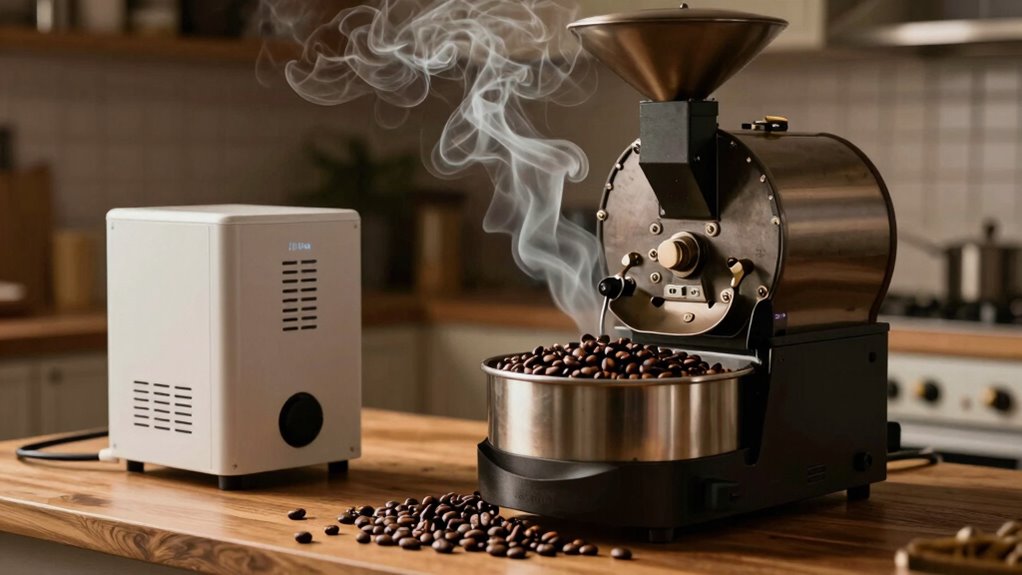
To effectively suppress smoke during home roasting, combine strong ventilation with quality air filtration. Use exhaust fans or range hoods vented outside to actively remove smoke-laden air, and add HEPA filters to trap residual particles. Relying on just filters or small purifiers won’t cut it during heavy roasting. Achieving a cleaner, safer atmosphere takes both strategies working together. Keep exploring how to optimize your setup for the best results.
Key Takeaways
- Combining high-quality air filtration with effective ventilation is essential for controlling smoke during home roasting.
- Exhaust systems vented outside prevent indoor smoke buildup, making active ventilation more effective.
- Portable air purifiers alone often can’t handle heavy smoke; they must be paired with proper ventilation.
- Proper placement of range hoods above roasting stations significantly improves smoke removal.
- Relying solely on air filters without ventilation is wishful thinking; a layered approach ensures better smoke suppression.
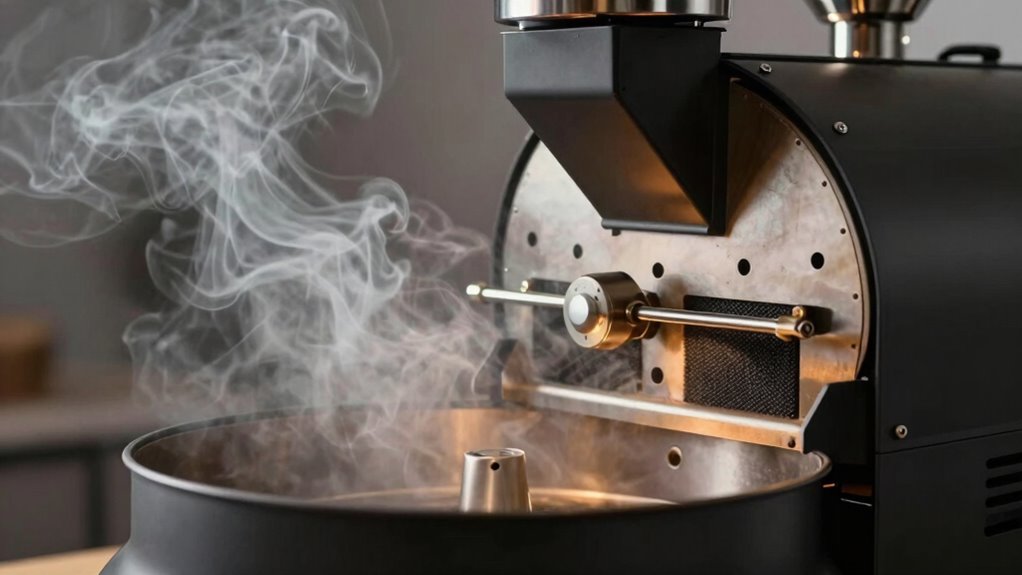
If you’re passionate about home roasting, you’ve probably noticed how smoke can quickly become a problem. Not only does it fill your kitchen with a strong aroma, but it can also trigger smoke alarms and leave behind stubborn stains. To manage this, understanding effective smoke suppression methods is essential. One of the most vital aspects is implementing proper air filtration and ventilation solutions. These tools work together to remove smoke particles from the air, making your roasting experience safer and more pleasant.
Air filtration systems are designed to trap smoke particles before they disperse throughout your space. HEPA filters are particularly effective at capturing fine particulate matter, which is the primary component of smoke. Using a high-quality air purifier with a HEPA filter near your roasting setup can considerably reduce airborne smoke. However, it’s important to remember that air filtration alone isn’t enough. Smoke particles are often generated faster than filters can capture them, especially during prolonged roasting sessions. That’s where ventilation solutions come into play.
Air filters trap smoke but need ventilation to keep air fresh and clear.
Proper ventilation involves actively removing smoke-laden air from your kitchen and replacing it with fresh air. Ventilation solutions range from simple exhaust fans to more sophisticated ducted systems. A powerful range hood or exhaust fan installed directly above your roasting station can make a noticeable difference. It pulls smoke out of the air before it has a chance to spread. For best results, ensure that your ventilation system vents directly outside, preventing smoke from recirculating indoors. If outdoor venting isn’t feasible, consider using a combination of air filtration and localized exhaust to contain smoke as much as possible.
Many home roasters underestimate the importance of airflow. Without adequate ventilation, smoke can linger, settling on surfaces and creating unpleasant odors. Even the best air filters will struggle if the airflow isn’t sufficient. Combining an efficient ventilation system with air filtration creates a practical, layered approach. This setup ensures that smoke is both actively expelled and filtered, reducing its presence in your home. Remember, the key isn’t just having one solution but integrating multiple strategies for excellent results.
Wishful thinking suggests that a small, portable air purifier alone can handle all smoke issues. While helpful, a purifier without proper ventilation isn’t enough during intense roasting sessions. Smoke suppression requires a proactive approach—invest in a robust ventilation system alongside quality air filtration. This dual approach not only improves air quality but also preserves your kitchen’s cleanliness and your peace of mind. Understanding effective smoke suppression methods is crucial to creating a comfortable roasting environment. With the right air filtration and ventilation solutions, you can enjoy home roasting without the smoke taking over your space.
Frequently Asked Questions
How Effective Are Commercial Smoke Suppression Systems for Home Use?
Commercial smoke suppression systems can be quite effective for home use, especially when they undergo effectiveness testing before installation. These systems are designed to capture and reduce smoke emissions, but their success depends on proper setup and ventilation. You’ll find that high-quality systems often outperform DIY solutions, providing a noticeable reduction in smoke. However, keep in mind that no system completely eliminates smoke, so combining suppression with good ventilation is your best bet.
Can Ventilation Alone Eliminate Smoke Completely During Roasting?
Ventilation alone can’t completely eliminate smoke during roasting, leaving you wondering if fresh air is enough. While good airflow helps improve air quality and reduces smoke odors, it often falls short of fully clearing stubborn smoke. You might notice lingering smells and reduced air clarity. To truly protect your space, combining ventilation with other suppression methods is essential—relying solely on air movement isn’t enough for complete smoke control.
Are DIY Smoke Suppression Methods Safe and Reliable?
DIY smoke suppression methods can be safe and reliable if you prioritize DIY safety and choose durable materials. You should carefully research proper techniques and use sturdy, heat-resistant components to prevent accidents. While homemade solutions may help reduce smoke, they aren’t always as effective as commercial options. Always test your setup thoroughly, monitor for safety issues, and avoid shortcuts to guarantee your roasting environment stays safe and smoke levels stay manageable.
What Are the Long-Term Health Impacts of Smoke Exposure From Home Roasting?
Think of your lungs as delicate filters catching every puff of smoke; long-term exposure from home roasting can cause damage. You might unknowingly increase carcinogen exposure, risking lung health over time. Continuous inhalation can lead to irritation, inflammation, and even more serious respiratory issues. Protect yourself by ensuring proper ventilation and smoke suppression, because your lungs deserve more than just hope—they need active care to stay healthy in the long run.
How Often Should Smoke Filters or Suppression Systems Be Maintained?
You should check your smoke filters and suppression systems regularly, ideally every 1-3 months. Replace filters as needed based on usage and visible buildup. Also, guarantee system calibration is performed annually to maintain efficiency. Proper maintenance prevents smoke buildup, reduces health risks, and keeps your home roasting safe. Consistent upkeep, including filter replacement and calibration, ensures your smoke suppression system works effectively and lasts longer.
Conclusion
When it comes to smoke suppression in home roasters, don’t put all your eggs in one basket. While some methods are more effective than others, it’s clear that combining techniques offers the best shot at keeping smoke at bay. Remember, every tool has its limitations, so stay vigilant and adapt as needed. In the end, it’s better to be safe than sorry—don’t let smoke cloud your coffee dreams.