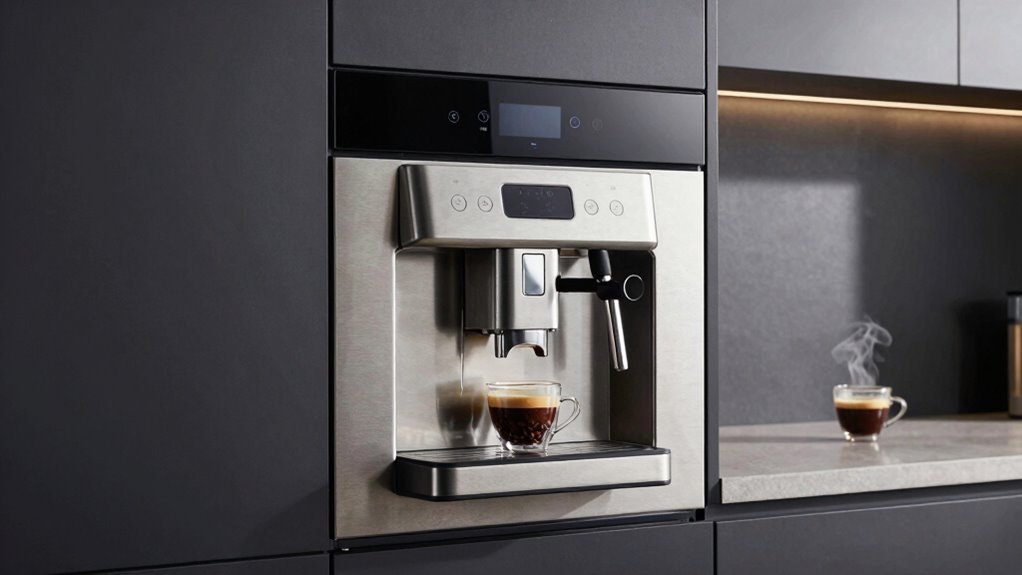
Built-in grinder coffee makers shine when they offer fresh, customizable brews and the convenience of grinding and brewing in one device. They work best when you select high-quality beans and maintain proper calibration, ensuring consistent grind size for great flavor. However, they can fall short if the grind isn’t uniform or if maintenance is neglected, leading to bitter or weak coffee. Keep an eye on these factors to get the most out of your machine and explore more insights ahead.
Key Takeaways
- They shine when offering fresh, customizable grounds that enhance flavor and aroma with convenience.
- They don’t shine if the grinder produces uneven grounds or requires frequent calibration and maintenance.
- They excel in delivering consistent grind size, improving extraction and overall coffee quality.
- They fall short when built-in grinders are of low quality or poorly maintained, affecting durability and performance.
- They shine in user convenience and brew personalization but may underperform if calibration and cleaning are neglected.
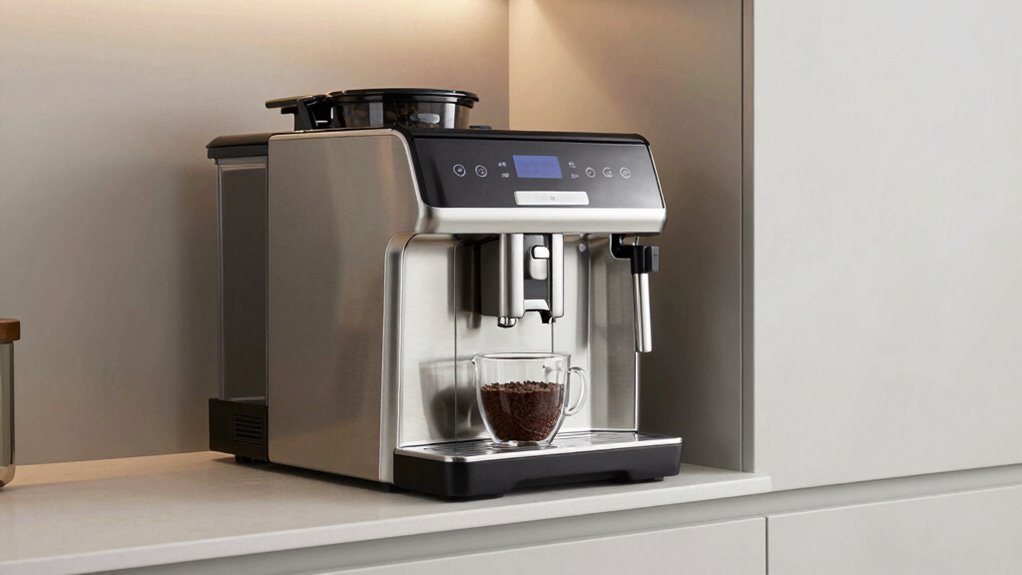
A built-in grinder coffee maker offers the ultimate convenience for coffee enthusiasts who want fresh grounds with every brew. When you choose to incorporate a grinder directly into your machine, you gain control over the coffee bean selection and grind consistency, key factors that influence the flavor and quality of your coffee. Selecting the right beans is essential; high-quality, fresh coffee beans provide more vibrant flavors, while the grind consistency ensures each cup is balanced and aromatic. With a built-in grinder, you can customize the grind size—whether coarse for French press or fine for espresso—allowing you to tailor your brew to your preferences. This flexibility ensures your coffee is never over- or under-extracted, leading to a richer, more satisfying experience. Additionally, material selection plays a crucial role in the durability and performance of your grinder, so choosing quality components can extend its lifespan. However, the benefits of a built-in grinder aren’t without their caveats. One common challenge is maintaining consistent grind size. Even the most advanced grinders can sometimes produce uneven grounds, which can result in a brew that’s either too bitter or weak. If your grinder isn’t calibrated correctly or if you choose a lower-quality machine, you might find that the grind varies from batch to batch. This inconsistency can diminish the flavor profile you’re aiming for, especially if you enjoy brewing different types of coffee. To maximize the benefits, you should regularly clean and calibrate your grinder, ensuring it maintains ideal grind consistency. When it performs well, you’ll notice a marked difference in the aroma, taste, and overall quality of your coffee.
Frequently Asked Questions
How Often Should I Clean the Grinder?
You should clean your built-in grinder every one to two weeks, depending on your usage. Regular maintenance tips include removing coffee grounds and wiping down parts to prevent buildup. Frequent cleaning guarantees your coffee tastes fresh and your machine runs smoothly. If you brew daily, consider more frequent cleaning. Following proper cleaning frequency and maintenance tips helps extend your grinder’s lifespan and keeps your coffee flavorful and consistent.
Can I Use Pre-Ground Coffee With These Machines?
Yes, you can use pre-ground coffee with built-in grinder coffee makers, but your options for grinding customization will be limited. Pre-ground compatibility depends on your machine’s design; some models allow bypassing the grinder, while others don’t. Keep in mind, using pre-ground coffee may reduce freshness and flavor, so for the best experience, it’s ideal to grind beans yourself to customize the grind size and aroma.
Do Built-In Grinders Affect Brewing Temperature?
Imagine you’re savoring your morning brew, wondering if your built-in grinder affects brewing temperature. It typically doesn’t, but inconsistent grinding can disrupt temperature stability, impacting flavor preservation. For example, uneven grounds might cause some beans to overheat, degrading aroma and taste. Proper grinding consistency ensures ideal extraction without raising the machine’s temperature, so you get a rich, flavorful cup every time.
Are Built-In Grinder Coffee Makers Energy-Efficient?
Built-in grinder coffee makers are generally energy-efficient because they optimize power consumption during brewing and grinding. You’ll save energy with their smart features, like automatic shut-off and efficient motors, which reduce unnecessary power use. These machines can help you achieve power savings over time, especially if you use them regularly. Keep in mind that their overall energy efficiency depends on the model and how you operate it, but they’re typically a smart choice for conserving energy.
What Is the Average Lifespan of These Machines?
You can expect your built-in grinder coffee maker to last around 5 to 10 years, depending on machine durability and maintenance frequency. Regular cleaning and descaling help extend its lifespan, while neglecting maintenance can lead to early breakdowns. Investing in quality models and following manufacturer guidelines guarantees you get the most out of your machine, making it a reliable part of your daily routine for years to come.
Conclusion
So, when you choose a built-in grinder coffee maker, you’re embracing ease and excellence — but be aware of the pitfalls too. With the right model, you’ll enjoy fresh, flavorful mornings that motivate and motivate. However, if you ignore maintenance or opt for the wrong design, you could face frustration and fuss. Make your move mindfully, and let your mornings melt into magnificent moments of mastery and memorable coffee. Your perfect brew awaits—seize it!