
If your grinder’s burrs are worn, you might notice inconsistent grinds even after adjusting the settings, leading to uneven extraction and dull flavors. You may feel the grind is rough or uneven, and flavor clarity declines over time. Burr wear causes particles to vary, impacting aroma and taste. Regular maintenance helps, but if tweaking no longer improves results, it’s probably time for replacement. Keep going, and you’ll discover how to catch those subtle signs early.
Key Takeaways
- Inconsistent grind size despite adjustments indicates burr wear affecting particle uniformity.
- A decline in coffee flavor clarity and aroma suggests burrs are dull or misaligned.
- Noticeable uneven particles or over/under-extraction points to worn burrs impacting extraction quality.
- Persistent need for calibration or inconsistent brewing results signal burr deterioration.
- Visual inspection revealing dull, misaligned, or chipped burrs confirms they are compromising coffee quality.
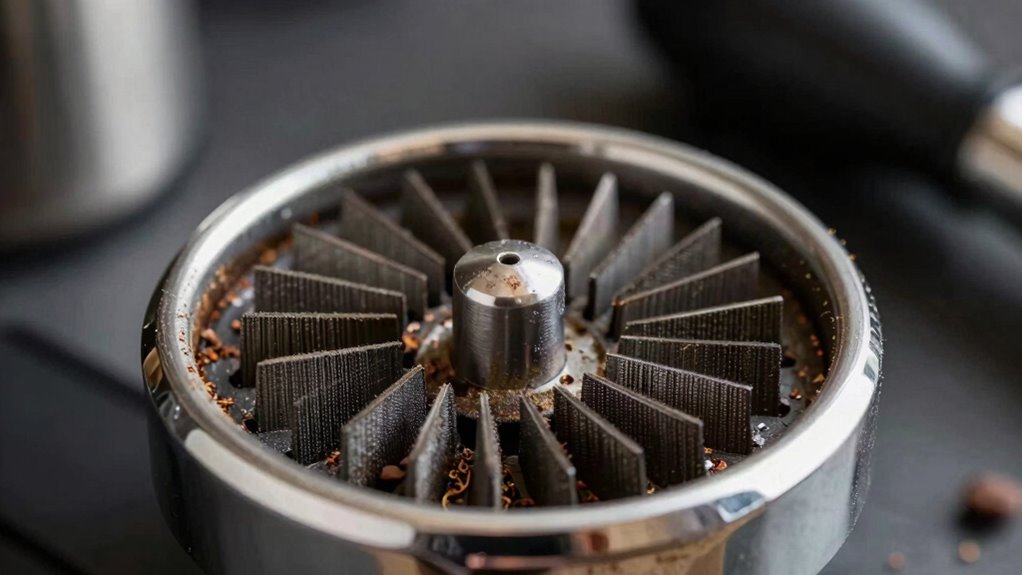
Have you ever wondered why burrs cling stubbornly to your clothing or fur? The same principle applies when dealing with your coffee grinder’s burrs. Over time, these burrs experience wear, which can silently compromise your coffee’s flavor. Recognizing the signs of burr wear starts with understanding burr calibration and grind consistency. Proper burr calibration ensures your grinder produces uniform particle sizes, which is essential for a balanced extraction. When burrs wear out, they lose their ability to produce a consistent grind, leading to uneven particles that can cause over-extraction or under-extraction. This inconsistency directly impacts the flavor and aroma of your coffee, making it taste dull or off.
Burr wear affects grind consistency, harming your coffee’s flavor and aroma over time.
As burrs wear down, you might notice that your grinder no longer produces the same uniformity, even after adjusting the grind setting. This is a clear sign that your burrs are no longer aligned properly or have become too dull to cut the beans evenly. The grind will start to feel inconsistent, with some particles being too fine and others too coarse, which disrupts your brewing process. You might also find yourself constantly tweaking the grind setting without achieving the desired extraction, wasting time and coffee beans. That’s your cue to check the burr calibration—if it’s off, the burrs aren’t aligned as they should be, and the grind consistency suffers. Additionally, burr material fatigue can cause the burrs to become less effective over time, further indicating the need for inspection or replacement.
Another indicator of burr wear is a noticeable decline in flavor clarity. When the burrs aren’t cutting properly, the coffee beans aren’t ground uniformly, which means extraction becomes uneven. This results in a muddled taste, with certain flavors overpowered or lost entirely. If you’ve been using your grinder regularly and suddenly notice your coffee tasting flat or less vibrant, it’s time to inspect the burrs. Regular maintenance, including calibration and cleaning, can extend their lifespan, but eventually, wear is unavoidable.
To maintain grind consistency and peak flavor, pay attention to how your grinder performs over time. If adjusting the burr calibration doesn’t restore the uniform grind, or if the grind feels inconsistent despite your efforts, replacing the burrs might be necessary. Remember, a well-calibrated grinder with sharp burrs produces the best results, enhancing the natural flavors and aroma of your coffee. Ignoring signs of burr wear can lead to a gradual decline in coffee quality, turning a routine morning ritual into a frustrating experience. Staying vigilant about burr calibration and grind consistency is key to ensuring your coffee remains delicious and your grinder lasts longer.
Frequently Asked Questions
How Often Should I Replace My Grinder’s Burrs?
You should replace your grinder’s burrs every 500 to 1000 pounds of coffee, depending on burr material and maintenance frequency. Harder materials like ceramic last longer, but softer metals may need more frequent changes. Regular maintenance, including cleaning and calibrating, helps extend their lifespan. Keep an eye on grind consistency and noise levels—if your coffee tastes off or it’s noisier, it’s time for new burrs.
Can Burr Wear Affect Espresso Extraction Quality?
Think of your grinder as a musician hitting the right notes; burr wear disrupts that harmony, affecting grind consistency. As burrs dull, your espresso’s extraction quality suffers, leading to flavor deterioration. You might notice uneven grounds or over-extraction, which dulls the vibrant flavors you seek. Regularly checking and replacing worn burrs ensures your grinder stays in tune, delivering ideal grind consistency and preserving the rich, nuanced taste of your espresso.
What Are Signs of Uneven Grind Caused by Burr Wear?
You’ll notice uneven grind caused by burr wear through inconsistent grind size, leading to unpredictable extraction. Signs include a wider range of particle sizes, uneven espresso shots, or channelling. Check burr alignment regularly, as misalignment worsens uneven grind. When you see a decline in grind consistency, it’s time to inspect and replace worn burrs to maintain ideal flavor and extraction quality.
Does Burr Wear Impact Coffee Flavor Over Time?
Burr wear definitely impacts your coffee flavor over time because worn burr material causes inconsistent grinds, leading to uneven extraction. As your grinder calibration drifts, the flavor becomes dull or bitter, and the original aroma diminishes. You might notice stale or off-flavors developing, which is a clear sign that your burrs need replacing. Regularly checking your burrs and maintaining proper calibration guarantees your coffee stays fresh and flavorful.
Are There Specific Grinders More Resistant to Burr Wear?
Yes, some grinders are more resistant to burr wear. Look for models with durable materials like ceramic or hardened steel burrs, which resist wear longer. Regular maintenance, like cleaning and adjusting the grind settings, also helps prevent unnecessary wear. Choosing a grinder with high-quality materials and committing to consistent maintenance can extend its lifespan, ensuring your coffee stays flavorful and your grinder remains reliable over time.
Conclusion
Don’t disregard the dulling dance of your grinder’s burrs. Regular checks and careful cleaning can catch cracks before coffee quality crashes. By paying attention to subtle signs of wear, you prevent poor pours and preserve the perfect profile. Keep your grinder’s grip on greatness, and your coffee will consistently charm with clarity. Remember, a mindful maintenance routine means more magnificent mornings, richer roasts, and less wasted wisdom. Stay vigilant, and your coffee game will stay strong.