
To dial in espresso for cappuccinos, focus on balancing yield and strength by adjusting grind size and extraction time. A tighter grind and shorter shot (around 1 ounce) create a strong, concentrated espresso that forms the perfect base. Longer shots dilute flavor but increase yield, while shorter shots boost strength. Consistently tweaking these variables helps you find the ideal balance. Keep exploring these techniques to craft the perfect cappuccino every time.
Key Takeaways
- Adjust grind size: finer for stronger, more concentrated espresso; coarser for lighter yield and milder flavor.
- Control extraction time: shorter shots increase strength; longer shots raise yield but may dilute flavor.
- Monitor yield: aim for 1 to 1.5 ounces to balance richness and intensity for cappuccinos.
- Consistently tamp and dose coffee to ensure uniform extraction and predictable strength.
- Experiment with shot duration and grind to find your ideal balance between espresso strength and volume.
Have you ever wondered what makes a perfect cappuccino? It all starts with dialing in the right espresso shot, which depends on choosing the proper coffee grind and mastering milk frothing. When you’re aiming for that ideal balance, understanding how these elements influence yield and strength is vital. The coffee grind plays an essential role because it determines how quickly water extracts flavors during brewing. If your grind is too coarse, the water will pass through too quickly, resulting in a weak shot. Conversely, a grind that’s too fine can clog the espresso machine and produce an overly bitter or over-extracted shot. Finding that sweet spot ensures consistent extraction, giving you the right strength and flavor profile for your cappuccino.
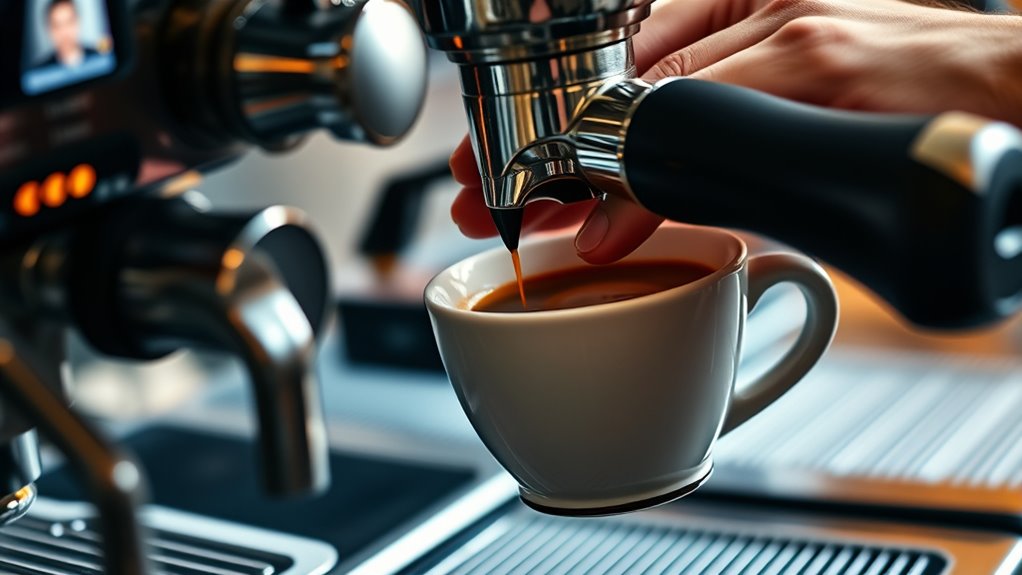
Once you’ve selected your coffee grind, you can start brewing. The yield refers to the amount of espresso you extract from your coffee grounds, and it’s key to balancing the strength of your drink. Typically, a standard shot uses about 7-9 grams of coffee, yielding roughly 1 to 1.5 ounces of espresso. Adjusting the grind size and tamping pressure will influence this yield, so experiment until you get a shot that’s rich and flavorful without being overly intense or too weak. Keep in mind that a longer extraction might increase the yield but can dilute the strength, making your cappuccino less robust. On the other hand, a shorter shot will be more concentrated and stronger, offering a bold base for your milk.
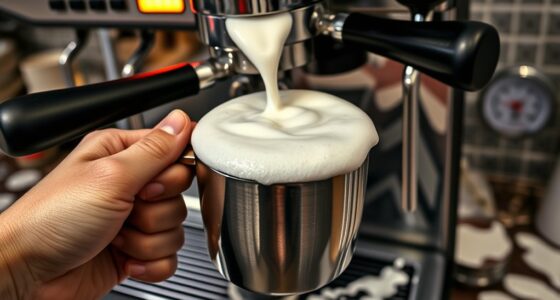
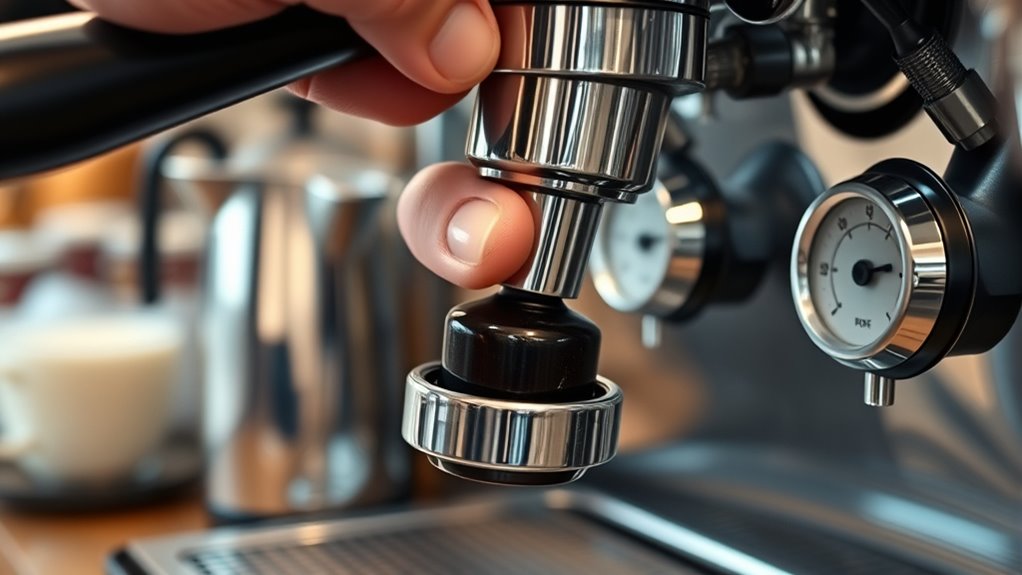
Speaking of milk, milk frothing is the next vital step. The quality of your milk froth impacts the overall texture and mouthfeel of your cappuccino. To achieve that velvety microfoam, you need to steam milk to the right temperature—usually around 140-150°F—while introducing air into the milk with controlled, gentle movements. Proper milk frothing transforms cold, liquid milk into a silky foam that seamlessly blends with the espresso. It’s not just about creating volume; it’s about developing a smooth, glossy texture that enhances the drink’s flavor and presentation. When your milk is properly frothed, it becomes easier to pour and swirl, creating that classic layered look of a well-made cappuccino. Additionally, regularly inspecting your espresso machine’s parts, such as the portafilter and filters, helps maintain optimal brewing conditions to achieve consistent results.
Ultimately, dialing in the right espresso strength and yield hinges on your choice of coffee grind and your milk frothing technique. Experiment with grind sizes to find the perfect extraction, and practice your milk steaming until you consistently produce luscious microfoam. When these elements come together, you’ll craft a cappuccino that’s perfectly balanced—rich, flavorful, and irresistibly smooth.

Mini Manual Coffee Grinder with 40 Adjustable Settings, Portable Hand Coffee Bean Mill with 30g Capacity, Conical Burr Coffee Grinder with Crank for Travel, Camping, Office, Espresso, Pour Over, etc
40 EXTERNAL ADJUSTABLE GRIND SETTINGS – Unlike traditional grinders with internal adjustments, our manual coffee grinder offers 40…
As an affiliate, we earn on qualifying purchases.
As an affiliate, we earn on qualifying purchases.
Frequently Asked Questions
What Is the Ideal Espresso Shot Volume for a Perfect Cappuccino?
You should aim for an espresso shot volume of about 1 to 1.5 ounces for a perfect cappuccino. This provides a strong enough base to create beautiful coffee art and balance the milk frothing. When you dial in your shot, guarantee it’s neither too weak nor too concentrated, so the milk’s silkiness complements the espresso. Consistent shot volume helps achieve that ideal harmony in flavor and presentation.
How Does Grind Size Affect Espresso Strength and Flavor?
Think of your grind size as the key to opening the treasure chest of flavor. When you use a consistent grind, you guarantee even flavor extraction, making your espresso balanced and rich. A fine grind acts like a tight lock, intensifying strength and boldness, while a coarse grind opens the vault for a lighter, more delicate taste. Adjusting grind size lets you craft your perfect espresso, full of depth and character.
Can Different Beans Alter the Optimal Espresso Yield for Cappuccinos?
Yes, different beans can change the ideal espresso yield for cappuccinos. You should consider bean origin and roast level, as they influence extraction and flavor. For example, a light roast from Central America might need a slightly higher yield to develop its bright notes, while a dark roast from Africa could require a shorter shot to avoid bitterness. Adjust your yield based on these factors for the best cappuccino experience.
What Brewing Pressure Produces the Best Espresso for Cappuccinos?
You should aim for a brewing pressure of around 9 bars to produce the best espresso for cappuccinos. Maintaining pressure consistency guarantees even extraction, which enhances flavor and crema. Focus on timing extraction carefully; typically, it should last about 25-30 seconds. This balance helps you achieve a rich, smooth espresso that complements your milk froth perfectly, resulting in a well-rounded cappuccino.
How Does Temperature Influence Espresso Extraction and Cappuccino Quality?
Ever wondered how water temperature shapes your cappuccino? It’s vital because water that’s too hot or cold can alter extraction, leading to inconsistent flavors. When you maintain ideal water temperature, you guarantee extraction consistency, revealing the espresso’s full richness and smoothness. This balance enhances the espresso’s body and flavor, giving your cappuccino that perfect harmony. Keep the temperature steady, and you’ll craft a consistently delicious cup every time.

SAIAOKJ Shot Glasses Measuring Cup Set 2PACK Espresso Shot Glasses Liquid Heavy Glass 26-Incremental Measurement 1 OZ, 2 TBS, 6 TSP, 30 ML Kitchen Tools (Red)
2 PACK MEASURING CUPS: You will get 2 piece set of measuring shot glass with printed red scale…
As an affiliate, we earn on qualifying purchases.
As an affiliate, we earn on qualifying purchases.
Conclusion
Mastering your espresso dialing guarantees every cappuccino hits just right. Imagine waking up to a perfectly balanced drink, its rich flavor brightening your morning. For instance, a barista adjusted their yield and strength, transforming a mediocre cup into a customer favorite. With practice, you’ll craft consistently delicious cappuccinos that delight every time. Keep experimenting, trust your taste buds, and watch your skills elevate, turning simple mornings into memorable moments.

SIMPLETASTE Milk Frother, 4-in-1 Electric Milk Frother and Steamer, Automatic Warm and Cold Foam Maker and Milk Warmer for Latte, Cappuccinos, Dark Blue
4-in-1 Multifunctional: Customize your favorite café-style drinks at home with this versatile milk frother. Choose from warm dense…
As an affiliate, we earn on qualifying purchases.
As an affiliate, we earn on qualifying purchases.

Electactic Espresso Machine with Grinder, 15 Bar Expresso Coffee Machines with Milk Frother Steam Wand, Professional Espresso Maker with Removable Water Tank, Cappuccino & Latte Machine for Home
Barista-Quality Coffee at Home – Enjoy barista-level coffee with our espresso machine, featuring a built-in grinder, a 15-BAR…
As an affiliate, we earn on qualifying purchases.
As an affiliate, we earn on qualifying purchases.