

When you order a cappuccino in Italy, you’ll find a craft-focused drink emphasizing quality, balanced flavor, and tradition, usually enjoyed in small cups in the morning. Abroad, the same name often means a visually striking beverage, with colorful toppings and latte art, sometimes prioritizing appearance over taste. These variations reflect cultural differences in ritual, presentation, and flavor. To understand how these styles contrast and what they reveal about coffee culture, explore further.

Get coffee and tea gear delivered free with Prime
- Fast, free delivery on millions of items
- Prime Video, Amazon Music and more included
- Member-only deals all year
Key Takeaways
- In Italy, cappuccino emphasizes tradition, quality espresso, and balanced flavor, typically enjoyed in the morning in small cups.
- Abroad, cappuccinos often prioritize visual appeal, with larger cups, colorful toppings, and latte art, sometimes sacrificing traditional flavor.
- Italian cappuccinos focus on velvety foam and subtle taste, while international versions may be sweeter or milkier.
- Timing differs: Italians drink cappuccino mainly in the morning; abroad, it’s consumed any time, influenced by local customs.
- Cultural significance shapes presentation and drinking habits, making the same name refer to different beverage experiences worldwide.
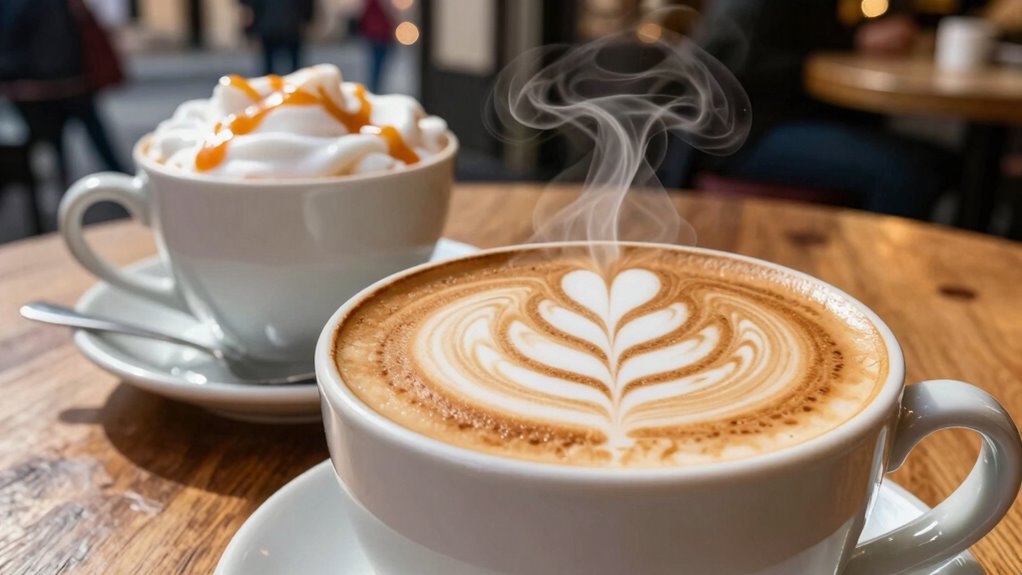
When it comes to enjoying a cappuccino, the experience can vary greatly depending on whether you’re in Italy or abroad. In Italy, coffee culture is deeply rooted in tradition, and the way a cappuccino is prepared and presented reflects that heritage. You’ll notice that Italian cafes prioritize the beverage presentation, serving a perfectly balanced cappuccino with a velvety foam top, often topped with a light sprinkle of cocoa or cinnamon. The focus is on quality, with baristas honing their craft to ensure each cup embodies the classic Italian style. Here, a cappuccino is more than just a drink; it’s a daily ritual, typically enjoyed in the morning with a quick exchange of words with the barista. The emphasis is on delivering a rich, harmonious flavor that complements the smooth, frothy milk, all served in a small, elegant cup that enhances the overall experience.
In contrast, when you’re abroad, the concept of a cappuccino can shift significantly. Coffee culture varies widely from country to country, and so does the beverage presentation. Many places serve larger cups or even different types of milk foams that might be more about visual appeal than tradition. The focus can often turn towards Instagram-worthy aesthetics, with colorful toppings or intricate latte art, sometimes sacrificing the authentic Italian balance of flavors. The quality of the espresso itself may also fluctuate, depending on local standards, meaning that your experience could lean more towards a sweet, milky beverage rather than the robust, well-crafted drink you’d find in Italy. Moreover, the typical time of day for drinking a cappuccino abroad can differ; in some countries, it’s enjoyed any time of day, not just morning, leading to variations in how the beverage is perceived and prepared. Additionally, understanding the coffee preparation methods used can help distinguish authentic Italian techniques from those adapted elsewhere. Recognizing these differences can also enhance your appreciation for regional coffee customs, which are often deeply ingrained in local culture and history. It’s interesting to note that these regional variations can sometimes influence the overall experience, making each cappuccino a reflection of local identity.
Furthermore, the cultural significance of coffee in different societies shapes how cappuccinos are integrated into daily life, adding another layer of meaning to this popular beverage. Despite the differences, the core idea remains the same: a cappuccino is a symbol of coffee culture, representing both tradition and personal expression. Still, the way it’s served and enjoyed can tell you a lot about the local customs and values. When you’re in Italy, the focus is on tradition, simplicity, and craftsmanship. When abroad, the beverage presentation often emphasizes creativity and adaptation to local tastes. Whether you prefer the authentic, understated elegance of an Italian cappuccino or the colorful, inventive versions abroad, understanding these subtle distinctions can deepen your appreciation for this beloved coffee drink.
As an affiliate, we earn on qualifying purchases.
Frequently Asked Questions
How Do Italian Baristas Typically Prepare a Cappuccino?
You’ll find that Italian baristas typically prepare a cappuccino by carefully selecting high-quality coffee beans and expertly brewing a rich espresso shot. They focus on milk frothing techniques, creating a velvety, dense foam that’s poured over the espresso. The drink is usually served in a small cup, with a balanced ratio of coffee, milk, and foam, emphasizing the harmony of flavors and textures that define an authentic Italian cappuccino.
What Are Common Regional Variations of Cappuccino Outside Italy?
Imagine a globe-trotting barista adjusting recipes—each city adding its unique twist. Outside Italy, regional flavor influences cappuccino variations, from sweeter, chocolate-infused versions in Spain to spiced options in Middle Eastern countries. Beverage customization thrives as cafes adapt to local tastes, often blending local ingredients or adjusting sweetness levels. These regional variations create diverse, flavorful experiences, transforming the classic Italian cappuccino into a beverage that reflects its cultural surroundings.
Is It Customary to Order a Cappuccino at Any Time of Day Abroad?
You can usually order a cappuccino at any time of day abroad, but it’s most common in the morning as a morning caffeine boost. In some places, it’s seen as a dessert pairing or a breakfast drink. However, in countries like Italy, locals often avoid cappuccinos after noon. So, while you can order it anytime, be mindful of local customs and enjoy it accordingly.
How Does the Price of a Cappuccino Differ Internationally?
You’ll notice that the price of a cappuccino varies widely internationally due to global coffee culture and price disparities. In Italy, it’s often affordable, reflecting local customs, while abroad, costs can be higher because of import taxes, quality, or tourist pricing. You might pay a premium in popular tourist spots or upscale cafes, but in local spots, prices tend to be more reasonable, showing how global trends influence local coffee costs.
Are There Cultural Etiquette Rules for Drinking Cappuccino in Different Countries?
You should follow local coffee customs and drinking etiquette when enjoying a cappuccino abroad. In Italy, it’s customary to drink it quickly in the morning, often standing at the bar, since it’s seen as a breakfast drink. In many other countries, you can relax and sip it anytime, sometimes with added flavors. Respect these cultural norms to avoid seeming rude and to truly enjoy the local coffee experience.
Conclusion
Think of ordering a cappuccino abroad as opening a familiar book only to find it’s a different story inside. Just like a traveler discovering new landscapes, your coffee experience varies with each place. Whether it’s foam art or brewing style, these differences remind us that even shared names can hide unique traditions. Embrace the journey, savor each sip, and let each cup be a chapter in your global coffee adventure. After all, every cappuccino has its own tale to tell.
Halloween Picks
halloween
As an affiliate, we earn on qualifying purchases.