Brew time and contact time are different but both shape your coffee’s flavor. Brew time is the total duration from when hot water hits the grounds until it ends, while contact time is the active period when water interacts with the coffee. Managing these properly helps prevent over- or under-extraction, which affects taste. For better control and a perfect cup, understanding the difference is key—keep exploring to discover how adjusting these can elevate your brew.

Get coffee and tea gear delivered free — and shop member deals
- Fast, free delivery on millions of items
- Access to Prime Big Deal Days deals on October 6–7
- Prime Video, Amazon Music and more included
Key Takeaways
- Brew time is the total duration from water contact to end, while contact time is the active period of water-coffee interaction.
- Over- or under-extraction results from improper timing of either brew time or contact time.
- Different brewing methods (espresso vs pour-over) require specific adjustments to contact time.
- Proper control of contact time influences flavor complexity and prevents bitterness or sourness.
- Recognizing the difference helps troubleshoot and optimize brewing for better flavor and efficiency.
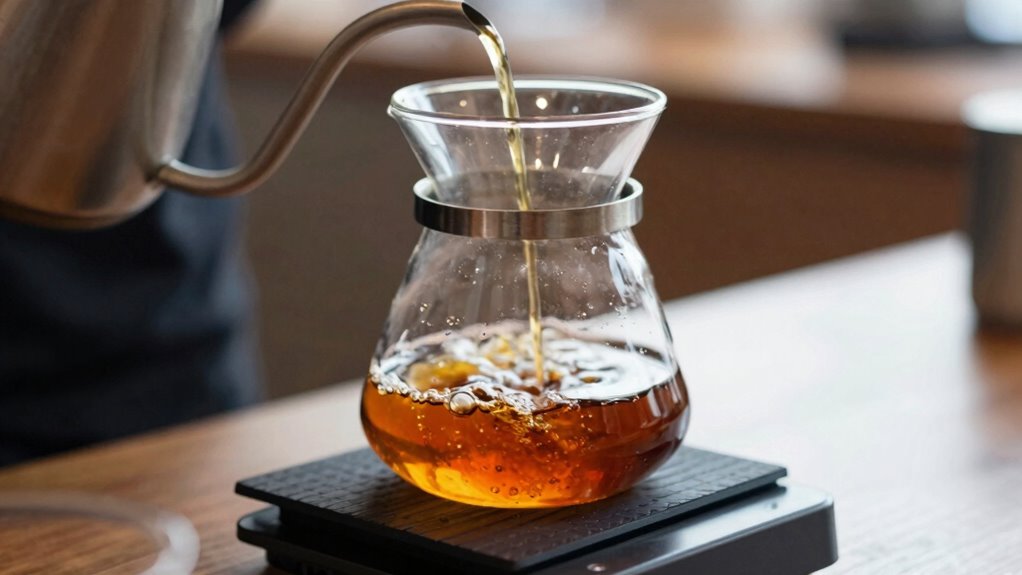
When it comes to making a great cup of coffee, understanding the difference between brew time and contact time is essential. These two factors influence how your coffee tastes and how efficiently you extract flavors. Brew time refers to the total duration from when hot water first contacts the coffee grounds until the brewing process ends. Contact time, on the other hand, is the period during which water actively interacts with the coffee grounds. While they’re related, they aren’t the same, and mismanaging either can lead to over- or under-extraction, affecting flavor.
Flavor extraction is at the core of what these terms impact. When water stays in contact with coffee grounds for too long, over-extraction occurs, pulling out bitter compounds and dulling the overall flavor. Conversely, if contact time is too short, under-extraction leaves your coffee weak and sour because not enough of the desirable oils and solubles have been dissolved. The key is balancing contact time within the total brew time so that the extraction is maximized for the best flavor profile. The brew time determines how long the water is passing through the grounds, but the contact time specifies how long water is actively interacting with the coffee during that process. Controlling extraction is crucial for achieving the desired flavor balance.
Balancing contact time within brew time maximizes flavor extraction and enhances your coffee’s taste.
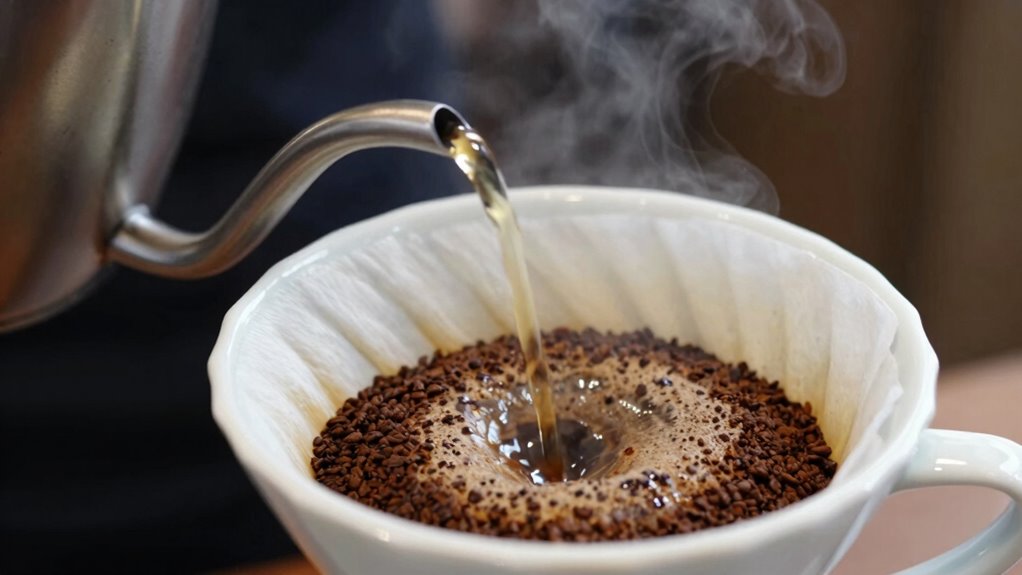
Understanding that brewing efficiency ties into this distinction can help you optimize your process. A well-managed contact time can make your brewing process more efficient, extracting the maximum flavor in a shorter amount of time without sacrificing quality. For example, espresso machines rely on high pressure and short contact times to quickly extract rich flavors, while pour-over methods often involve longer contact times for a more nuanced profile. By adjusting contact time thoughtfully, you can improve your brewing efficiency, saving time and resources while still achieving a balanced, flavorful cup. Recognizing the importance of extraction control can help you fine-tune your method and enhance your overall coffee experience.
Understanding that brew time isn’t just about how long the water runs through the coffee, but also about controlling the contact time, helps you troubleshoot and refine your process. If your coffee tastes flat or sour, you might need to tweak either the contact time or the overall brew time. Shortening contact time could prevent over-extraction, while extending it might bring out more complex flavors. Additionally, temperature management plays a role in optimizing extraction and flavor development. Ultimately, paying attention to both parameters allows you to customize your brew for ideal flavor extraction and brewing efficiency, resulting in a consistently better cup. Recognizing the distinction empowers you to make precise adjustments, *revealing* the full potential of your coffee beans.
As an affiliate, we earn on qualifying purchases.
Frequently Asked Questions
How Does Grind Size Affect Contact Time?
You’ll find that grind size directly affects contact time through grind consistency and particle distribution. Finer grinds increase surface area, leading to longer contact time, but uneven grind can cause inconsistent extraction. Coarser grinds reduce contact time, resulting in a quicker brew. Maintaining uniform particle distribution ensures ideal contact time, preventing over- or under-extraction. Adjusting grind size thoughtfully helps you control extraction, improving flavor and overall brew quality.
Can Contact Time Be Adjusted Without Changing Brew Time?
You can adjust contact time without changing brew time by tweaking water temperature or using fresher coffee. Notably, a 10°F increase in water temp can shorten extraction time by about 20%, affecting contact time. When your coffee’s fresh, it extracts faster, so you might need to extend contact time slightly. Play with these variables to optimize flavor without altering your overall brew duration.
Why Is Contact Time Important for Extraction?
You need contact time for proper extraction because it directly affects your coffee’s aroma and flavor. Longer contact allows water to better dissolve soluble compounds, enhancing aroma and body. If you don’t manage contact time carefully, extraction becomes inconsistent, leading to over- or under-extraction. By controlling contact time, you guarantee each cup has consistent flavor, highlighting the best aroma and preventing bitter or weak tastes.
Does Longer Brew Time Always Mean Better Flavor?
Think of brewing as a dance—longer isn’t always better. While extended brew time can enhance flavor complexity and preserve aroma, it can also lead to over-extraction, making coffee bitter. You need to find the right balance, just like a dance partner syncing perfectly. So, longer brew time doesn’t always mean better flavor. Instead, focus on optimizing contact time to reveal the best aroma and nuanced taste.
How Do Different Brewing Methods Impact Contact Time?
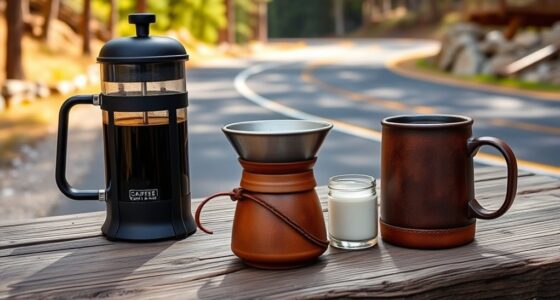
Different brewing methods impact contact time, influencing flavor clarity and brewing consistency. For example, pour-over offers precise control over contact time, enhancing clarity, while French press has longer, less controlled contact time, which can create a richer, bolder flavor. Espresso uses short contact times for intensity. Understanding these differences helps you optimize each method, ensuring consistent results and desired flavor profiles every time you brew.
Conclusion
Just remember, brew time and contact time aren’t the same—think of them as different dancers in a performance. Brew time is how long you let the coffee steep, while contact time is how long the coffee interacts with water. Ignoring this can be like trying to catch a butterfly with a net full of holes. Pay attention to both, and you’ll brew a cup that’s just right—like finding the perfect melody in a song.
Fall Picks
fall essentials
As an affiliate, we earn on qualifying purchases.