

Turkish coffee fortune telling, or kafemancy, involves brewing finely ground coffee, then swirling and drinking it, leaving grounds at the cup’s bottom. You then interpret the patterns and symbols formed by the grounds on the sides of the cup, which are believed to reflect your future and life events. Common symbols like hearts or stars have specific meanings, offering insights into love, health, or success. If you’re curious about how these symbols reveal your destiny, keep reading to explore more.
Key Takeaways
- Kafemancy is a traditional Turkish art of reading coffee grounds to predict the future.
- It involves brewing and drinking Turkish coffee, then interpreting the patterns left in the cup.
- Symbols like hearts, stars, and circles formed by grounds represent different life aspects.
- The process relies on observing shapes, positions, and relationships of grounds, combining symbolism and intuition.
- Kafemancy is a cultural practice rooted in Ottoman and Middle Eastern traditions, emphasizing personal and social insights.
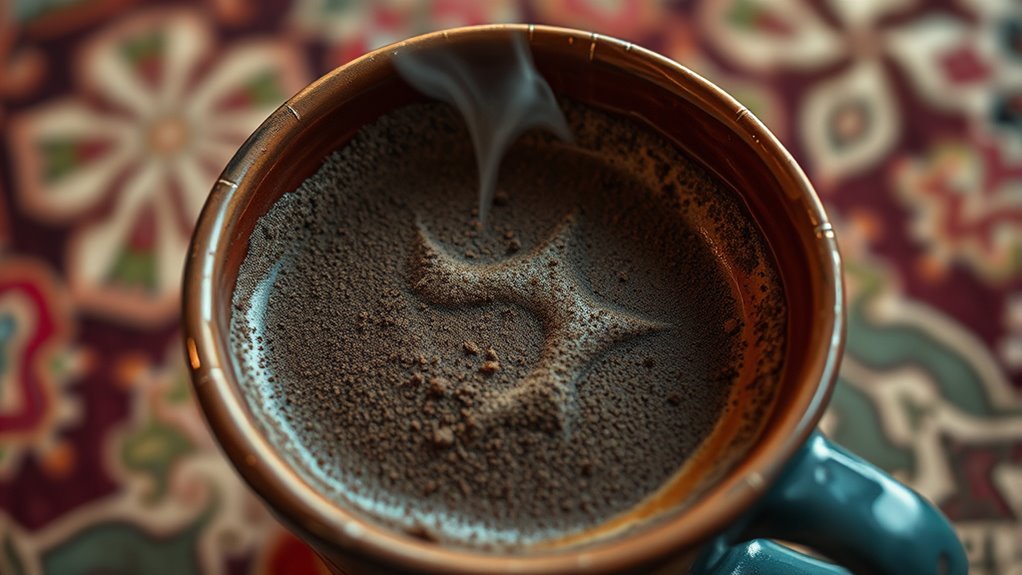
Turkish coffee fortune telling, also known as tasseography, is an enthralling tradition that combines the art of reading coffee grounds with centuries-old cultural practices. When you indulge in a cup of Turkish coffee, you’re participating in a ritual that goes beyond mere drinking; it’s a gateway to understanding symbols, stories, and potential futures embedded in the coffee grounds. The process involves brewing finely ground coffee directly in a small, special pot called a cezve, then drinking it slowly while leaving a small amount of liquid at the bottom. As you flip the cup onto a saucer, the remaining grounds spread along the sides, forming patterns. It’s these patterns, rich in coffee symbolism, that become the canvas for interpretation.
The roots of Turkish coffee fortune telling stretch back centuries, with influences from the Ottoman Empire and Middle Eastern cultures. Historically, it was a popular social activity, often performed in cafes where friends gathered to share stories and predict future events. The origins of tasseography are believed to trace to ancient Persia and the Middle East, where similar practices involved reading tea leaves or coffee grounds. Over time, this art evolved into a respected tradition, with specific symbols and their meanings passed down through generations. Today, understanding the historical origins is essential because it provides context for how certain shapes and symbols are associated with specific life events or traits. For example, a heart shape might symbolize love or emotional connections, while a star could indicate success or good fortune.
Your role in Turkish coffee fortune telling is to observe the patterns formed by the grounds carefully. The coffee symbolism embedded in these patterns isn’t random; it’s a language that your subconscious interprets. Symbols like lines, circles, or clusters of grounds carry meaning based on their shape, position, and relation to each other. The tradition has developed a rich lexicon of symbols, each linked to different aspects of life—love, health, career, or spirituality. As you learn to read these symbols, you’ll notice that many are universal, while others are more culturally specific. The key is to trust your intuition and pay attention to the details in the grounds, as they can reveal messages from your subconscious mind or insights into your future. Ultimately, Turkish coffee fortune telling offers a unique blend of cultural history, symbolism, and personal intuition, making each reading a deeply meaningful experience.
Frequently Asked Questions
How Accurate Is Turkish Coffee Fortune Telling?
Turkish coffee fortune telling’s accuracy myths often overstate its precision, but your personal skills considerably influence results. While some believe it’s highly accurate, remember it’s more of an art than a science. Your intuition, experience, and interpretation skills shape the outcome. So, if you approach it with an open mind and practice, you can improve your accuracy, but don’t rely solely on kafemancy for life-changing decisions.
Can I Learn Kafemancy Myself Easily?
Yes, you can learn kafemancy yourself, but it takes dedication. Start with beginner tips like studying basic symbols and patterns, practicing regularly, and keeping a journal of your readings. Learning techniques involve observing how symbols connect to meanings and refining your intuition. Be patient and consistent, and over time, you’ll develop confidence in interpreting coffee grounds. Remember, practice makes perfect, and seeking guidance from experienced practitioners can accelerate your progress.
Are There Cultural Differences in Turkish Coffee Reading?
You’ll find that cultural variations considerably influence Turkish coffee reading, with different regions emphasizing unique traditional symbols. For example, in some areas, symbols like hearts or stars carry specific meanings. Around 65% of practitioners adapt their interpretations based on local customs, making each reading uniquely meaningful. These cultural differences enrich the practice, allowing you to explore diverse symbolism and deepen your understanding of kafemancy’s varied traditional roots.
What Are the Origins of Turkish Coffee Fortune Telling?
You might find that Turkish coffee fortune telling has rich historical roots dating back to the Ottoman Empire, where it evolved as a cultural tradition. Cultural influences from Middle Eastern and Mediterranean societies shaped its practices, blending symbolism and storytelling. As you explore it, you’ll notice how this ancient art reflects deep-rooted beliefs and social customs, making it a fascinating blend of history and culture in every cup.
Is Kafemancy Practiced Officially or Informally?
Kafemancy is practiced informally rather than officially, with cultural acceptance widely present in Turkey and neighboring regions. It’s seen as a traditional, spiritual practice rather than a regulated profession, so its legal status remains unofficial. You’ll find many people enjoying personal or social readings, but it’s not recognized as an official or licensed activity. Instead, it thrives as a cultural custom rooted in community and tradition.
Conclusion
As you gaze into the swirling patterns of your coffee grounds, remember that, like the Sphinx’s riddles, kafemancy offers mysteries wrapped in symbols. While it’s tempting to seek certainty, embrace the ambiguity as part of the journey. Just as the stars guide sailors through fog, these symbols can illuminate paths unseen, inviting you to trust your intuition. Ultimately, the future remains a story you craft—written one cup at a time.