

To create effective student study cafés, focus on varied layouts that balance quiet zones with collaborative spaces. Use different seating options and strategic furniture placement to support individual and group work. Incorporate soundproofing and zone separation to manage noise and maintain focus. Thoughtful lighting and ergonomic furniture boost comfort, while flexible areas allow you to adapt as your needs change. Keep exploring to discover how these design tips can transform your study environment even further.
Key Takeaways
- Design specific zones for quiet individual work and active collaboration to manage noise levels effectively.
- Incorporate flexible, multi-purpose furniture to adapt spaces for varying study needs and group sizes.
- Ensure ample lighting and ergonomic furniture to promote comfort and focus during extended study sessions.
- Strategically place power outlets and charging stations to support extended use and reduce clutter.
- Use soundproofing elements and soft furnishings to minimize noise disruption and create a conducive learning environment.
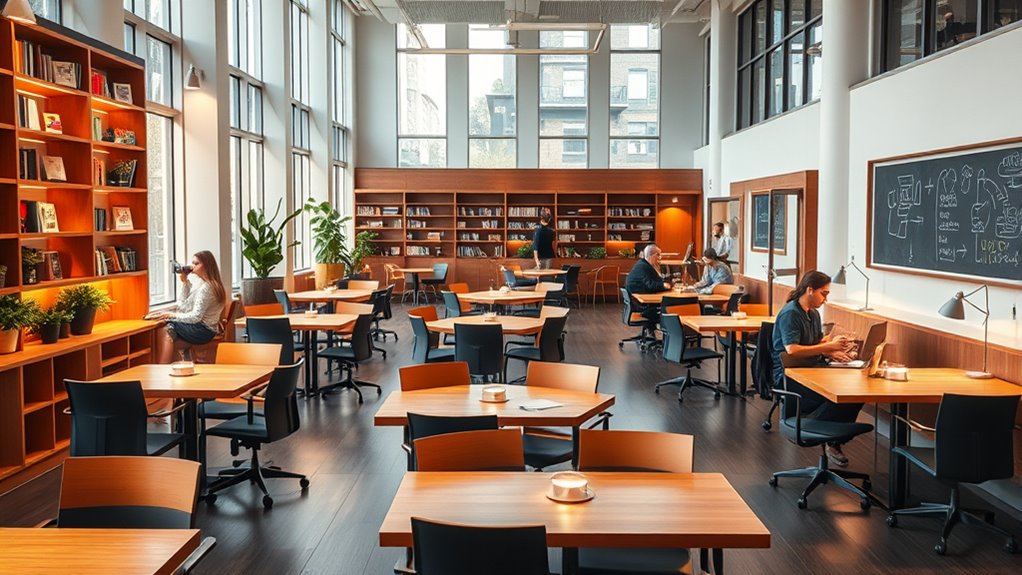
Student study cafés have become popular spots where students can focus, collaborate, and enjoy a relaxing environment outside of traditional libraries. When designing a study space in these cafés, the goal is to create an environment that promotes productivity while still feeling welcoming. Good study space design balances functionality and comfort, ensuring that each area serves a specific purpose. You’ll notice that successful cafés incorporate a mix of seating options—quiet zones for focused work and more casual areas for group discussions. These varied layouts help cater to different study styles, making it easier for you to find a spot that matches your needs. Proper layout planning also includes sufficient lighting, ergonomic furniture, and strategically placed power outlets, all contributing to a space where you can work comfortably for hours. Additionally, the use of multi-functional furniture allows for flexible arrangements that can adapt to changing group or individual needs, further enhancing the usability of the space. Noise management plays an essential role in creating an effective study environment. You want to be able to concentrate without being disturbed by loud conversations or background noise, but at the same time, the space shouldn’t feel sterile or isolating. Good noise management involves thoughtful zoning—designating quiet areas where you can focus without interruption and separate zones where collaboration is encouraged. Soundproofing elements, like acoustic panels or soft furnishings, are often incorporated to absorb excess noise, preventing it from spreading throughout the café. In addition, the placement of tables and seating can influence noise levels; for example, clustering group tables away from individual workstations helps contain chatter and prevents it from disrupting others. Background music is another tool used to mask distracting sounds without becoming a distraction itself, and many cafés adjust their playlists to maintain a conducive atmosphere. The layout also considers traffic flow, ensuring that movement within the space doesn’t interfere with concentration. Clear pathways and logical arrangements of tables and workstations make it easier for you to find a spot and switch locations if needed. Incorporating designated quiet zones, collaborative areas, and even breakout spaces helps manage noise levels according to your activity. As a student, you’ll appreciate a space where noise levels are controlled but flexible enough to accommodate different study modes. The combination of thoughtful study space design and effective noise management creates an environment that boosts your focus and makes studying more enjoyable. When these elements work together, student study cafés become more than just a place to work—they become an extension of your academic environment, supporting your productivity and comfort every step of the way.
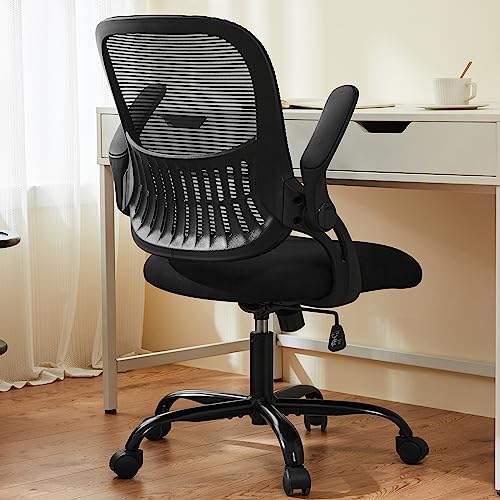
Sweetcrispy Office Computer Desk Chair, Ergonomic Mid-Back Mesh Rolling Work Swivel Task Chairs with Wheels, Comfortable Lumbar Support, Comfy Flip-up Arms for Home, Bedroom, Study, Student, Black
【Ergonomic Lumbar Support】- The ergonomically designed backrest of our ergonomic office chair has prominent lumbar support to fit…
As an affiliate, we earn on qualifying purchases.
As an affiliate, we earn on qualifying purchases.
Frequently Asked Questions
How Do Lighting Choices Affect Concentration in Study Cafés?
Lighting choices considerably impact your concentration in study cafés. Natural light boosts alertness and keeps you energized, making it easier to focus. Meanwhile, color schemes influenced by lighting help create a calming or stimulating environment, depending on your needs. Well-lit spaces with balanced natural and artificial light minimize eye strain and distractions, enabling you to stay engaged and productive throughout your study sessions.
What Are the Best Materials for Soundproofing in Study Areas?
Soundproofing in study areas works best with materials like acoustic panels and sound insulation. Research shows that acoustic panels absorb noise, reducing echo and distractions, while dense insulation materials block sound from entering or leaving the space. You should prioritize installing high-quality acoustic panels on walls and ceilings, and add thick insulation within walls to create a quiet, focused environment that boosts concentration and learning.
How Can Furniture Arrangement Reduce Distractions?
You can reduce distractions by arranging furniture to enhance seating flexibility and create visual privacy. Position desks and chairs to allow easy movement and adaptable seating options, so students can customize their workspace. Use partitions or strategic placement to block visual distractions, helping students focus better. Keep pathways clear to prevent congestion, and make sure that seating areas are spaced out enough to minimize noise and visual interruptions, fostering a more productive study environment.
What Technology Integrations Enhance Student Focus?
Imagine releasing your full focus with a simple upgrade. Digital tools like noise-canceling headphones and focus apps cut distractions, while ergonomic setups keep you comfortable for hours. These technology integrations create an environment where concentration thrives, making it easier to study effectively. By seamlessly combining digital tools and ergonomic furniture, you’ll find yourself more engaged and productive, transforming your study sessions into truly focused, distraction-free experiences.
How Do Layout Designs Support Diverse Learning Styles?
Your layout design supports diverse learning styles by incorporating ergonomic seating and flexible partitions, allowing you to customize your space. You can choose quiet zones for focused work or collaborative areas for group projects. This adaptable environment helps you stay comfortable and engaged, whether you prefer independent study or team discussions. By catering to your specific needs, the layout fosters better concentration, creativity, and overall learning effectiveness.

AmazingSpark 1 Pcs 48" X 6' Soundproof Room Divider Panel, Foldable Acoustic Partition Wall with Stand and Straps, Freestanding Privacy Screen for Office Study Bedroom Studio Library (Grey)
Soundproofing & Privacy:our acoustic room divider panel is crafted with acoustic foam and felt to help reduce noise…
As an affiliate, we earn on qualifying purchases.
As an affiliate, we earn on qualifying purchases.
Conclusion
So, next time you choose a study spot, will you prioritize a cozy corner or a lively café layout? Remember, the right environment can boost your focus and motivation. Student study cafés are designed with layouts that support your learning style, making studying less stressful and more effective. Isn’t it worth seeking out a space that helps you thrive? Ultimately, the right layout could be the key to revealing your full potential.

Furniture Levelers, 20Pcs Flexible Multi-Purpose Rubber Shims for Leveling – Prevent from Wobbling for Furniture Toilet (Black)
【Stop the Wobble – Instant Stability】Tired of shaky chairs or uneven appliances? Rubber shims stabilize furniture, appliances, and…
As an affiliate, we earn on qualifying purchases.
As an affiliate, we earn on qualifying purchases.

Airlonv LED Desk Lamp for Office Home, Eye-Caring Desk Light with Stepless Dimming Adjustable Flexible Gooseneck, 10W USB Adapter Desk Lamp with Clamp for Reading, Study, Workbench (Black)
Stepless Dimming Mode: The desk light offers effortless switching of color temperatures (2700K-6500K) and stepless dimming (1% -…
As an affiliate, we earn on qualifying purchases.
As an affiliate, we earn on qualifying purchases.