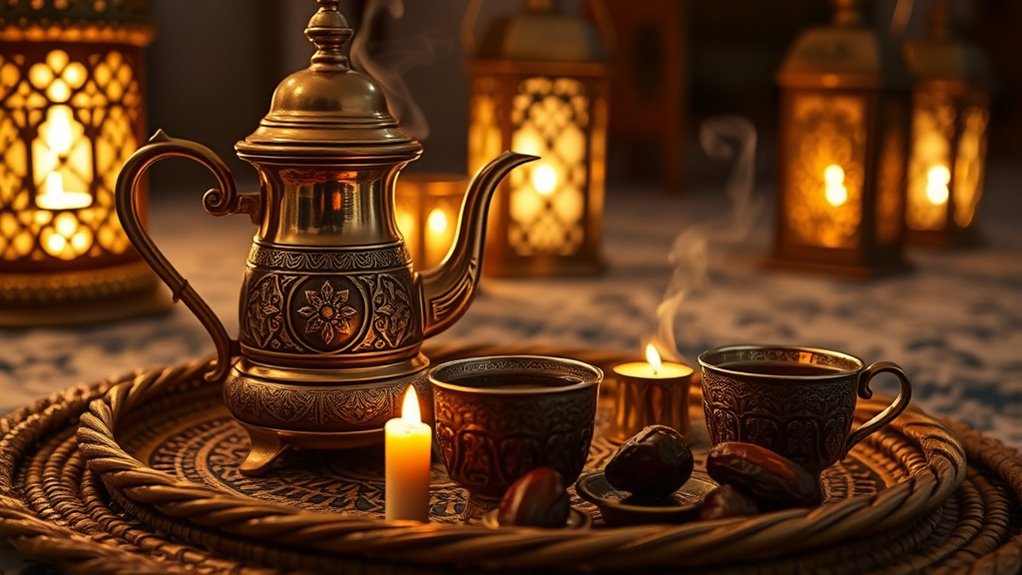

During Ramadan, coffee holds deep cultural and spiritual significance, often marking specific times of the day like Suhoor and Iftar. It helps you stay alert during fasting and brings people together in shared rituals that emphasize community and reflection. Brewing and sharing coffee become mindful acts that deepen your spiritual connection and gratitude. If you want to explore how these traditions shape your Ramadan experience, there’s more to discover ahead.
Key Takeaways
- Coffee rituals during Ramadan often mark the end of fasting (Iftar) and pre-dawn meals (Suhoor).
- Traditional coffee preparation varies regionally but emphasizes community and spiritual reflection.
- Drinking coffee serves as a mindful practice that enhances alertness during fasting hours.
- Coffee aroma signals moments of pause and gratitude, reinforcing spiritual connections.
- Incorporating coffee rituals deepens the sense of community and mindfulness during Ramadan.

During Ramadan, coffee often plays an essential role in helping you stay alert and energized during long fasting hours. For many, coffee isn’t just a beverage; it’s woven into cultural coffee rituals that mark the rhythm of daily life during this sacred month. These rituals vary across regions but share a common theme: turning coffee into a meaningful act that deepens spiritual reflection. In some cultures, preparing coffee becomes a communal event, emphasizing the importance of togetherness and connection. The aroma of freshly brewed coffee signals moments of pause, serving as a reminder of the spiritual significance of Ramadan. When you partake in these rituals, you’re not just enjoying a drink—you’re participating in a tradition that enriches your Ramadan experience and reinforces your faith. Incorporating mindful preparation of coffee can also enhance your sense of presence and gratitude during this holy month.
During Ramadan, coffee rituals deepen spiritual reflection and foster community bonds.
Coffee as a spiritual practice takes on a special dimension during Ramadan. Many find that the act of brewing and sharing coffee becomes a form of mindfulness, a way to center yourself amid the spiritual and physical demands of fasting. The ritual of preparing coffee can be a meditative process, helping you focus your mind on the divine and your intentions for the day. Sharing coffee with loved ones before or after Iftar fosters a sense of community, reinforcing bonds and spiritual unity. This act of communal drinking transforms coffee from a simple stimulant into a vessel of spiritual connection, reminding you of the importance of gratitude, patience, and reflection during this holy month. Developing mindfulness practices around coffee rituals can further deepen your spiritual experience in Ramadan.
Frequently Asked Questions
How Does Ramadan Affect Global Coffee Consumption Trends?
During Ramadan, you’ll notice a shift in global coffee consumption, especially around Iftar when people seek warm beverages to break their fast. Ramadan coffee consumption increases as part of global fasting rituals, with many enjoying traditional drinks after sunset. This seasonal spike influences coffee markets worldwide, prompting suppliers to adjust production and marketing strategies to meet the heightened demand during this period.
Are There Specific Coffee Brewing Methods Preferred During Ramadan?
During Ramadan, you often prefer traditional brewing methods like Turkish or Arabic coffee, echoing age-old customs. These techniques, deeply rooted in cultural traditions, become Ramadan favorites, offering a richer, more ceremonial experience. You cherish the slow, deliberate process that transforms simple beans into a meaningful beverage, symbolizing reflection and community. This choice reflects a desire for authenticity and connection, making traditional brewing the preferred method during this sacred month.
What Are the Health Benefits of Coffee During Fasting Hours?
During fasting hours, coffee can boost your alertness thanks to caffeine metabolism, helping you stay focused. It also provides hydration effects, but be mindful not to overconsume, as it can cause dehydration. Coffee may help suppress appetite temporarily, making fasting easier. Just remember, moderation is key to avoid jitters or dehydration, especially when you’re fasting for extended periods.
How Do Different Cultures Incorporate Coffee Into Ramadan Traditions?
You’ll notice that different cultures incorporate coffee into Ramadan traditions through unique cultural rituals and beverage variations. In Middle Eastern countries, you might enjoy aromatic Turkish coffee served during Iftar, while in North Africa, spiced coffee blends are common. These rituals deepen your connection to tradition, making the experience special. Each culture’s beverage variations reflect their history and values, enriching your spiritual and social observances during Ramadan.
Does Ramadan Influence Coffee Shop Business Hours and Operations?
During Ramadan, your coffee shop adjusts operating hours to match fasting schedules, opening later in the morning and closing earlier at night. You might also implement menu modifications, offering special beverages for Iftar and Suhoor. This shift aligns your business with the community’s needs, attracting more customers during key times. By adapting your hours and menu, you embrace the month’s unique rhythm, boosting sales and strengthening local connections.
Conclusion
As you’ve seen, coffee plays a special role during Ramadan, fueling your fasts and bringing people together. Some say the tradition dates back centuries, helping communities stay alert and connected. While there’s no solid proof, it’s fun to imagine coffee as a timeless symbol of unity and resilience. So, next time you sip your cup, remember you’re part of a rich, shared history that’s brewed over generations. Cheers to that!