
In a Japanese kissaten, you’ll notice that service is quiet and unobtrusive, allowing you to relax fully. Silence is embraced as part of the ambiance, encouraging reflection and mindful enjoyment of your coffee. Staff provide calm, discreet attention, creating a peaceful environment perfect for solitude or quiet conversation. The focus is on tradition, quality, and a sense of tranquility. To discover more about these unique customs, keep exploring how they shape the overall experience.
Key Takeaways
- Service in kissaten is understated and attentive, emphasizing respect, discretion, and a calm, unobtrusive presence.
- Silence is embraced as a vital part of the ambiance, fostering reflection, mindfulness, and peaceful solitude.
- The environment encourages slow, meditative coffee preparation and consumption, highlighting traditional craftsmanship.
- Staff anticipate needs subtly, creating a tranquil space free from haste and noise.
- Overall, the combination of respectful service and silence preserves the timeless, contemplative atmosphere of kissaten.

Japanese kissaten, traditional coffee shops that have long been cherished in Japan, offer more than just a caffeine fix—they provide a nostalgic escape into a bygone era. When you step inside, you’re transported to a time when coffee brewing was an art, and the atmosphere was carefully crafted to foster calm and reflection. The aroma of freshly brewed coffee welcomes you, often prepared with meticulous attention to detail, whether through pour-over methods or classic drip brew. As you settle into your seat, you notice the vintage decor surrounding you—wooden furniture, glass cabinets filled with antique coffee paraphernalia, and nostalgic posters adorning the walls. These elements create an ambiance that’s both cozy and timeless, inviting you to slow down and savor every moment.
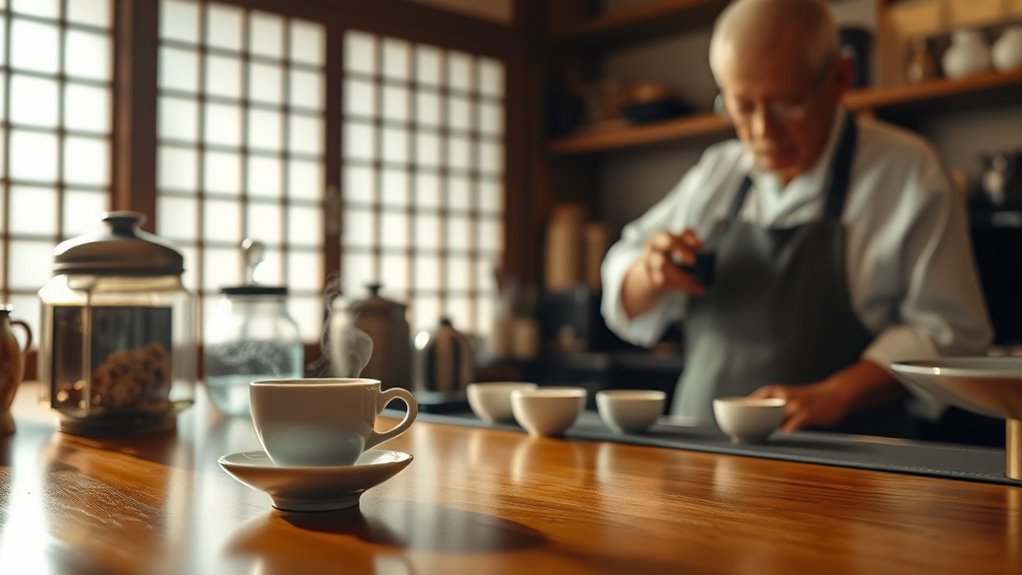
Your experience in a kissaten is shaped by the understated yet attentive service that emphasizes respect and discretion. Unlike bustling cafes, the service here is quiet and unobtrusive. You’re not hurried; instead, the staff anticipates your needs with subtle gestures and a gentle presence. They often serve your coffee with a calm demeanor, allowing you to enjoy your drink in peace. The focus is on creating a tranquil environment where conversation is subdued, and silence is valued as part of the overall experience. This sense of quietude encourages you to reflect, read, or simply enjoy the moment without distraction.
In a kissaten, attentive service fosters tranquility, allowing you to enjoy your coffee in peaceful reflection.
The ritual of coffee brewing in a kissaten is almost meditative. Whether you’re watching the barista carefully prepare your coffee or savoring the aroma, each step underscores a respect for tradition and craftsmanship. The vintage decor complements this process perfectly, emphasizing a connection to the past and a dedication to quality. The slow pace of service and the emphasis on silence foster a peaceful atmosphere, allowing you to indulge in the simple pleasure of a well-made cup of coffee. It’s a space where noise and haste are left outside, replaced by a sense of calm and mindfulness.
In these traditional coffee shops, service isn’t just about efficiency; it’s about creating an experience that respects your need for tranquility. Silence isn’t awkward but is embraced as part of the ambiance—giving you space to relax, think, or just enjoy your coffee in solitude. This unique blend of careful coffee brewing, vintage decor, and respectful service makes a kissaten a timeless retreat from the modern world. It’s not just about the drink; it’s about the atmosphere, the tradition, and the quiet moments that make your visit truly special.
Frequently Asked Questions
How Do Kissaten Differ From Modern Coffee Shops?
Kissaten differ from modern coffee shops by offering a retro ambiance that immerses you in Japan’s cultural significance. They emphasize quiet, relaxed service, encouraging you to enjoy your coffee in peace. Unlike contemporary cafes focused on fast service and socializing, kissaten create a nostalgic atmosphere where silence is valued, making your experience more contemplative and culturally rich. You’ll find a unique blend of tradition and tranquility in each visit.
Are Kissaten Still Popular Among Younger Japanese?
You might find it surprising, but many young Japanese still cherish kissaten for their retro atmosphere, like stepping into a timeless portrait. These cozy spots serve as cultural preservation, offering a quiet refuge amid modern chaos. While not as ubiquitous, they attract those seeking a nostalgic escape, blending old-world charm with contemporary tastes. So, yes, among some youth, kissaten remain a beloved slice of Japan’s cultural tapestry.
What Traditional Drinks Are Exclusive to Kissaten?
In a kissaten, you’ll find traditional drinks like carefully brewed coffee, often made using slow drip methods, and classic tea varieties such as matcha and hojicha. These drinks are exclusive to the setting, highlighting the skilled coffee brewing that emphasizes quality and tradition. You can enjoy these unique beverages in a tranquil atmosphere, where the focus remains on savoring your drink quietly, preserving the timeless charm of the kissaten experience.
How Do Kissaten Maintain Their Historical Ambiance?
You walk into a kissaten and feel the vintage ambiance surrounding you, a nostalgic decor that whispers of bygone eras. They preserve their historical charm by maintaining traditional furniture, vintage posters, and classic lighting, creating a timeless atmosphere. This juxtaposition of old-world decor with modern life keeps the essence alive, inviting you to slow down and savor the moment, ensuring the kissaten’s unique ambiance endures for generations to come.
Are There Specific Etiquette Rules for Kissaten Visits?
When you visit a kissaten, you should follow politeness customs like greeting staff politely and speaking softly. Silence etiquette is important, so avoid loud conversations or phone calls inside. Keep your voice low and be respectful of others’ quiet space. It’s also customary to wait patiently for service and show appreciation with a simple thank you. These practices help preserve the tranquil, respectful atmosphere that makes kissaten unique.
Conclusion
As you step into a kissaten, you sense the quiet patience that defines its soul. Every sip of coffee, every moment of silence, hints at stories whispered through generations. But beneath the calm surface, secrets linger—stories waiting for someone who truly listens. Will you uncover what’s hidden behind the gentle silence? Or will you leave wondering what mysteries this timeless tradition still holds in its quiet embrace? The choice is yours.