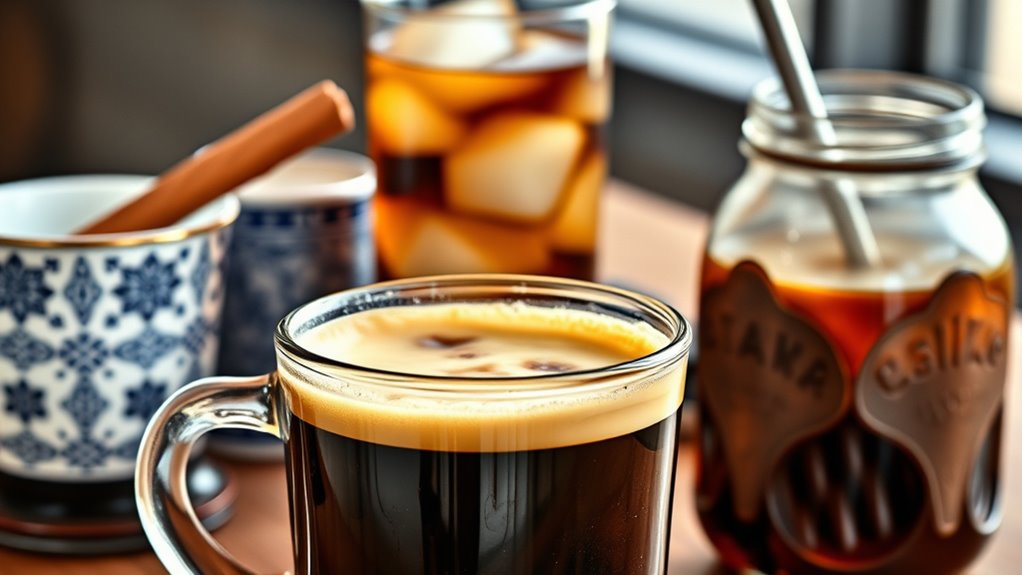

Around the world, cold brew varies widely, reflecting local customs and flavors. In Japan, gravity-based and artistic techniques create striking visuals, while Vietnam’s drip method pairs with sweetened condensed milk. European styles incorporate regional tastes like chicory, and tropical regions add ingredients like sesame or soy. Innovations boost consistency and flavor control, blending tradition with technology. If you’re curious about how different regions shape their cold brew styles, there’s much more to explore.

Get coffee and tea gear delivered free with Prime
- Fast, free delivery on millions of items
- Prime Video, Amazon Music and more included
- Member-only deals all year
Key Takeaways
- Different regions employ unique cold brew techniques, such as gravity brewing in Japan and drip methods in Vietnam.
- Local ingredients like chicory, sesame, and condensed milk influence regional cold brew flavors.
- Technological innovations, like recirculation systems, enhance extraction control and flavor consistency worldwide.
- Cold brew reflects cultural identities, incorporating traditional ingredients and preparation styles across countries.
- The global cold brew market is rapidly growing, with regional adaptations shaping diverse and innovative styles.
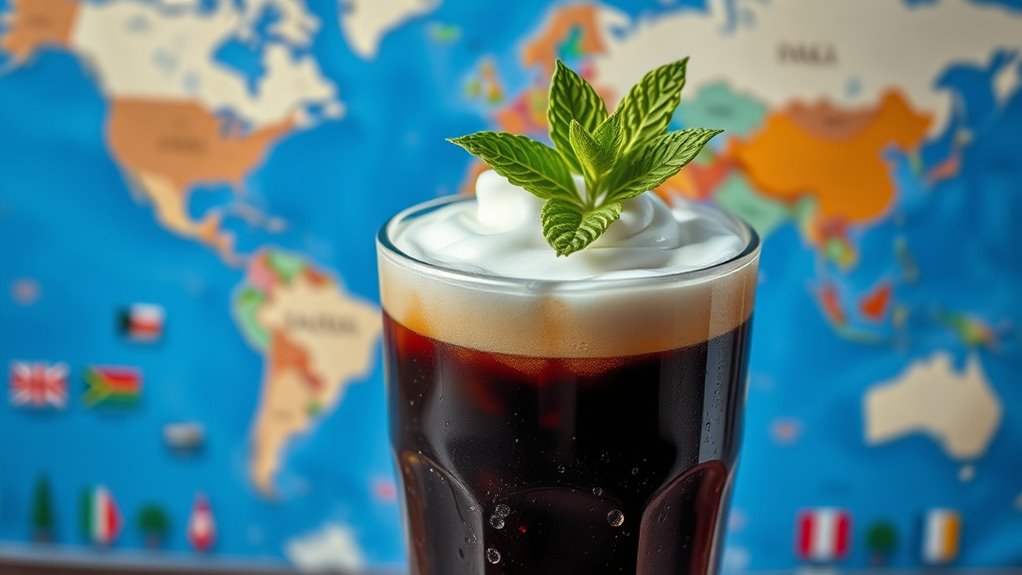
Have you ever wondered how cold brew coffee varies across the globe? The answer lies in the rich regional variations that shape how this beverage is brewed and enjoyed. While many think of cold brew as simply steeped coffee served cold, each region brings its unique coffee techniques and preferences to the table. From Japan’s gravity-based brewing methods to Vietnam’s drip techniques with sweetened condensed milk, the diversity is striking. These regional variations demonstrate how local ingredients, tastes, and innovations influence the way cold brew is made, creating a fascinating tapestry of styles worldwide.
Discover how regional techniques and ingredients craft diverse cold brew styles worldwide.
In Europe, for example, brewing methods often incorporate local flavors, such as the addition of chicory root, which is popular in New Orleans-style cold brew. Innovations in brewing technology, like recirculation systems, help refine the extraction process and improve consistency. These advancements have made iced coffee more accessible and customizable, matching regional preferences for flavor and strength. Brewing technology continues to evolve, enabling more precise control over flavor profiles and extraction times.
Countries like Japan have contributed to the evolution of cold brew by blending traditional coffee techniques with modern brewing technology, often emphasizing the visual artistry of each cup. Meanwhile, in Cuba and Algeria, practical innovations have led to unique methods that emphasize ease of preparation and flavor profile, sometimes integrating hot water to adjust strength or temperature during brewing.
The global market for cold brew is booming, projected to reach over $16 billion by 2032. This rapid growth reflects consumer demand for premium, convenient, and health-oriented beverages. As more people seek out cold brew, regional preferences continue to shape product offerings. For example, Thai and Vietnamese iced coffees often include added ingredients like soybeans or sesame seeds, reflecting local flavors and ingredients.
These variations aren’t just about taste but also about cultural identity, making cold brew a versatile beverage adaptable to different markets. Brewing methods across the world show how coffee techniques evolve based on local ingredients and consumer preferences. In some regions, cold brew is made by steeping coffee grounds in cold water for hours, while others incorporate hot water initially or use innovative brewing technology to speed up extraction.
These differences highlight how regional innovations and preferences drive the development of cold brew. As the global market expands, you can expect to see even more variations, blending tradition with innovation, and creating a truly global coffee experience that respects regional tastes while pushing the boundaries of brewing technology.
cold brew coffee maker with recirculation system
As an affiliate, we earn on qualifying purchases.
As an affiliate, we earn on qualifying purchases.
Frequently Asked Questions
Is Cold Brew an American Thing?
You might think cold brew is just an American trend, but it actually has deep international roots. Japan started experimenting with cold brewing techniques in the 1600s, and Dutch traders brought early cold coffee concentrates to Asia.
The modern popularity in the U.S. began in the 1960s, but its origins span across Japan, the Netherlands, and beyond. So, cold brew isn’t solely an American invention; it’s a global coffee tradition.
Which Country Is Famous for Cold Coffee?
You might wonder which country is famous for cold coffee. Japan stands out with its traditional slow drip Kyoto-style coffee, taking up to 24 hours to brew.
Vietnam’s cà phê phin offers a sweet, creamy treat with condensed milk.
Cuba’s Mazagran combines strong coffee with lemon or syrup.
The US popularizes modern cold brew.
Each country’s unique methods showcase its rich coffee culture.
Do Europeans Drink Cold Brew?
Yes, Europeans do drink cold brew. You’ll notice a growing trend across the continent, especially in countries like the UK and Germany, where sales have surged by 60% recently.
You can find innovative options from companies like Finlays, and giants like Coca-Cola and Nestlé are making it more accessible.
As you explore, you’ll see that Europeans appreciate cold brew for its convenience, flavor, and health benefits, fueling its rising popularity.
Where Did Cold Brew Originate?
You wanna know where cold brew originated? It started in Japan in the 1600s, where they adapted traditional tea steeping methods for coffee.
Dutch traders later brought cold brewing techniques to Japan, influencing Kyoto-style slow drip coffee.
Over time, these early practices spread and evolved into the modern cold brew we enjoy today, blending centuries of tradition from different regions into a popular, revitalizing beverage worldwide.
Conclusion
As you’ve explored, cold brew has become a global favorite, with each country adding its unique twist. From Japan’s smooth, silky textures to Brazil’s sweet, creamy versions, you can enjoy a diverse range of flavors no matter where you are. So next time you sip on cold brew, remember you’re part of a worldwide coffee movement that celebrates creativity and tradition. Keep exploring, tasting, and savoring the incredible variety of cold brew around the world.
Fall Picks
fall essentials
As an affiliate, we earn on qualifying purchases.