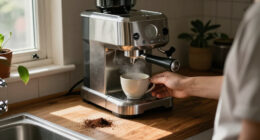
🔍 Read the full analysis: How Italians Do Breakfast: Cornetto, Cappuccino, And The Morning Bar on Mad Tasting

Get coffee and tea gear delivered free with Prime
- Fast, free delivery on millions of items
- Prime Video, Amazon Music and more included
- Member-only deals all year
TL;DR
A common Italian breakfast is a cappuccino and cornetto, often eaten quickly at a neighborhood café bar, though many people eat at home or choose something else. Habits vary by region, season and schedule, and café payment and service customs differ from one establishment to another.
A cappuccino and cornetto is a common Italian breakfast, often eaten at a café bar before work or school, according to a guide from Mad Tasting. The account also emphasizes that it is a familiar pattern rather than a national rule: breakfast choices and café routines differ by region, season and personal schedule.
At many bars, customers order a coffee and a pastry, eat at the counter and leave within a short time. Others sit at a table or have breakfast at home. In Italy, a bar typically means a café serving coffee, pastries and other drinks; it does not necessarily mean a cocktail lounge. The pace can make it a practical stop on the way to work, school or a train.
A cornetto is a crescent-shaped pastry similar to a croissant, though the guide says the two are not always identical. It may be plain or filled with jam, custard, chocolate or honey. Some regions use the word brioche for a similar pastry. A cappuccino combines espresso with steamed milk and foam, and is a common pairing with the pastry.
Ordering and paying are not uniform across cafés. Some ask customers to pay at the register and take a receipt to the counter; elsewhere, payment may happen at the counter. The guide recommends checking the room or asking staff, since prices, service and payment routines vary. Visitors can order simply with “Un cappuccino e un cornetto, per favore,” or ask “Si paga qui?” to find out where to pay.
A field guide to the Italian morning
How Italians Do Breakfast: Cornetto, Cappuccino, and the Morning Bar
A familiar pairing, a quick café stop, and plenty of room for regional and personal variation. Here’s how to enjoy the routine without mistaking it for a rule.
01 / The familiar combination
Two staples, one quick stop
At many bars, customers order coffee and a pastry, eat at the counter, and move on with the day. Sitting down or eating at home are also ordinary choices.
Pastry
Cornetto
A crescent-shaped pastry similar to a croissant, but not always identical. It may be plain or filled with jam, custard, chocolate, or honey.
Coffee
Cappuccino
Espresso combined with steamed milk and foam. It is a common match for a sweet pastry in the morning.
The setting
At the bar
In Italy, a “bar” commonly serves coffee, pastries, and other drinks. It does not necessarily mean a cocktail lounge.
02 / A practical rhythm
From order to onward
A café stop can fit a commute, school run, or train connection. The steps are simple, while the exact routine depends on the establishment.
03 / More than one menu
Familiar, never universal
Breakfast choices shift with region, season, and schedule. The pairing is recognizable, not a complete account of what everyone eats.
Regional note / Sicily
Granita with soft brioche can be a warm-weather favorite.
A regional and seasonal example—not a nationwide breakfast rule.
At home
A slower start
Many people have breakfast at home instead of stopping at a café.
Something sweet
Other choices
Biscuits, yogurt, or bread may take the place of a cornetto.
Coffee only
Keep it simple
Some choose espresso without a pastry; some skip breakfast.
Take your time
Sit at a table
A café visit can last longer when the schedule allows it.
04 / A visitor’s pocket guide
Read the room, then order
Payment and service customs are not the same everywhere. A quick look around—or one friendly question—can make the process clear.
Useful order
Ask for the classic
Name a filling to make your choice more specific, such as “alla crema” for custard.
“Un cappuccino e un cornetto, per favore.”Payment check
Find the register
Look for signs, watch how customers ahead of you order, or ask staff where to pay.
“Si paga qui?” — “Do you pay here?”Before sitting
Check table service
Ask whether table service is available and check the current menu for prices.
Keep perspective
Follow this café
Prices, service, and payment routines vary by establishment. There is no single procedure to assume.
05 / Questions visitors ask
Breakfast, clarified
Use this as practical travel guidance, not a survey of every household or café in Italy.
What is a common Italian breakfast?
Cappuccino and cornetto are a common choice, often at a café bar. Breakfast may also be at home or include other foods—or just espresso.
Is a cornetto the same as a croissant?
They are similar crescent-shaped pastries, but the guide notes they are not always the same. Cornetti may have a range of fillings.
Do customers have to stand?
No. The counter is a common quick option, but people may sit at a table or eat elsewhere. Service arrangements vary.
How widespread is each habit?
The guide offers examples, not nationwide survey data. It does not establish how many people choose each breakfast or compare regions in detail.
Source: Mad Tasting guide. It does not provide current café prices, identify specific cafés, or specify a publication date; check the local menu and instructions for up-to-date details.
How the Bar Shapes the Morning
The breakfast routine offers visitors a practical way to understand a common part of daily life without mistaking it for a fixed cultural rule. A quick stop at the counter can fit into a commute, while a table offers more time. Recognizing that bar customs vary by café helps travelers avoid assuming that every place has the same ordering or payment system.
The distinction matters for planning as well as etiquette. A traveler with a train to catch may prefer a pastry and coffee at the counter; someone wanting to linger should check whether table service is available and how it works. The guide presents the bar as a neighborhood stop, but does not claim that all Italians eat breakfast there or follow one routine.
As an affiliate, we earn on qualifying purchases.
The source describes colazione, or breakfast, as often a small, sweet meal centered on coffee and pastry. It also notes that some people choose biscuits, yogurt or bread, drink only espresso, or skip a pastry. These alternatives make clear that the cappuccino-and-cornetto pairing is a recognizable example, not a complete account of what everyone eats.
Regional and seasonal choices can look different. In Sicily during warm weather, the guide points to granita served with soft brioche as a favorite. Elsewhere, a weekday coffee stop may be brief, while a customer at the same café might sit down and take more time. The source offers these examples as variations, rather than as a comprehensive survey of regional habits.
“A cappuccino and cornetto is a useful way to understand Italian breakfast, but it’s only one version of the morning.”
— Mad Tasting guide
How Much Habits Differ
The source provides examples, not nationwide survey data, so it does not establish how many Italians choose each breakfast or how habits differ across regions. It also does not give current café prices, which can change by location and establishment. No single ordering or payment procedure can be assumed from the guide: customers may need to check signs, observe the queue or ask staff.
The guide does not specify a publication date, and it does not identify particular cafés or provide a detailed regional comparison. Its description should be read as practical travel guidance, not as a measured account of every Italian household or bar.
What Visitors Can Check
For a café visit, customers can check the pastry case, look for a register or payment instructions, and ask where payment is made if the process is unclear. A short order such as “Un cappuccino e un cornetto, per favore” is enough to request the common pairing; naming a filling, such as alla crema, can make the choice more specific.
Travelers should check the café’s current menu for prices and ask about table service before sitting down. The source describes no pending policy change or next formal milestone. The practical takeaway is to treat the routine as local and variable: observe how the particular café works, then choose whether to eat at the counter, sit, or take another breakfast option.
Key Questions
What is a common Italian breakfast?
A cappuccino and cornetto is a common choice, often eaten at a café bar. Breakfast can also be eaten at home or consist of other foods or just espresso.
What is a cornetto?
A cornetto is a crescent-shaped pastry similar to a croissant, though the guide notes they are not always the same. It may be plain or filled with jam, custard, chocolate or honey.
Do customers have to stand at the counter?
No. Standing at the counter is a common quick option, but customers may also sit at a table or eat elsewhere. Service arrangements differ by café.
How do I know where to pay?
Check for a register or payment sign, or watch how other customers order. If it is unclear, ask “Si paga qui?” (“Do you pay here?”). Some cafés use a register and receipt; others handle payment at the counter.
What might breakfast look like in Sicily?
The guide describes granita with soft brioche as a warm-weather favorite in Sicily. It is a regional and seasonal example, not a breakfast followed everywhere in Italy.
Source: Mad Tasting
Halloween Picks
halloween
As an affiliate, we earn on qualifying purchases.