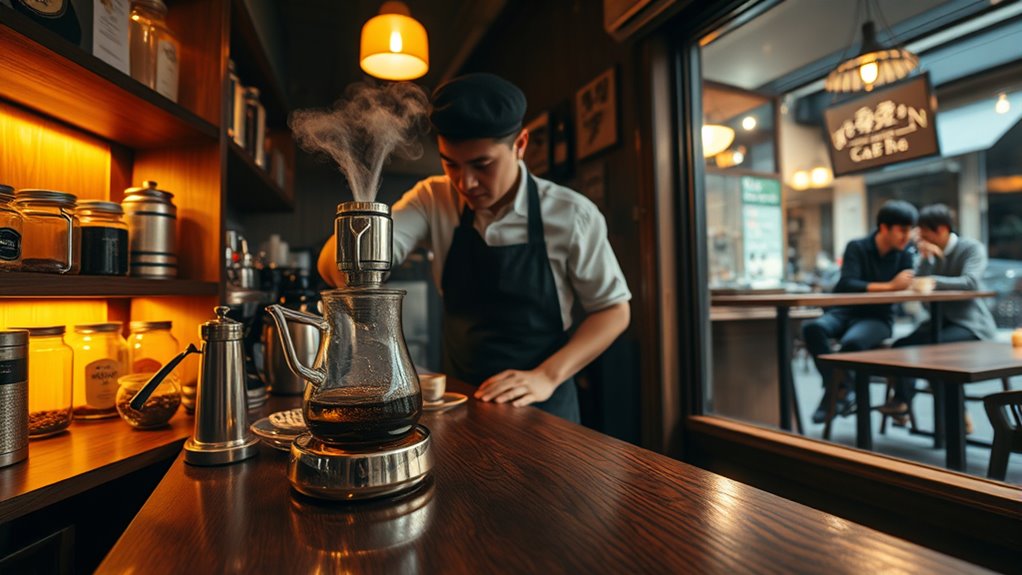

Japan’s coffee culture blends traditional kissaten’s quiet, meticulous craftsmanship with the vibrant energy of trendy cafes. You’ll notice an emphasis on artistry, from delicate pour-over designs to carefully roasted beans and precision brewing techniques like siphon and pour-over. This scene values aesthetics, sensory appeal, and technical skill, creating a unique experience that’s more than just about coffee. If you explore further, you’ll discover how this evolving scene continues to honor its rich heritage while embracing innovation.

Get coffee and tea gear delivered free — and shop member deals
- Fast, free delivery on millions of items
- Access to Prime Big Deal Days deals on October 6–7
- Prime Video, Amazon Music and more included
Key Takeaways
- Japan’s coffee culture blends traditional kissaten charm with modern café trends, emphasizing craftsmanship and aesthetic presentation.
- Coffee art, such as latte designs and pour-over patterns, showcases Japanese attention to detail and artistic skill.
- Deep respect for bean roasting and brewing techniques highlights Japan’s focus on flavor quality and precision.
- Traditional kissaten offer quiet, nostalgic atmospheres, while trendy cafés emphasize innovation and visual appeal.
- Overall, Japan’s coffee scene values sensory experience, craftsmanship, and aesthetic expression, reflecting cultural appreciation for artistry.
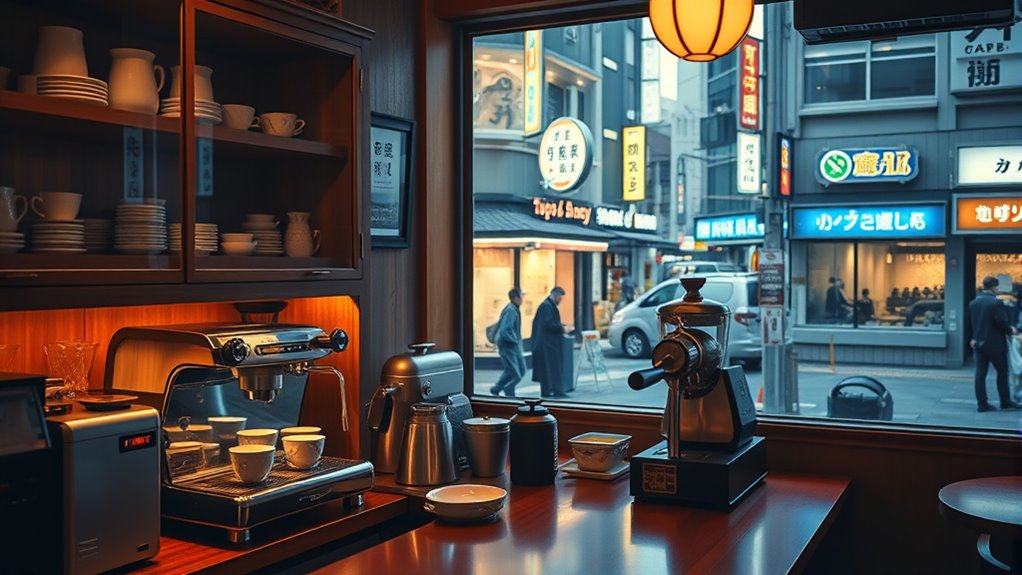
Japan’s coffee culture has grown into a vibrant and sophisticated scene, blending traditional tea customs with modern café trends. As you explore this dynamic landscape, you’ll notice that coffee isn’t just a drink here—it’s an art form and a craft. Coffee art, with its delicate pour-over patterns and intricate latte designs, stands out as a symbol of the meticulous attention to detail that Japanese baristas bring to their craft. When you order a coffee at a trendy café, you might be greeted with a beautifully crafted heart or rosette floating atop your cup, showcasing the skill and creativity of the barista. The emphasis on coffee art reflects Japan’s appreciation for aesthetics, precision, and the sensory experience of drinking coffee. Behind this sophisticated scene lies a deep respect for bean roasting. Japanese coffee shops often take pride in their bean roasting process, which they approach with the same care and precision as traditional tea ceremonies. When you visit these cafes, you might see roasted beans displayed prominently or even observe the roasting process firsthand. Coffee roasters in Japan focus on developing complex flavors and aromas, often using small batches to ensure quality control. This dedication to roasting means that every cup you enjoy is a reflection of the meticulous process that enhances the natural qualities of the beans. Whether they’re using lightly roasted beans to highlight bright, fruity notes or darker roasts for a richer, bolder flavor, Japanese coffee experts emphasize balance and depth. Additionally, the use of specialized brewing techniques like siphon and pour-over further elevates the quality and presentation of Japanese coffee. These techniques allow baristas to showcase their precision and skill, which are highly valued in Japan’s coffee culture. In many ways, the art of bean roasting and coffee art go hand-in-hand. The roasting process influences how the barista will craft each cup, dictating the flavor profile and how well the milk or foam can be manipulated into artful designs. This synergy creates a coffee experience that’s both visually stunning and richly satisfying on the palate. As you immerse yourself in Japan’s coffee scene, you’ll find that each sip and each visual flourish tells a story of craftsmanship, tradition, and innovation. From the quiet elegance of a kissaten to the lively energy of a modern café, Japan’s coffee culture invites you to appreciate the nuances of each cup, emphasizing artistry and skill at every turn.
As an affiliate, we earn on qualifying purchases.
Frequently Asked Questions
How Has Japan’S Coffee Culture Influenced Local Social Customs?
You notice that Japan’s coffee culture has shaped social customs, especially around coffee etiquette and social interactions. As you visit cafés, you observe polite behaviors like carefully pouring coffee and maintaining quiet conversations. These customs promote respectful interactions, creating a calm, communal atmosphere. Whether in traditional kissaten or modern cafes, the emphasis on etiquette encourages considerate behavior, influencing how people connect and communicate in everyday social settings.
What Are the Most Popular Coffee Beverages in Japan Today?
You’ll find that espresso varieties like lungo and macchiato are popular in Japan today. Coffee enthusiasts also enjoy diverse brewing methods such as pour-over, siphon, and cold brew, which highlight Japan’s appreciation for precision and flavor. Trendy cafes often serve specialty drinks with intricate latte art, blending traditional techniques with modern innovation. This mix of espresso varieties and brewing methods reflects Japan’s evolving coffee culture, emphasizing quality and craftsmanship.
How Do Traditional Kissaten Differ From Modern Cafes?
Imagine stepping into a warm, nostalgic embrace—that’s how traditional kissaten feel compared to modern cafes. You’ll notice artisanal brewing methods, like hand-poured coffee, in kissaten, creating a cozy, slow-paced atmosphere rooted in history. Modern cafes, however, often emphasize sleek design and quick service. You might find a kissaten offering a sense of timeless charm, while trendy spots cater to on-the-go lifestyles with contemporary flair.
Are There Any Regional Coffee Specialties Unique to Japan?
You’ll find regional coffee specialties across Japan that highlight local bean varieties and unique brewing methods. For example, in Okinawa, you might enjoy locally grown beans prepared with traditional methods, creating a distinct flavor. In other regions, like Kyoto, you’ll discover refined pour-over techniques that emphasize regional characteristics. Exploring these specialties lets you experience Japan’s diverse coffee culture firsthand, showcasing regional ingredients and brewing traditions that make each area’s coffee unique.
How Has Japan’S Coffee Scene Evolved Over the Last Decade?
Thinking of Japan’s coffee scene over the past decade is like watching a caterpillar transform into a butterfly. You’ve seen artisanal brewing gain popularity, with baristas perfecting pour-overs and unique beans. Coffee festivals now attract enthusiasts enthusiastic to explore new flavors. Trendy cafes blend modern aesthetics with traditional techniques, creating a vibrant, innovative atmosphere. You’re part of a dynamic evolution that celebrates craftsmanship and community around every cup.
Conclusion
As you sip your coffee, picture Japan’s vibrant blend of tradition and trend—like a delicate cherry blossom blooming amidst modern skyscrapers. From the timeless kissaten to bustling trendy cafes, each cup tells a story of craftsmanship and innovation. Embrace this rich tapestry, where history and modernity dance together like shadows under a rising sun. Your journey through Japan’s coffee culture isn’t just a taste—it’s a vivid canvas of history and future, waiting to be explored.
Halloween Picks
halloween
As an affiliate, we earn on qualifying purchases.