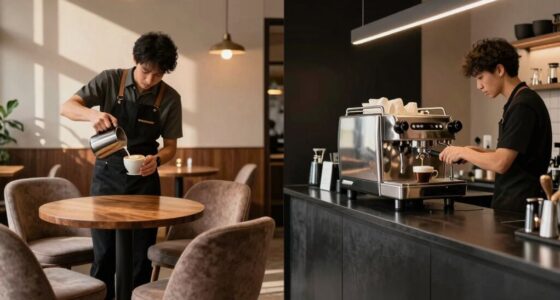
Tipping practices in coffee shops vary widely worldwide. In Western countries, you often tip 15-20% for good service, even for quick orders, and tips are a key income source for baristas. In Europe, small tips or rounding up are common, especially where service charges aren’t included, while Scandinavian customs see tipping as polite but not obligatory. In many Asian countries, tipping is less common or even discouraged, except in high-end spots. Keep exploring to discover more about these diverse customs.

Get coffee and tea gear delivered free with Prime
- Fast, free delivery on millions of items
- Prime Video, Amazon Music and more included
- Member-only deals all year
Key Takeaways
- Tipping norms vary widely: 15-20% in Western countries, often less or rounding up in Europe and Asia.
- In Europe, tipping is usually minimal or included in the bill, with regional differences influencing practice.
- Scandinavian countries view tipping as polite but not obligatory due to included service charges.
- Tipping is uncommon or discouraged in Japan and South Korea, emphasizing respectful service without monetary reward.
- Cultural and economic factors shape tipping customs, requiring awareness to show appropriate appreciation worldwide.

Tipping practices in coffee shops vary widely across the globe, reflecting different cultural norms and economic factors. As you visit different countries, you’ll notice how coffee shop etiquette and tipping customs shape your interactions with baristas and your overall experience. In some places, tipping is considered a generous gesture, while in others, it’s more of a customary expectation. Understanding these subtle differences helps you navigate social expectations and show appreciation for good service appropriately.
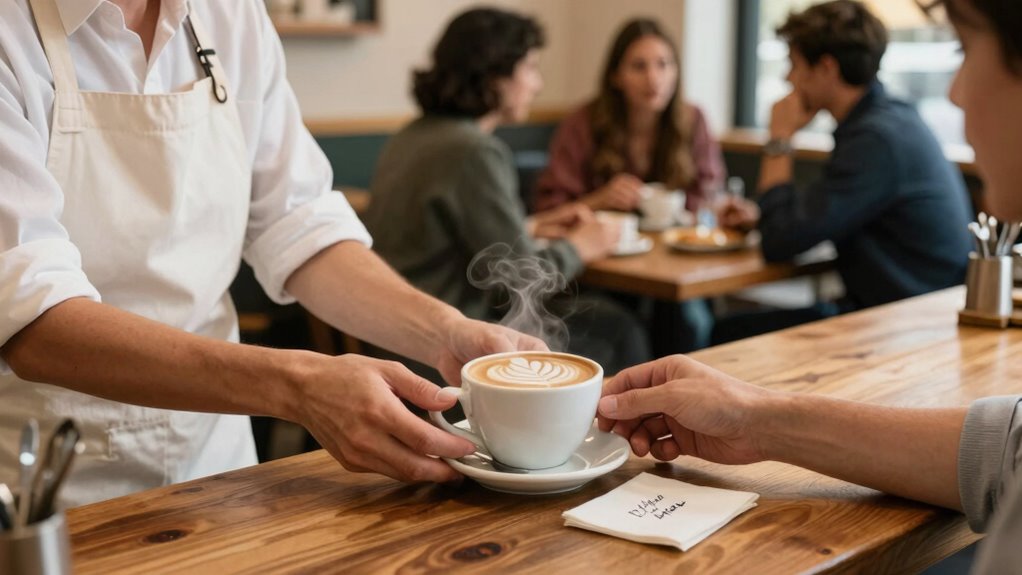
In many Western countries, especially the United States, tipping is an ingrained part of coffee shop etiquette. When you buy your coffee, tipping around 15-20% of the bill is common, especially if you’re ordering at the counter and the service exceeds basic expectations. Even if you’re just grabbing a quick espresso, leaving a small tip is appreciated. Here, tipping customs are often linked to your overall experience—faster service, friendly interactions, or special requests might warrant a slightly higher tip. In these cultures, tips aren’t just about politeness; they are a significant part of the baristas’ income, which makes understanding these customs important.
In contrast, many European countries like France, Italy, and Spain have different approaches. Coffee shop etiquette here often involves tipping a small amount or rounding up the bill, rather than calculating a percentage. In Italy, for example, rounding up your total or leaving a euro or two is standard practice, especially in cafes where service charges are not included. Meanwhile, in Scandinavian countries, tipping is more subdued, often seen as a polite gesture rather than an obligation. These regions typically include service charges in the price, so additional tipping is optional and less expected. Additionally, understanding regional tipping customs can help travelers avoid unintended rudeness. It’s also helpful to note that in some areas, tipping practices are influenced by the local economic factors, which shape the expectations around gratuity. A good rule of thumb is to consider the general cultural norms when deciding whether to tip or not.
In many European countries, tipping is often a small gesture or rounding up, with service charges typically included.
In Asian countries like Japan and South Korea, tipping is less common and sometimes even discouraged. Coffee shop etiquette emphasizes respectful service without the expectation of extra monetary rewards. If you do tip in these countries, it’s often seen as unusual or even rude, unless you’re in a tourist-heavy area or at a high-end establishment. Conversely, in some Middle Eastern countries, tipping is customary and appreciated, often around 10% of the bill, aligning with local tipping customs that value hospitality and generosity.
Understanding these cultural nuances helps you show respect for local customs and avoid awkward situations. Whether tipping generously, rounding up, or not tipping at all, your awareness of different coffee shop etiquette and tipping customs ensures you contribute positively to the service experience. It’s a small gesture that speaks volumes about your appreciation, no matter where you are.
portable coffee shop tipping jar
As an affiliate, we earn on qualifying purchases.
As an affiliate, we earn on qualifying purchases.
Frequently Asked Questions
Do Coffee Shop Employees Rely Solely on Tips for Income?
No, coffee shop employees don’t rely solely on tips for income. Customer expectations for friendly, efficient service motivate them to provide high service quality, which can lead to better tips. While tips supplement their wages, many coffee shops pay a base salary or hourly wage. Your tipping habits influence their earnings, but employer wages and policies also play a significant role in their overall income.
Are There Specific Tipping Percentages Preferred in Different Countries?
Tipping percentages are like a global dance, with each country’s cultural expectations leading the steps. In the US, 15-20% is standard, while in many European countries, rounding up or a few euros suffices. Tipping etiquette varies, so it’s best to research local customs. By understanding these differences, you show respect for local practices, ensuring your tips are appreciated and appropriate in any coffee shop worldwide.
How Do Cultural Attitudes Toward Tipping Vary Globally?
Cultural attitudes toward tipping vary widely because social norms and cultural etiquette shape expectations differently worldwide. In some countries, tipping is seen as an essential part of service workers’ income, while others consider it optional or even rude. You should always observe local customs and adapt your behavior accordingly. By understanding these cultural differences, you show respect for local social norms and guarantee a positive experience wherever you go.
Is Tipping Expected for Small Purchases Like a Single Coffee?
For small purchases like a single coffee, tipping isn’t always expected but can be appreciated if you feel the service quality was exceptional. Customer expectations vary depending on the country and establishment, so it’s helpful to observe local customs. When the staff provides attentive, friendly service, leaving a tip shows your gratitude. However, in some places, tipping might be optional or included in the bill, so consider local norms and your satisfaction level.
Are Digital or Mobile Tips Common in International Coffee Shops?
Digital or mobile tips are increasingly common in international coffee shops, especially with cashless tipping becoming a popular trend. You’ll often see options to tip via mobile payment apps or contactless systems, making it easy to show appreciation without cash. As mobile payment trends grow worldwide, more coffee shops now encourage cashless tipping, allowing you to tip conveniently through your phone after your purchase.
Conclusion
So, next time you’re handed a tiny cup of liquid gold, remember—your tip might just be the only thing keeping that barista from a caffeine-fueled revolt. Whether you’re in Tokyo or Toronto, tipping isn’t just about good manners; it’s about preventing an international coffee crisis. After all, who knew a few coins could wield such power? So, go ahead, tip generously—your caffeine addiction and global peace depend on it.
Halloween Picks
halloween
As an affiliate, we earn on qualifying purchases.