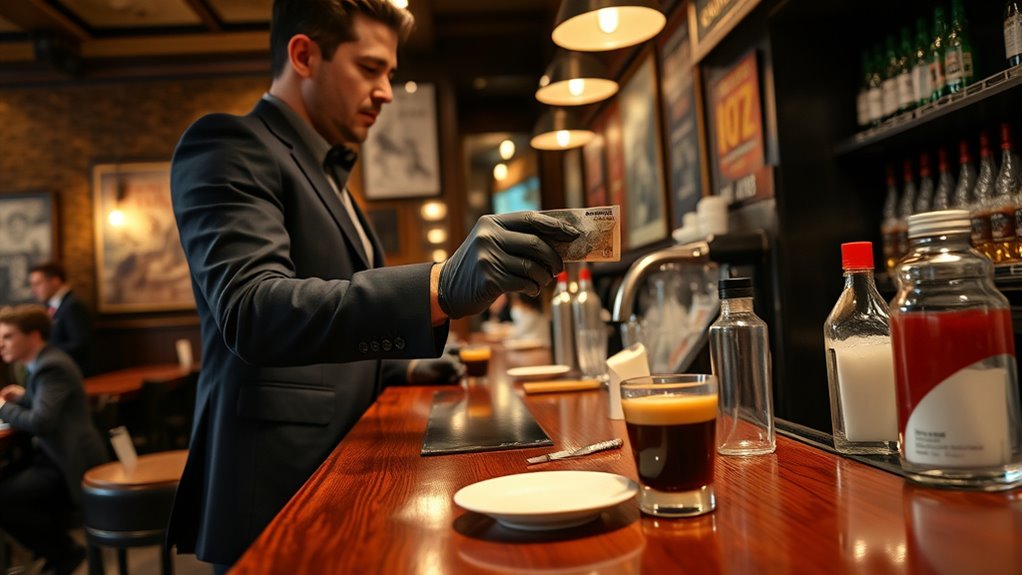

In Italian bar culture, you’ll find yourself standing at the bar, quickly paying with cash or card, and sipping your coffee—part of a daily ritual that strengthens community bonds. These quick exchanges aren’t just about grabbing a drink; they foster lively conversations and warm interactions with strangers and friends alike. This vibrant scene highlights Italy’s love for immediacy, connection, and shared moments. Keep exploring to discover how these simple actions create a rich social experience.

Get coffee and tea gear delivered free — and shop member deals
- Fast, free delivery on millions of items
- Access to Prime Big Deal Days deals on October 6–7
- Prime Video, Amazon Music and more included
Key Takeaways
- Standing at the bar is a common, social way to enjoy coffee quickly and engage with others.
- Paying at Italian bars is seamless, often cash or card, integrated into the social routine.
- Sipping espresso at the bar fosters community and spontaneous conversations among locals.
- Bar rituals are vital social acts, transforming daily routines into moments of connection.
- The bar culture emphasizes immediacy, warmth, and shared experiences in everyday Italian life.

Italian bar culture is a vibrant and essential part of everyday life, where locals gather not just to enjoy drinks but to socialize and connect. When you step into an Italian bar, you’ll notice that coffee isn’t just a beverage; it’s a deeply ingrained ritual that sets the tone for the day. Coffee rituals in Italy are precise and cherished, often involving an espresso shot that’s quick yet intensely flavorful. You’ll see people ordering their coffee at the bar, standing shoulder to shoulder with others, embracing a sense of community. This way of drinking coffee encourages social interactions, as it’s common to exchange greetings or brief conversations with the barista or fellow patrons. The act of standing at the counter isn’t just about convenience; it’s about participating in a daily tradition that fosters a sense of belonging.
In Italy, the bar isn’t just a place to grab a quick drink; it’s a social hub. As you observe, you’ll realize that many conversations start with a simple ‘buongiorno’ or ‘ciao,’ often accompanied by a friendly nod. These interactions are quick, yet meaningful, reinforcing the close-knit nature of Italian social life. Coffee rituals serve as a catalyst for these exchanges, creating a lively atmosphere that’s both casual and warm. Whether you’re catching up with friends or exchanging pleasantries with strangers, the bar provides a space where social interactions flow naturally, almost effortlessly. The act of paying is also part of this routine—cash or a quick card tap, and you’re back to your seat or ready to order another.
Additionally, the cultural significance of these rituals highlights how integral the bar is to daily Italian life, making it more than just a place to drink but a cornerstone of social connection. The social aspect extends beyond the morning routine. In the afternoon or evening, bars transform into gathering spots for locals who enjoy more than just coffee. Aperitifs, small bites, and lively conversations fill the space, keeping the spirit of community alive. Here, standing at the bar remains a popular choice, allowing you to remain engaged with the environment and with others. The Italian bar culture’s emphasis on standing, paying, and sipping reflects a lifestyle that values connection, immediacy, and shared moments. It’s a tradition that turns an everyday activity into an opportunity for social bonding, making every visit to an Italian bar a true experience of community and culture.
As an affiliate, we earn on qualifying purchases.
Frequently Asked Questions
Are There Specific Dress Codes for Italian Bars?
You don’t need a strict dress code for Italian bars, but bar attire is usually smart casual. Avoid overly revealing or athletic clothing, as locals tend to dress neatly. It’s best to wear clean, tidy clothes that show respect for the social setting. Comfortable footwear helps if you’re standing for a while. Overall, dress well enough to blend in with the stylish, relaxed vibe of Italian bar culture.
Can Tourists Participate in Local Bar Traditions?
Imagine stepping into a lively piazza, the aroma of fresh espresso in the air—yes, you can join in local bar customs. Tourists are warmly welcomed to participate, blending in with locals by standing at the bar, paying quickly, and savoring a quick sip. Embrace the rhythm, observe the etiquette, and enjoy the authentic experience—your participation enriches the vibrant tapestry of Italian bar culture.
What Are the Common Italian Bar Etiquette Rules?
When visiting an Italian bar, you should greet the barista with a friendly “buongiorno” or “ciao.” Keep interactions brief and polite, especially when ordering at the bar. Follow bar seating etiquette by standing at the counter or sitting at designated tables. Pay immediately after ordering, usually in cash, and avoid lingering excessively. Respect local customs, and you’ll enjoy a genuine Italian bar experience.
How Do Tipping Customs Vary Across Regions?
Think of Italy’s regions like different flavors of gelato—each has its unique taste. Tipping variations can be subtle or more generous depending on where you are. In the North, you might tip a little more as a sign of appreciation, while in the South, it’s often less expected. Regional differences influence how much you tip, so stay attentive and adapt to local customs to show respect and kindness.
Are There Age Restrictions for Entering Italian Bars?
You should know that Italy has age restrictions for entering bars, mainly related to the legal drinking age, which is 18. When you go to an Italian bar, you’ll need to show ID if you look underage. Bars generally enforce these rules strictly, especially for purchasing alcohol. So, if you’re 18 or older, you’re allowed to enter and enjoy the experience; if not, you might be asked to leave.
Conclusion
Embrace Italy’s vibrant bar culture, where standing at the counter, paying with a simple nod, and sipping your espresso create moments of genuine connection. Imagine sharing a Negroni in a bustling piazza, feeling timeless as if you’re part of history, just like the legendary poets of the past. Remember, in Italy, it’s not just about the drink—it’s about savoring life’s simple pleasures, even if someday you’ll wish you’d been here during the Roaring Twenties.
Halloween Picks
halloween
As an affiliate, we earn on qualifying purchases.