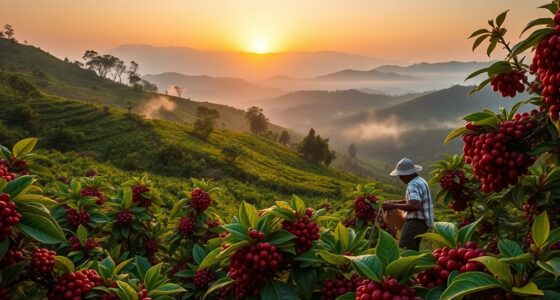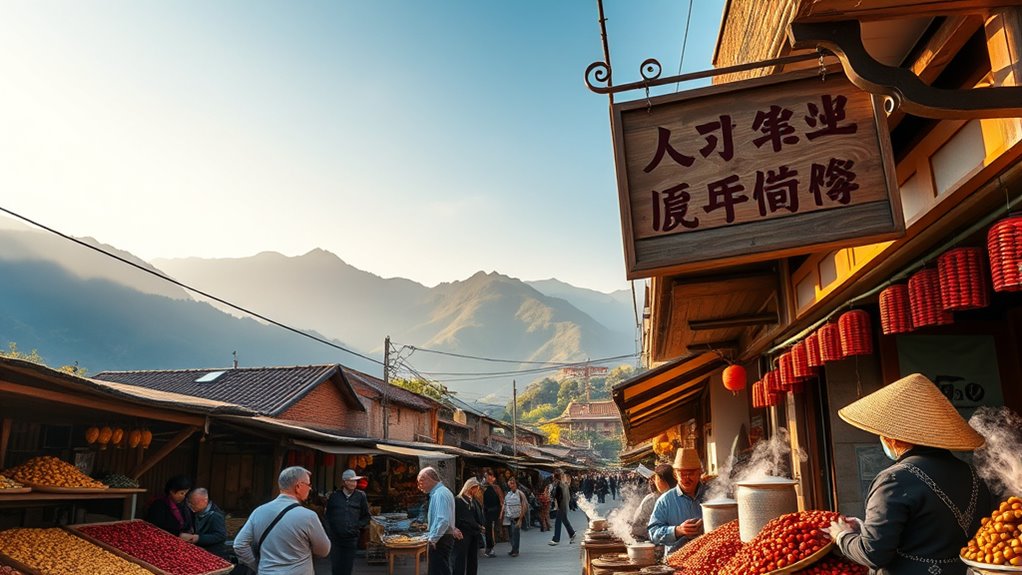

Discover the vibrant coffee scene in Yunnan’s Pu’er and Baoshan, where rich soils and ideal climate produce exceptional Arabica beans. You’ll find a mix of bustling cafes and quiet shops that showcase local craftsmanship and artisanal brewing techniques like pour-over and French press. Farmers focus on sustainable practices that boost quality and flavor. Exploring these regions reveals a commitment to innovation and tradition, offering a true taste of Yunnan’s coffee heritage—there’s much more to uncover beneath the surface.
Key Takeaways
- Yunnan’s high-altitude, fertile soil creates ideal conditions for premium Arabica coffee cultivation in Pu’er and Baoshan.
- The regions emphasize sustainable, organic farming practices to produce high-quality, environmentally friendly coffee beans.
- Pu’er and Baoshan boast a vibrant coffee culture with artisanal cafes, diverse brewing methods, and skilled baristas.
- Local producers innovate through roasting techniques and blending to enhance flavor profiles and maintain quality control.
- Visiting cafes offers insight into Yunnan’s rich coffee craftsmanship and growing reputation as a major Chinese coffee hub.
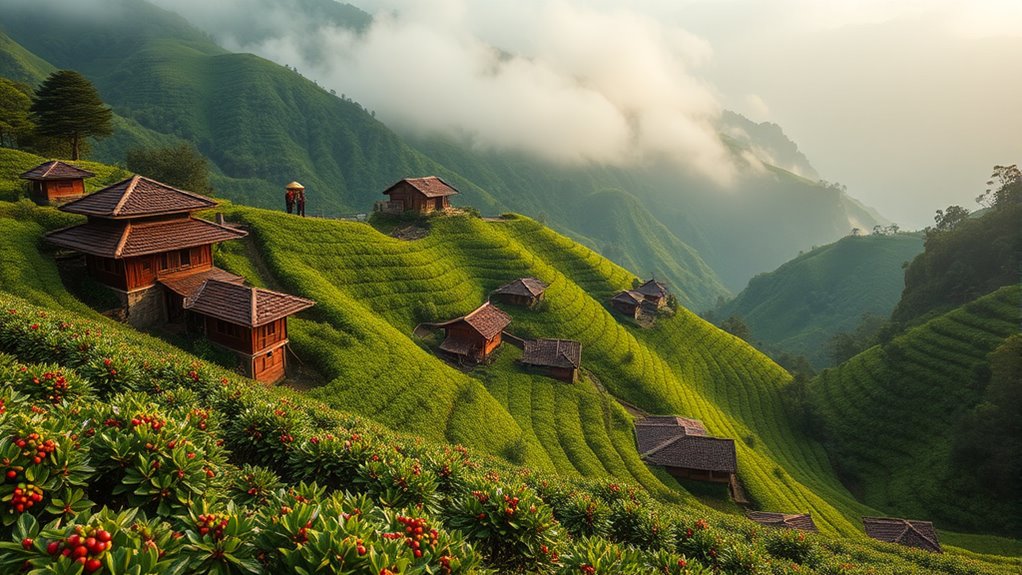
Ever wondered why Yunnan has become China’s premier coffee region? The answer lies in its unique climate, rich soil, and dedication to quality coffee cultivation. Over the past few decades, farmers and entrepreneurs have invested heavily in growing high-quality Arabica beans, taking advantage of the region’s altitude and favorable weather. This combination creates the perfect environment for coffee cultivation, producing beans with complex flavors that draw both local and international attention. As you explore Yunnan’s coffee scene, you’ll notice that the region emphasizes meticulous cultivation practices, ensuring that only the best beans make it to market. The focus on sustainable farming methods and organic cultivation not only enhances the flavor profiles but also promotes environmental health, making Yunnan a standout in China’s coffee industry. Sustainable farming practices are a cornerstone of Yunnan’s commitment to quality and environmental stewardship.
When it comes to brewing techniques, Yunnan’s coffee culture is diverse and evolving. Many local roasters and cafes emphasize traditional brewing methods like pour-over and French press, which highlight the beans’ nuanced flavors. These techniques allow you to control variables such as temperature and extraction time, bringing out the best in each cup. You’ll find that Yunnan coffee shops often serve freshly brewed coffee, emphasizing artisanal preparation. The region’s baristas are passionate about educating customers on proper brewing techniques, encouraging you to appreciate the delicate aroma and vibrant taste profiles of Yunnan’s coffee beans. Whether you prefer a smooth drip brew or a more intense espresso shot, you’ll discover that mastering brewing techniques is key to disclosing the full potential of Yunnan coffee.
Yunnan’s commitment to quality extends beyond cultivation and brewing. Many local producers are experimenting with innovative methods to enhance flavor, such as applying unique roasting profiles or blending different beans to create signature profiles. As a coffee enthusiast, you’ll notice the region’s dedication to quality control, ensuring each cup delivers a consistent and satisfying experience. Visiting local cafes, you’ll likely witness baristas adjusting grind size, water temperature, and extraction time—skills that make a significant difference in flavor and aroma. This attention to detail reflects Yunnan’s broader mission to elevate its coffee reputation and share its rich, flavorful beans with the world. Whether you’re sampling coffee in a bustling café in Pu’er or a quiet shop in Baoshan, you’ll experience firsthand the passion and craftsmanship that define Yunnan’s coffee culture.
Frequently Asked Questions
What Is the Best Time to Visit Yunnan for Coffee Tasting?
The best season to visit Yunnan for coffee tasting is during the dry months, from October to April, when the weather is clear and pleasant. Avoid the rainy months of June to September, as heavy rain can disrupt tours and harvests. This period offers ideal conditions to explore coffee plantations, enjoy fresh brews, and experience the vibrant local culture without weather-related interruptions.
Are There Any Local Coffee Festivals in Pu’Er and Baoshan?
Yes, you can enjoy local coffee events and regional coffee celebrations in Pu’er and Baoshan. These festivals often happen during harvest season, typically from late autumn to early winter. Attending these events gives you a chance to taste freshly brewed coffee, learn about local roasting techniques, and experience the vibrant coffee culture firsthand. Keep an eye on local announcements, as these celebrations are lively and deeply rooted in the area’s coffee heritage.
How Do Yunnan’s Climate and Altitude Affect Coffee Flavor Profiles?
You’ll notice that Yunnan’s high altitude considerably influences coffee flavor, giving it a bright acidity and complex notes. The climate impact, with its warm days and cool nights, enhances the beans’ development, resulting in a well-rounded cup. Altitude influence promotes slower maturation, enriching flavors, while the moderate climate ensures balanced growth. Together, these factors create the unique, vibrant profiles that make Yunnan coffee stand out globally.
Can Tourists Participate in Coffee Plantation Tours in These Regions?
Yes, you can participate in coffee plantation tours in Pu’er and Baoshan. These regions often offer guided tours where you can learn about coffee cultivation, processing, and tasting. Additionally, attending local coffee festivals gives you a chance to experience regional coffee culture firsthand. Be sure to check schedules and book in advance, as these tours and festivals provide a unique insight into Yunnan’s vibrant coffee scene.
What Are the Traditional Methods of Coffee Processing in Yunnan?
You’ll find that Yunnan’s traditional coffee processing involves fermentation and sun drying. After harvesting, farmers often use traditional fermentation methods to develop flavor complexity, allowing the beans to ferment naturally in controlled environments. Once fermentation is complete, they sun dry the beans on large mats, which enhances the coffee’s aroma and flavor. These methods preserve the region’s unique coffee characteristics and add to the rich cultural experience of Yunnan’s coffee production.
Conclusion
Now that you’ve explored Yunnan’s unique coffee scene, imagine sipping a freshly brewed cup in Pu’er’s lush mountains, feeling the vibrant local culture around you. Just like Li, a traveler who discovered an award-winning coffee farm here, you too can experience Yunnan’s rich flavors firsthand. So, next time you crave something special, remember this hidden gem—where tradition and taste blend seamlessly—and let Yunnan’s coffee inspire your next adventure.