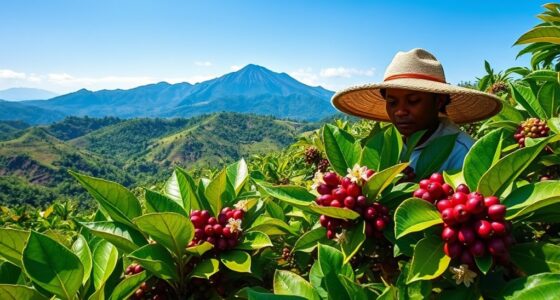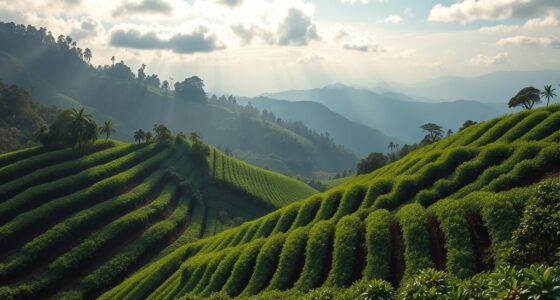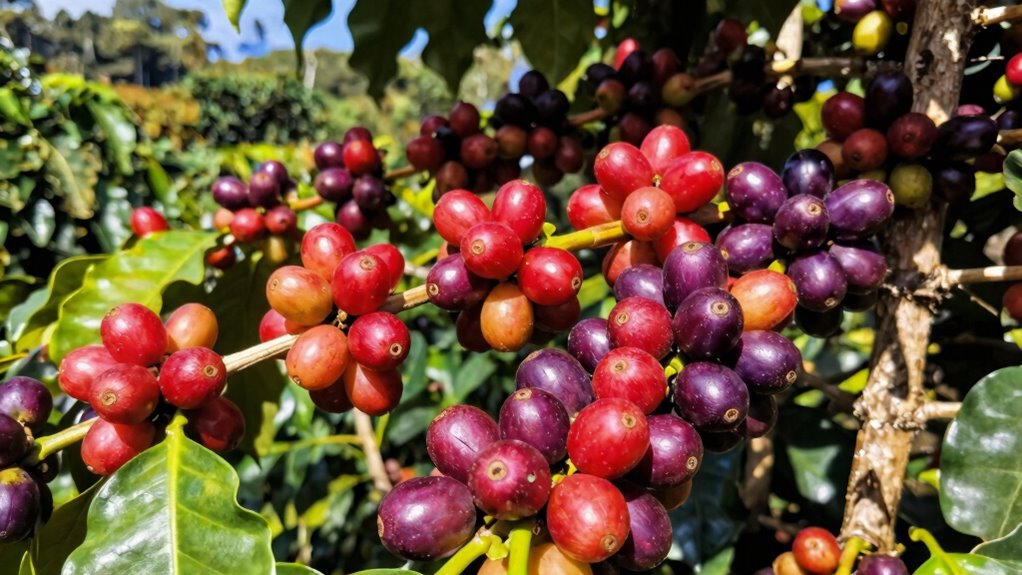

Uganda’s coffee story blends the best of both worlds—high-quality Arabica from its high-altitude southwest and bold Robusta from lower regions. This diverse cultivation allows you to enjoy a wide range of flavors while benefiting from the country’s sustainable practices and innovative processing. Uganda’s ability to produce both varieties keeps its market resilient and adaptable to global trends. If you want to discover how this unique combination shapes its reputation, there’s more to uncover.

Get coffee and tea gear delivered free with Prime
- Fast, free delivery on millions of items
- Prime Video, Amazon Music and more included
- Member-only deals all year
Key Takeaways
- Uganda’s diverse topography and climate enable cultivation of both high-quality Arabica and robust Robusta coffees in a single origin.
- Arabica thrives in high-altitude southwestern regions, while Robusta is grown in lower elevations, showcasing geographic diversity.
- Sustainable farming and modern processing techniques enhance the quality and consistency of both coffee varieties.
- The country’s ability to produce both types allows market flexibility and resilience against global price fluctuations.
- Uganda’s focus on specialty coffee and innovation positions it as a prominent, versatile coffee origin worldwide.
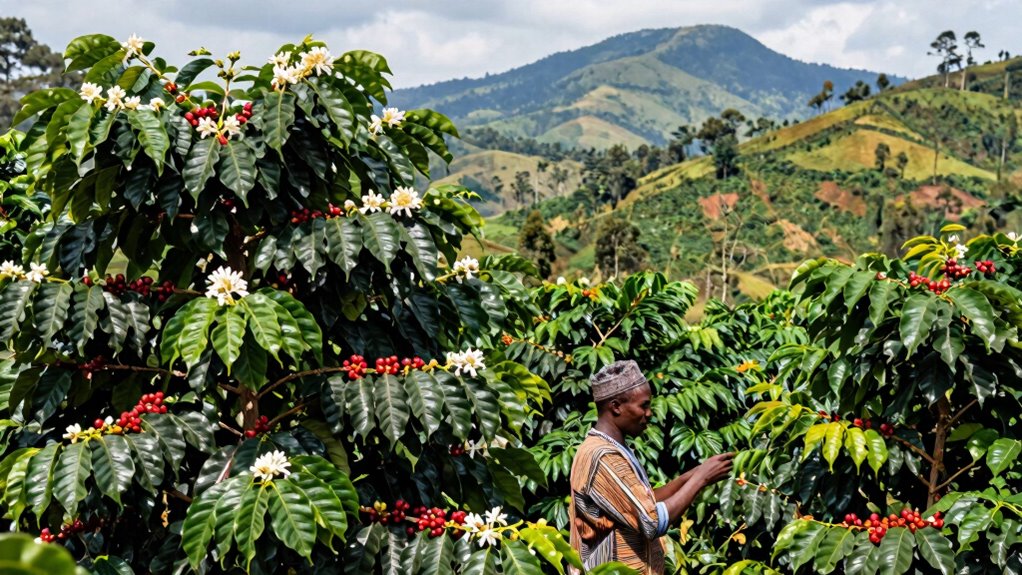
Have you ever wondered how Uganda became a notable player in the global coffee scene? It all starts with the country’s rich coffee cultivation, which has deep roots dating back over a century. Uganda’s unique climate and fertile volcanic soils create ideal conditions for growing both Arabica and Robusta coffee beans. Arabica, known for its smooth flavor and aromatic profile, is cultivated mainly in the high-altitude regions of the southwest. Robusta, on the other hand, thrives in lower elevations and is valued for its strong, bold taste and higher caffeine content. By mastering the cultivation of both varieties, Uganda has positioned itself as a versatile coffee producer capable of meeting diverse market demands. The country’s climate and soil conditions are fundamental to producing high-quality beans across both types of coffee. Additionally, the country’s commitment to sustainable farming practices ensures the long-term health of its coffee landscapes and supports biodiversity conservation efforts. The ongoing investment in modern processing techniques further enhances the quality and consistency of Ugandan coffee, making it more competitive globally. Recognizing the importance of diversified coffee production, Ugandan farmers are increasingly exploring innovative methods to optimize yields and quality.
In recent years, market trends have played a significant role in shaping Uganda’s coffee industry. The global shift toward specialty coffees has increased demand for high-quality Arabica beans, pushing Ugandan farmers and exporters to adopt better farming practices and improve processing methods. This push for quality has helped Uganda carve out a niche in the specialty coffee market, appealing to consumers who seek unique flavors and ethically sourced products. Meanwhile, Robusta remains a core component of Uganda’s coffee exports, especially for instant coffee and blends favored in many markets. The country’s ability to balance both types of coffee has allowed it to remain resilient amid fluctuating global prices and changing consumer preferences.
As an affiliate, we earn on qualifying purchases.
Frequently Asked Questions
How Does Uganda’s Climate Specifically Influence Coffee Flavor Profiles?
Uganda’s climate greatly influences coffee flavor profiles through altitude and rainfall patterns. Higher altitudes create cooler temperatures, which slow bean maturation and enhance acidity and complex flavors. Consistent rainfall guarantees healthy plant growth and balanced development. These conditions enable you to taste brighter, more nuanced coffees, especially in Arabica varieties. Conversely, lower altitudes and irregular rainfall can lead to bolder, earthier Robusta profiles, highlighting Uganda’s diverse climate impact.
What Are the Key Challenges Faced by Ugandan Coffee Farmers Today?
You face key challenges like maintaining farmer livelihoods amid fluctuating coffee prices and climate change impacts. Export regulations add hurdles, complicating market access and fair trade practices. These issues threaten your ability to sustain farming operations and earn reliable income. To overcome them, you need supportive policies, better infrastructure, and access to resources that help improve coffee quality and guarantee farmers can thrive in this competitive industry.
How Does Uganda Ensure the Quality and Purity of Its Coffee Beans?
Did you know Uganda produces over 4 million bags of coffee annually? To guarantee quality and purity, you work with farmer cooperatives that promote coffee sustainability through strict quality controls. These cooperatives provide training on proper harvesting and processing methods, which helps maintain high standards. Regular inspections and certifications further guarantee the beans meet international quality benchmarks, preserving Uganda’s reputation as a top coffee origin.
Are There Any Unique Processing Methods Used in Uganda’s Coffee Production?
You’ll find Uganda uses unique processing methods like traditional fermentation techniques to enhance coffee flavor profiles. After harvesting, beans often undergo specific fermentation processes to develop distinct tastes. Additionally, drying methods such as sun drying or mechanical drying are carefully controlled to preserve bean quality. These techniques help Uganda produce high-quality Arabica and Robusta coffee, emphasizing their commitment to maintaining bean purity and flavor integrity throughout the production process.
What Is the Future Outlook for Uganda’s Arabica and Robusta Coffee Industry?
Your journey through Uganda’s coffee future looks promising, like a sunrise over lush plantations. With a focus on sustainable farming, the industry’s roots deepen, promising richer flavors and better livelihoods. As export growth picks up pace, Uganda’s Arabica and Robusta are poised to carve a larger slice of the global market. You can expect a vibrant future where quality and sustainability intertwine, fueling both local pride and international demand.
Conclusion
You now see how Uganda’s rich coffee journey is like a vibrant tapestry, woven with both Arabica’s delicate notes and Robusta’s bold strength. Just as a garden blooms with diverse colors, this origin offers a spectrum of flavors waiting for you to explore. Whether you prefer the smooth charm of Arabica or the robust punch of Robusta, Uganda invites you to savor its unique blend, a true paradise for coffee lovers like you.
Halloween Picks
halloween
As an affiliate, we earn on qualifying purchases.