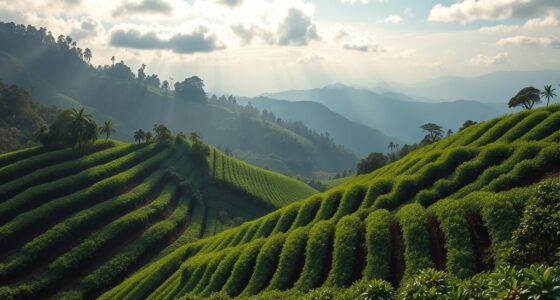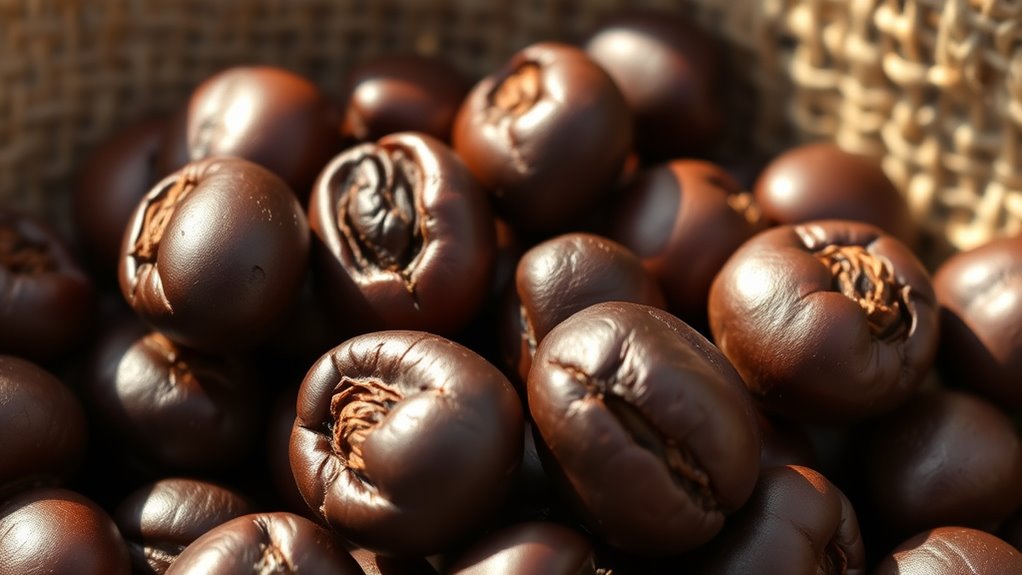

Tanzania Peaberries are often misunderstood as inferior due to their small size, but they actually offer a vivid, concentrated flavor profile. You’ll notice bright acidity, lively citrus and berry notes, and a delicate floral aroma. Carefully handpicked and washed, these beans showcase the artistry behind quality coffee. Their unique shape helps deliver consistent roasting and flavor. Curious to discover how these tiny beans produce such big flavors? Keep exploring to unleash their full potential.
Key Takeaways
- Tanzania Peaberries are small, single-seed coffee beans with a distinct, concentrated flavor profile.
- They develop through specific handpicking methods, emphasizing quality and ripeness.
- The wet processing method enhances their bright acidity and lively citrus and berry notes.
- Their shape and size promote even roasting, resulting in vibrant, well-rounded flavors.
- The “myth” suggests Peaberries are superior, but their unique flavor reflects careful cultivation and processing techniques.
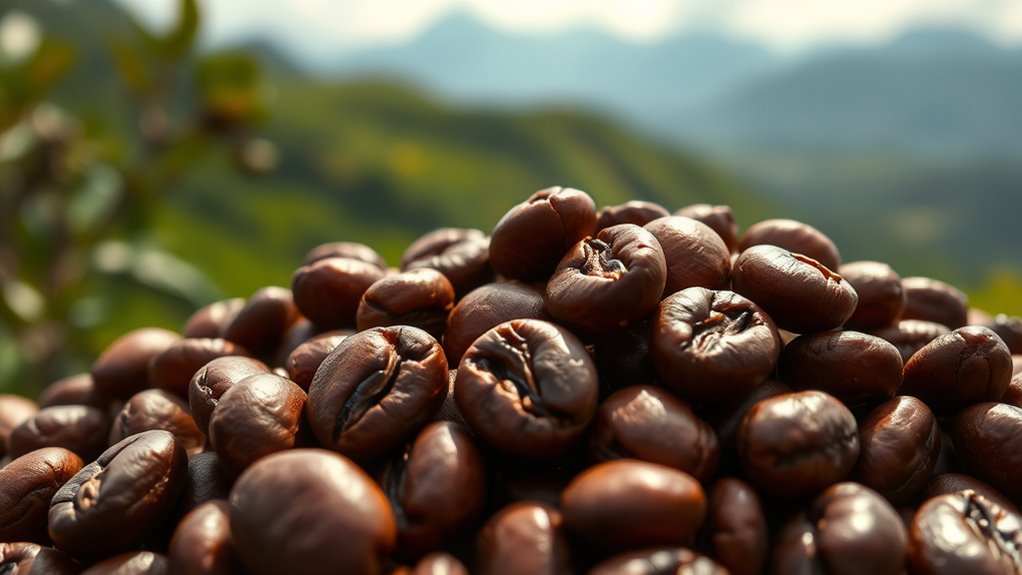
Tanzania Peaberries are a unique coffee variety known for their small, rounded beans and vibrant flavor profile. These beans develop through specific harvest techniques that guarantee quality and consistency. Unlike standard coffee cherries, which contain two beans, peaberries form when only one seed develops inside the cherry, resulting in a more compact and rounded bean. During harvest, skilled farmers often handpick the ripe cherries to make certain only the best are selected. They pay close attention to the color and firmness of each fruit, picking at peak ripeness to preserve the beans’ delicate flavors. This careful approach not only enhances the overall quality but also influences the flavor profile, as ripe cherries yield beans with more complex and bright notes. The harvest techniques for Tanzania Peaberries emphasize precision, making sure that each bean is at its ideal stage of maturity, which directly impacts the vibrant and nuanced flavors that coffee enthusiasts seek.
Once harvested, the processing method plays an essential role in shaping the flavor profile of these beans. Most producers use washed or wet processing, which involves removing the cherry’s outer layers before drying. This method highlights the beans’ natural brightness and clarity, allowing their distinctive characteristics to shine through. The small size and uniformity of peaberries also mean they tend to roast more evenly, which helps develop a consistent flavor profile. Expect bright acidity, with lively citrus and berry notes, complemented by a smooth body and subtle floral undertones. The unique shape of the peaberry allows for better heat transfer during roasting, often resulting in a more intense and concentrated flavor experience. Additionally, the shape and size of these beans contribute to their even roast, ensuring flavor consistency across batches.
When you brew Tanzania Peaberries, you’ll notice how their vibrant flavor profile stands out from other coffees. The meticulous harvest techniques and careful processing ensure that each cup delivers an energetic burst of flavor with a balanced acidity that awakens your palate. Whether you prefer a pour-over, French press, or espresso, these beans promise a lively, well-rounded experience. The small, rounded beans are often associated with a heightened aromatic profile, offering fragrant floral and fruity notes that linger pleasantly. As you enjoy the coffee, remember that the specific harvest techniques and attention to detail during processing directly contribute to this exceptional flavor profile. Tanzania Peaberries aren’t just a myth—they’re a proof of the artistry of coffee cultivation, where every step from harvest to cup enhances the vibrant, memorable taste you experience.
Frequently Asked Questions
How Do Tanzania Peaberries Compare to Other Peaberry Coffee Varieties?
You’ll find Tanzania peaberries stand out with their unique flavor profile and consistent size. During the harvest season, the small, round beans develop rich, bright acidity and fruity notes, making them different from other peaberry varieties. Their bean size guarantees even roasting, enhancing flavor extraction. Compared to others, they often have a more vibrant, complex taste, providing a distinctive experience that highlights Tanzania’s high-altitude, volcanic soil influence.
Are Tanzania Peaberries Suitable for Espresso Brewing?
Yes, Tanzania peaberries are suitable for espresso brewing. Their flavor profile features bright acidity, fruity notes, and a full-bodied richness, making them ideal for a bold, complex espresso shot. To extract the best flavors, use proper brewing techniques like fine grinding and precise tamping. Their unique character shines through in espresso, offering a vibrant, aromatic experience that highlights the peaberry’s distinct qualities.
What Is the Best Storage Method for Tanzania Peaberries?
You should store Tanzania peaberries in airtight containers to preserve their freshness and flavor. Keep them in a cool, dark place away from direct sunlight, heat, and humidity. This prevents oxidation and maintains the beans’ aromatic qualities. Avoid storing them in the fridge or freezer, as moisture can damage the beans. Proper storage guarantees that your Tanzania peaberries stay fresh and flavorful for as long as possible, enhancing your brewing experience.
Do Tanzania Peaberries Have Any Unique Processing Techniques?
Tanzania peaberries often undergo traditional processing methods like washed or wet processing, which enhances their bright acidity and clean flavor profile. Harvesting techniques focus on selectively picking ripe cherries to guarantee quality. These careful harvesting methods, combined with precise processing steps, reveal the peaberries’ unique characteristics. You’ll notice that the meticulous approach to processing and harvesting contributes considerably to the vibrant, well-balanced flavors that set Tanzania peaberries apart from other coffees.
How Does Altitude Affect the Flavor of Tanzania Peaberries?
Altitude impacts the flavor development of Tanzania peaberries by influencing the coffee’s growth environment. Higher altitudes mean cooler temperatures, which slow bean maturation, allowing more complex flavors to develop. As you taste, you’ll notice brighter, more vibrant acidity and nuanced profiles. Lower altitudes might produce bolder, earthier notes, but high-altitude Tanzania peaberries deliver a refined, layered flavor that coffee enthusiasts appreciate for its depth and brightness.
Conclusion
Think of Tanzania peaberries as hidden gems in a treasure chest, each one uniquely crafted by nature’s own hand. Their rich flavors and intriguing myths invite you to begin a journey of discovery, much like explorers charting uncharted waters. When you savor these beans, you’re not just tasting coffee—you’re revealing a world of stories and secrets. Embrace the adventure, and let each sip be a step deeper into Tanzania’s flavorful mystery.