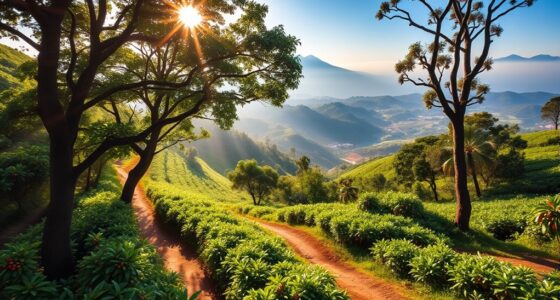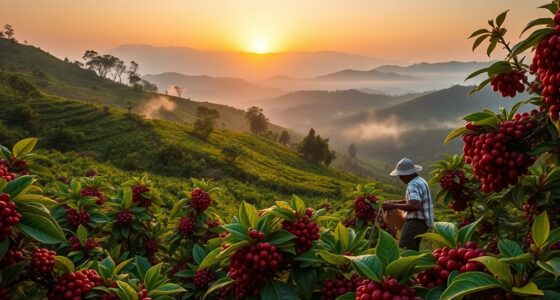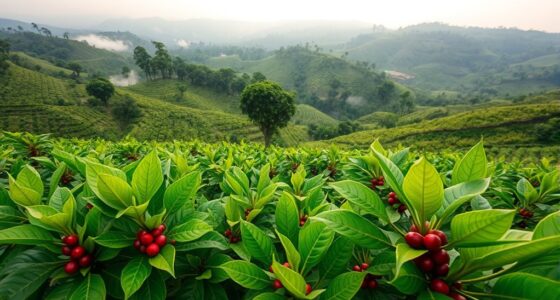
Discover the vibrant coffee regions of Cajamarca and Cusco in Peru, where sustainable farming practices and traditional techniques produce high-quality beans with unique flavors. Cajamarca offers bright, crisp tastes thanks to eco-friendly methods like shade-grown cultivation and organic fertilization, while Cusco blends indigenous traditions with modern sustainability to create complex, nuanced aromas. Both regions prioritize environmental preservation and fair trade, ensuring quality and community support. Continue exploring to uncover the fascinating stories behind these exceptional Peruvian coffees.
Key Takeaways
- Cajamarca and Cusco produce high-quality coffee with unique flavor profiles, emphasizing sustainable and environmentally friendly cultivation methods.
- Cajamarca’s coffee is known for bright, crisp flavors derived from shade-grown and organic farming practices.
- Cusco combines indigenous traditions with modern agroforestry, promoting biodiversity and complex aroma profiles.
- Both regions prioritize fair trade, organic practices, and water conservation to support community and environmental sustainability.
- Visiting coffee farms in these regions reveals a blend of traditional techniques and innovative sustainable practices.
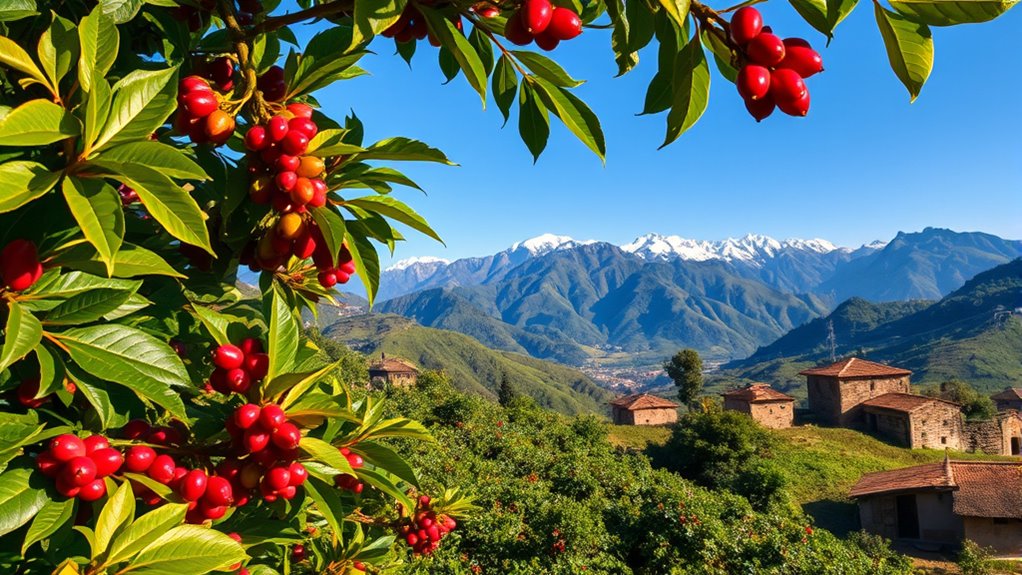
Are you curious about Peru’s vibrant coffee scene? If so, you’re in for a treat. Both Cajamarca and Cusco are emerging as key regions that showcase Peru’s rich coffee cultivation traditions. These areas are not only known for producing high-quality beans but also for their commitment to sustainable practices. As you explore these regions, you’ll discover how local farmers blend tradition with innovation to create exceptional coffee while caring for their environment.
In Cajamarca, coffee cultivation has deep roots, dating back decades, but it’s the recent focus on sustainable practices that truly sets it apart. Farmers here emphasize environmentally friendly methods, such as organic fertilization, shade-grown coffee, and water conservation techniques. These practices help maintain soil health, protect local biodiversity, and ensure the long-term viability of coffee farming. When you taste coffee from Cajamarca, you’re experiencing the fruits of these sustainable efforts—bright, crisp flavors with a clean finish that reflect the careful attention given to each step of cultivation.
Cajamarca’s sustainable coffee practices yield bright, crisp flavors with a clean finish.
Cusco’s coffee scene is equally impressive, blending indigenous traditions with modern sustainability efforts. Coffee growers in Cusco often cultivate their crops on small plots, integrating agroforestry systems that promote biodiversity and soil stability. These methods not only support the local ecosystem but also produce a unique flavor profile prized by connoisseurs worldwide. Farmers here often prioritize fair trade practices, ensuring that workers receive fair wages and that the community benefits from the coffee industry’s growth. As you sip a cup of Cusco coffee, you’ll notice its complex aroma and nuanced taste, which are direct results of these sustainable and ethical cultivation methods.
Throughout both regions, you’ll see how local farmers are actively involved in preserving their environment. They adopt organic farming, minimize chemical use, and incorporate traditional techniques passed down through generations. These efforts demonstrate a genuine commitment to sustainability, balancing economic needs with ecological responsibility. Visiting farms or coffee cooperatives, you’ll witness firsthand how sustainable practices are woven into everyday operations, making each cup not only delicious but also a symbol of environmental stewardship. Additionally, the integration of vertical storage solutions and other organization methods helps farmers efficiently manage their resources and reduce waste, further supporting their sustainability goals.
Top picks for "peru coffee cajamarca"
Open Amazon search results for this keyword.
As an affiliate, we earn on qualifying purchases.
Frequently Asked Questions
What Are the Best Times of Year to Visit Cajamarca and Cusco for Coffee Tours?
The best travel seasons for coffee tours in Cajamarca and Cusco are during the dry season, from May to October. These ideal visiting months offer clear skies and pleasant weather, perfect for exploring coffee plantations and participating in tours. Avoid the rainy season from November to April, as heavy rains can disrupt your plans. Visiting during these months ensures a smoother, more enjoyable experience soaking in the rich coffee culture.
Are There Any Coffee Festivals or Events in Cajamarca and Cusco?
Yes, you can enjoy exciting coffee festivals and events in Cajamarca and Cusco. During these festivals, you’ll experience vibrant celebrations centered around organic coffee tours and local coffee traditions. These events typically feature tastings, workshops, and cultural performances, giving you a deeper appreciation of Peru’s rich coffee heritage. Attending a coffee festival is a fantastic way to immerse yourself in the local coffee scene and learn about sustainable, organic coffee practices firsthand.
How Do Altitude Differences Affect Coffee Flavor in These Regions?
Altitude impact profoundly influences coffee flavor in these regions. As you move to higher elevations, you’ll notice a brighter, more acidic profile because the cooler temperatures slow bean maturation. In Cajamarca, higher altitudes create a vibrant, complex flavor, while in Cusco, the variation adds fruity and floral notes. These altitude differences lead to distinct flavor variation, giving each region its unique coffee character that you can enjoy in every sip.
Are There Eco-Friendly or Organic Coffee Farms Available for Tours?
They say “what’s good for the planet is good for us,” and you’ll find plenty of eco-friendly, organic coffee farms offering tours. Many of these farms prioritize sustainable practices and hold organic certification, ensuring you enjoy coffee produced responsibly. Visiting these farms, you get to see firsthand how they protect the environment while producing high-quality beans. It’s a great way to support sustainable agriculture and enjoy authentic coffee experiences.
What Local Customs Should Visitors Respect When Touring Coffee Plantations?
When touring coffee plantations, you should respect local customs by dressing modestly in local dress to show appreciation for their culture. Always ask before taking photos to follow photography etiquette, especially of people or private spaces. Be mindful of your surroundings, avoid loud noises, and listen carefully to guides. Showing genuine respect and curiosity helps you connect better with locals and enhances your experience.
Conclusion
Now that you’ve explored Cajamarca and Cusco, you’re ready to set out on an unforgettable coffee adventure. These regions produce some of the most remarkable brews on the planet, rivaling the finest in the world. So, sip slowly, savor every note, and let the vibrant flavors transport you to the heart of Peru’s rich coffee heritage. Trust us, once you taste it, you’ll be hooked forever—your love for coffee will never be the same again.