In the Eastern Highlands of Papua New Guinea, you’ll find coffee grown on small family farms amid volcanic soils and rugged terrain. These farms focus on traditional, sustainable methods, producing beans that showcase vibrant acidity, fruity notes, and complex flavors. Whether the beans are processed through washed or natural methods, they reflect careful craftsmanship and a distinct environment. If you want to discover more about what makes this coffee unique, there’s plenty of fascinating details to explore.
Key Takeaways
- Eastern Highlands coffee thrives in volcanic soil with ideal high-altitude, moderate temperatures, and consistent rainfall.
- Small family farms practice sustainable methods, focusing on meticulous cultivation and traditional processing techniques.
- Washing (wet process) emphasizes bright, clean cups with vibrant acidity and fruit notes; natural processing offers wine-like flavors.
- Regional coffee often wins awards for aroma, flavor complexity, and a clean finish, reflecting high-quality craftsmanship.
- Tasting profiles feature rich, fruity, and nuanced flavors, showcasing the unique environment and careful processing of Eastern Highlands coffee.

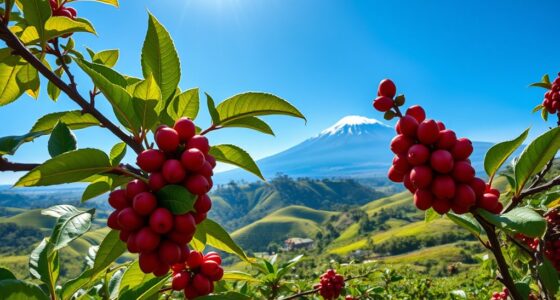
Are you curious about what makes Papua New Guinea coffee stand out? The answer lies in the unique combination of its coffee farms and processing methods. Nestled in the rugged terrain of the Eastern Highlands, the coffee farms here thrive in an environment that’s both challenging and rewarding. These farms are often small, family-run operations that have been passed down through generations, each one carefully cultivating coffee plants amidst lush, volcanic soil rich in minerals. The altitude, coupled with consistent rainfall and moderate temperatures, creates ideal conditions for growing high-quality Arabica beans. When you visit a coffee farm in this region, you’ll notice that farmers pay close attention to every detail — from planting to harvest — guaranteeing the beans develop their full flavor potential.
Processing methods are a vital factor that elevates Papua New Guinea coffee’s reputation. Unlike mass-produced, industrial methods, many local farmers employ traditional and innovative techniques that preserve the beans’ complex flavors. One common approach is the washed or wet process, where coffee cherries are carefully pulped and fermented before washing off the mucilage. This method produces a clean, bright cup with vibrant acidity and clear fruit notes. Some farmers also experiment with natural or dry processing, where cherries are sun-dried with the fruit still intact. This technique imparts a fruity, wine-like quality to the coffee, making each cup a distinctive experience. The choice of processing method directly influences the final profile, and many producers take pride in selecting the approach that best highlights their beans’ unique characteristics.
In the Eastern Highlands, coffee farmers often combine traditional practices with modern techniques, such as carefully controlled fermentation and careful sorting, to guarantee only the best beans reach the market. The meticulous attention to processing is reflected in the consistency and exceptional quality of Papua New Guinea coffee. It’s not uncommon for coffee from this region to receive awards for its aroma, flavor complexity, and clean finish. When you brew a cup, you can taste the effort and care that go into each stage — from selecting ripe cherries on the farm to employing precise processing methods. This dedication results in a coffee experience that’s both rich and nuanced, showcasing the distinctiveness of Papua New Guinea’s Eastern Highlands.
Frequently Asked Questions
What Are the Best Local Coffee Varieties in Eastern Highlands?
You’ll find that the best local coffee bean varieties in the Eastern Highlands include Arabica and Typica, known for their rich flavors and smooth profiles. During harvesting, you should focus on selective picking, ensuring only ripe cherries are harvested, which enhances quality. Using proper harvesting techniques helps preserve bean integrity, resulting in a vibrant, aromatic cup. These varieties and methods combine to produce some of the most sought-after coffee in the region.
How Does Altitude Affect Coffee Flavor Profiles in This Region?
Higher altitudes in the Eastern Highlands enhance coffee flavor, giving you a brighter, more complex cup. The mountain terroir influences the flavor profile, adding unique nuances and acidity. As you move up in altitude, the cooler temperatures slow bean maturation, resulting in more vibrant and nuanced flavors. So, you’ll notice that mountain-grown coffee offers a distinctive, crisp taste that reflects the region’s rich terroir and altitude effects.
Are There Eco-Friendly Coffee Farming Practices in Eastern Highlands?
You’ll find many eco-friendly coffee farms in the Eastern Highlands, where sustainable farming practices thrive. Farmers often prioritize organic certification, avoiding harmful chemicals and promoting soil health. This commitment not only benefits the environment but also enhances coffee quality, proving that eco-conscious cultivation can be both sustainable and profitable. Embracing these practices helps preserve the region’s rich biodiversity while delivering ethically produced, high-quality coffee to consumers worldwide.
What Are Traditional Methods of Coffee Processing Used Here?
You’ll find that traditional methods of coffee processing here often include traditional fermentation, where beans are soaked to develop flavor, and dry processing techniques, which involve sun-drying the beans with the husks intact. These methods preserve the unique regional flavors and are deeply rooted in local customs. By using these techniques, farmers maintain the authenticity of their coffee, ensuring a distinctive taste profile that reflects the Eastern Highlands’ rich cultural heritage.
How Can Tourists Visit Coffee Farms in Eastern Highlands?
You can visit coffee farms in Eastern Highlands by booking coffee farm tours through local tour operators. It’s best to follow local guide recommendations, as they know the best farms and guarantee an authentic experience. When you arrive, you’ll likely walk through the lush plantations, learn about traditional processing methods, and taste fresh coffee. These tours offer a unique chance to immerse yourself in the region’s rich coffee culture.
Conclusion
Now that you’ve explored the rich flavors of Eastern Highlands coffee, you’re ready to savor every sip like a true connoisseur. Imagine yourself in a bustling café, where the aroma of freshly brewed beans transports you to Papua New Guinea’s lush mountains. Just like the explorers of old, embrace the adventure in every cup, and let this guide be your trusty compass. Cheers to discovering the splendid world of Eastern Highlands coffee—your taste buds will thank you!