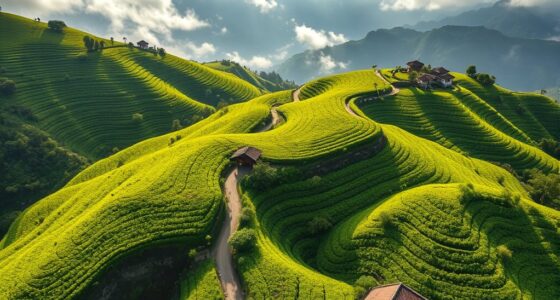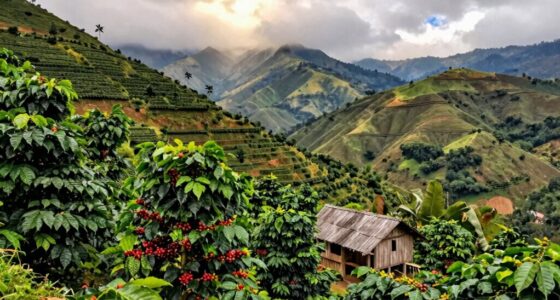
Malawi coffee offers a unique, vibrant profile thanks to high-altitude, volcanic soils and consistent rainfall. You’ll notice bright citrus notes and floral aromas, with a smooth finish that stands out in specialty markets. Smallholder farmers focus on quality and traditional methods, supporting sustainable growth. Though still gaining recognition, Malawi’s commitment to improving infrastructure and processing hints at even greater potential. If you want to explore what makes Malawi coffee special, keep going to discover more.

Get coffee and tea gear delivered free with Prime
- Fast, free delivery on millions of items
- Prime Video, Amazon Music and more included
- Member-only deals all year
Key Takeaways
- Malawi’s volcanic soils and high-altitude terrain produce coffee with vibrant acidity and complex floral and citrus flavors.
- Smallholder farmers focus on traditional, sustainable methods that preserve bean purity and enhance quality.
- The country is gaining international recognition for specialty coffee, primarily targeting Europe, North America, and Asia markets.
- Investments in processing infrastructure and farmer training are improving quality and market access.
- Malawi’s commitment to ethical, sustainable practices positions it as a promising, emerging coffee origin with significant growth potential.

Have you ever wondered what makes Malawi coffee so distinctive? It’s a combination of the country’s unique climate, high-altitude terrain, and dedicated farmers committed to quality. Malawi’s coffee cultivation thrives in volcanic soils, benefiting from ample sunlight and consistent rainfall. These conditions help produce beans with vibrant acidity, complex flavors, and a balanced body that coffee enthusiasts seek. Smallholder farmers play an essential role in this landscape, tending to their coffee plants with care and traditional methods that preserve the beans’ purity and character. As a result, Malawi coffee often features bright citrus notes, hints of floral aroma, and a smooth finish, making it stand out among other African coffees. Additionally, Malawi’s commitment to sustainable farming practices is gradually enhancing its reputation in the global coffee community. The country’s focus on quality over quantity is also contributing to its rising recognition in specialty coffee circles.
When it comes to export markets, Malawi’s coffee is gaining recognition, although it remains relatively under the radar compared to giants like Ethiopia or Kenya. The country’s producers are increasingly focused on quality rather than quantity, aiming to meet the standards of specialty coffee buyers worldwide. Export markets are a fundamental part of Malawi’s economic development, providing farmers with better income opportunities and encouraging sustainable practices. Coffee exports from Malawi are primarily directed toward Europe, North America, and increasingly Asia, where consumers are enthusiastic for unique, ethically sourced beans. The government, along with cooperatives and exporters, is actively working to improve infrastructure, quality control, and branding to position Malawi coffee more prominently on the global stage. A growing interest in ethical sourcing and transparent supply chains is also boosting Malawi’s profile among conscientious consumers. Furthermore, efforts to enhance processing infrastructure are vital for elevating the country’s coffee to premium market segments.
Despite its potential, Malawi faces challenges such as limited processing infrastructure, fluctuations in climate, and access to international markets. However, these hurdles are gradually being addressed through investments in processing facilities, training programs for farmers, and participation in international coffee fairs. The increasing focus on climate resilience further underscores Malawi’s dedication to sustainable growth and adaptation. The focus on specialty coffee production is opening doors to premium markets, where consumers are willing to pay more for the unique qualities Malawi coffee offers. Your interest in this origin can contribute to its growth, as demand for ethically and sustainably produced coffee continues to rise. Malawi’s quiet yet promising reputation as a coffee producer is rooted in its rich terroir and dedicated farmers, making it a source with real potential for expansion and recognition in the years to come.
As an affiliate, we earn on qualifying purchases.
Frequently Asked Questions
How Does Malawi’s Climate Influence Coffee Flavor Profiles?
Your coffee’s flavor profile is shaped by Malawi’s climate, where altitude influence plays a key role. Higher elevations mean cooler temperatures, which slow bean maturation and enhance acidity, resulting in bright, vibrant flavors. Microclimate effects, like local humidity and shade, further refine these profiles, adding complexity and nuance. This unique climate combination helps Malawi produce coffee with distinctive, lively characteristics that stand out in the global market.
What Are Malawi’s Main Coffee Growing Regions?
Think of Malawi’s main coffee regions as hidden gems in a vast treasure map. You’ll find the high-altitude areas of Thyolo, Mulanje, and Nkhata Bay thriving with lush, fertile lands ideal for coffee processing. These regions lead Malawi’s coffee export logistics, ensuring quality beans reach global markets. Their unique microclimates and volcanic soils produce distinctive flavors, making Malawi’s coffee truly stand out.
How Sustainable Are Malawi’s Coffee Farming Practices?
You’ll find Malawi’s coffee farming practices are quite sustainable. Many farms prioritize organic certification, reducing chemical use and supporting eco-friendly methods. Water conservation is also key; farmers implement rainwater harvesting and efficient irrigation techniques to protect water resources. These practices help preserve the environment while maintaining quality coffee production. Overall, Malawi’s coffee farmers are committed to sustainability, balancing economic growth with ecological responsibility for a healthier future.
What Are Common Challenges Faced by Malawi Coffee Growers?
You face challenges like pest management and export logistics that seem like insurmountable mountains. Pests can devastate your crops overnight, while export logistics might feel like steering through a labyrinth with no exit. These issues threaten your livelihood and the growth of Malawi’s coffee industry. Managing pests effectively and streamlining logistics are vital to overcoming these hurdles, ensuring your coffee reaches markets and fulfills its true potential.
How Does Malawi Coffee Compare to Other African Coffees?
You’ll find that Malawi coffee offers unique flavor nuances compared to other African coffees, often characterized by bright acidity and fruity notes. While Ethiopia and Kenya might dominate export markets with their well-known profiles, Malawi’s subtle yet distinctive flavors stand out for those seeking something different. Its growing reputation in international markets reflects its quality, and as demand rises, Malawi coffee’s comparative edge becomes increasingly apparent to coffee connoisseurs worldwide.
Conclusion
Don’t overlook Malawi coffee—its subtle charm and growing quality might surprise you. You might think it’s just another lesser-known origin, but its unique flavors and potential for excellence make it worth exploring. By giving Malawi coffee a chance, you can enjoy a distinct, authentic experience that stands out from more familiar options. So, next time you’re seeking something special, consider Malawi—you might just discover your new favorite brew.
Fall Picks
fall essentials
As an affiliate, we earn on qualifying purchases.