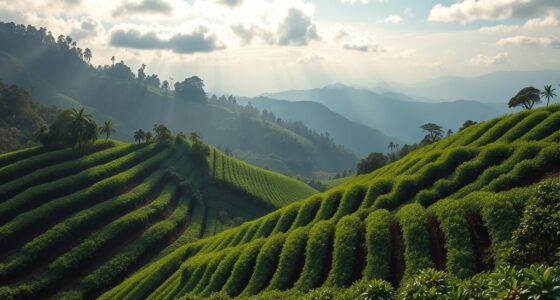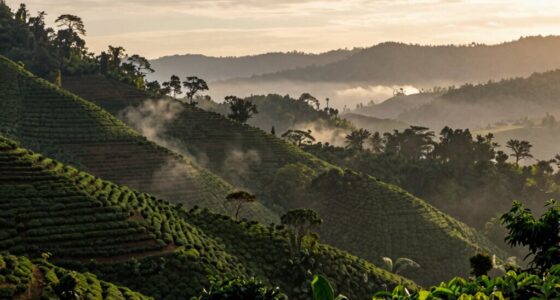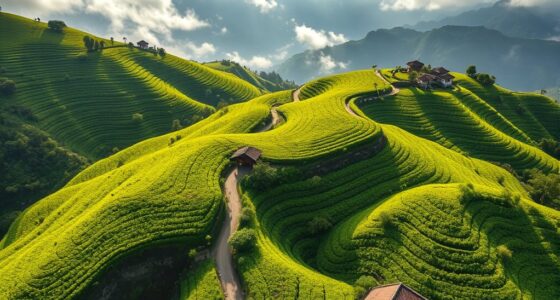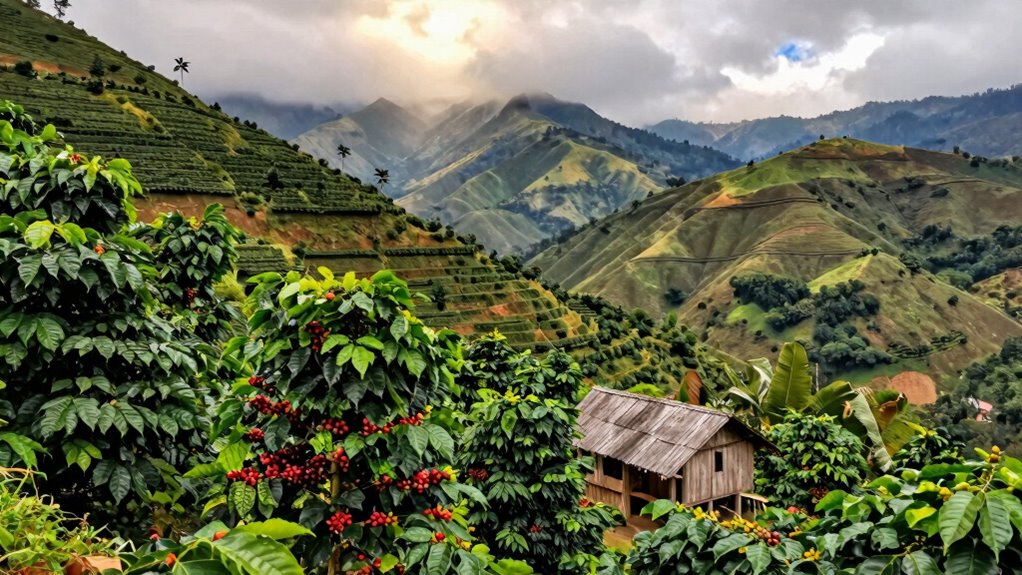

Dominican Republic coffee is celebrated for its natural sweetness and vibrant flavor, grown on lush mountain farms with volcanic soil and high-altitude conditions. This tradition dates back generations, with small-scale farmers using sustainable practices that support biodiversity and environmental health. The coffee’s quality is carefully controlled through meticulous processing, making it popular worldwide. If you’re curious about its rich history and commitment to eco-friendly cultivation, there’s much more to discover about this unique coffee heritage.

Get coffee and tea gear delivered free with Prime
- Fast, free delivery on millions of items
- Prime Video, Amazon Music and more included
- Member-only deals all year
Key Takeaways
- Dominican coffee is known for its smooth sweetness and rich flavor, thanks to high-altitude, volcanic soil, and shade-grown cultivation.
- The country’s coffee history dates back centuries, deeply rooted in local tradition and passed down through generations of farmers.
- Mountain farms on lush, steep hillsides provide ideal growing conditions for high-quality Arabica beans.
- Sustainable practices, including shade-grown methods, help preserve biodiversity and support local farmers’ livelihoods.
- Dominican coffee is exported globally, representing a blend of tradition and modern quality standards.
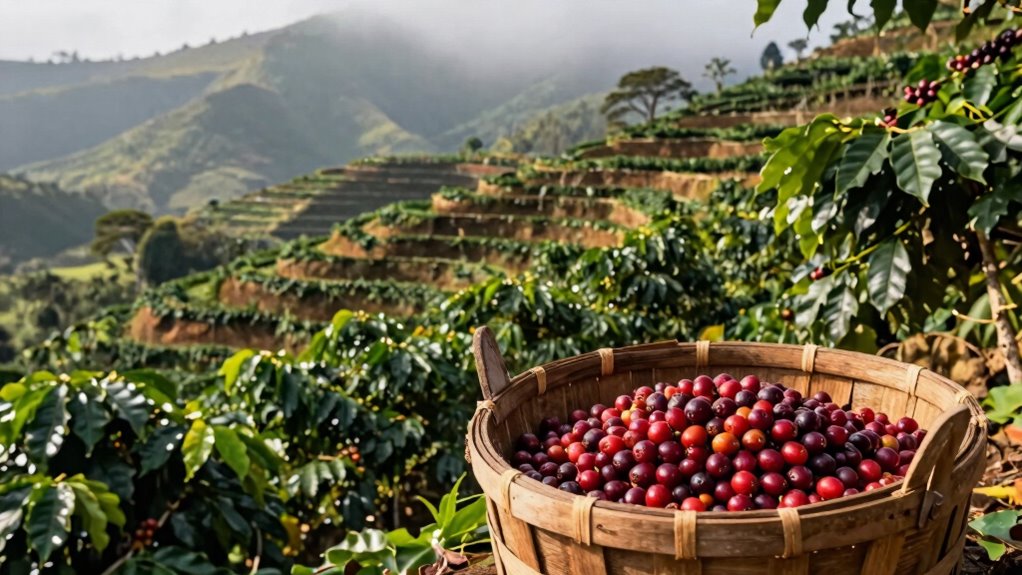
Nestled in the Caribbean, the Dominican Republic has become renowned for its rich and flavorful coffee, which is cultivated on the island’s lush mountainsides. You’ll find that the country’s coffee cultivation is deeply rooted in tradition, with small-scale farmers and large plantations working side by side to produce some of the most distinctive beans in the region. The volcanic soil, combined with the high-altitude climate, creates ideal conditions for growing high-quality Arabica coffee. As you explore the landscape, you’ll notice that many farms are nestled on steep hillsides, where coffee plants thrive under the shade of native trees, contributing to the beans’ unique flavor profile.
The process of cultivating coffee here isn’t just a means of livelihood; it’s a tradition passed down through generations. Farmers carefully tend to their crops, often practicing sustainable methods that preserve the environment and enhance bean quality. Harvesting usually occurs once the cherries ripen to a vibrant red, and it’s a labor-intensive process that demands attention to detail. You’ll see pickers carefully selecting only the ripest cherries, ensuring that each batch maintains a high standard. This dedication to quality is what sets Dominican coffee apart in the global market. Additionally, the sustainable farming practices employed help protect the environment while ensuring the longevity of coffee cultivation on the island. These practices often include shade-grown coffee, which supports biodiversity and reduces the need for chemical inputs. Implementing sustainable farming methods also helps improve the livelihoods of local farmers by promoting environmentally friendly and economically viable practices. Furthermore, the country’s commitment to environmental conservation plays a crucial role in maintaining the health of coffee-growing regions.
Once harvested, the coffee beans go through a meticulous processing method, from washing to drying, before they’re graded and prepared for export. The country’s coffee industry is a crucial part of its economy, with the beans finding their way into international markets around the world. You may not realize it, but Dominican coffee has a strong presence on the global stage, thanks to the country’s strategic focus on market export. The government and private sector work together to promote exports, ensuring that Dominican coffee reaches specialty shops, cafes, and roasters worldwide. This effort not only boosts the economy but also highlights the country’s commitment to sustainability and quality.
When you sip a cup of Dominican coffee, you’re tasting more than just a beverage—you’re experiencing centuries of tradition, the richness of volcanic soil, and the dedication of farmers committed to excellence. The blend of tradition and modernity in coffee cultivation and export practices makes this island’s coffee a true treasure. Whether enjoyed locally or abroad, Dominican coffee’s reputation continues to grow, symbolizing the island’s vibrant culture and agricultural prowess.
Dominican Republic Arabica coffee beans
As an affiliate, we earn on qualifying purchases.
As an affiliate, we earn on qualifying purchases.
Frequently Asked Questions
What Makes Dominican Republic Coffee Uniquely Sweet Compared to Others?
You’ll notice Dominican Republic coffee’s sweetness due to its unique flavor nuances and traditional harvesting methods. The high-altitude mountain farms and careful picking process allow the beans to develop naturally sweet and complex flavors. This combination of climate, soil, and traditional harvesting traditions enhances the coffee’s inherent sweetness, making it stand out from others. Your taste buds will enjoy the rich, smooth, and sweet profile that’s crafted through careful cultivation and processing.
How Do Altitude and Climate Influence Coffee Flavor Profiles?
Altitude effects are like a natural amplifier, intensifying coffee’s flavor complexity, while climate influence shapes its acidity and sweetness. Higher altitudes slow bean maturation, developing brighter, more vibrant flavors, and cooler temperatures preserve delicate aromatic compounds. Warm, humid climates promote lush growth, enhancing sweetness and body. Together, altitude and climate craft unique profiles, making each coffee batch a distinct reflection of its mountain environment.
Are There Specific Regions Within the Mountains Known for Premium Coffee?
You’ll find premium coffee mainly in the Cibao Valley and the Jarabacoa region, where mountain terracing and rich volcanic soil create ideal conditions. These areas grow diverse coffee varietals, like Arabica, which flourish at high altitudes. The combination of steep slopes, cooler temperatures, and careful cultivation enhances flavor, making these regions renowned for their exceptional coffee quality. Your best brews come from these elevated, meticulously farmed mountain zones.
What Traditional Methods Are Used in Processing Dominican Coffee Beans?
You’ll find that traditional processing of Dominican coffee involves dry processing, where beans are dried with the outer fruit intact, enhancing sweetness. Fermentation techniques are also essential; after pulping, beans undergo fermentation to remove mucilage, which develops complex flavors. These methods preserve the beans’ unique qualities, resulting in rich, aromatic coffee. By sticking to these traditional techniques, farmers maintain the authentic taste and character that make Dominican coffee distinctive.
How Has Coffee Farming Impacted Local Dominican Communities Historically?
You see how coffee farming has shaped local communities, fostering a rich coffee cultural and reinforcing farming traditions. It provides livelihoods, creating jobs and supporting local economies. It also brings social cohesion, as farmers share techniques and stories. Over time, coffee has become a symbol of identity, helping communities thrive economically and culturally, ensuring the preservation of their farming traditions while adapting to modern demands.
Conclusion
Imagine strolling through lush mountain farms in the Dominican Republic, savoring the rich aroma of freshly brewed coffee. Just like Juan, a local farmer who transformed his small plot into a thriving coffee destination, you can experience firsthand the sweetness and history behind each cup. Whether you’re a casual drinker or a coffee enthusiast, exploring these mountain farms lets you connect with centuries of tradition and the vibrant culture that makes Dominican coffee truly special.
Halloween Picks
halloween
As an affiliate, we earn on qualifying purchases.