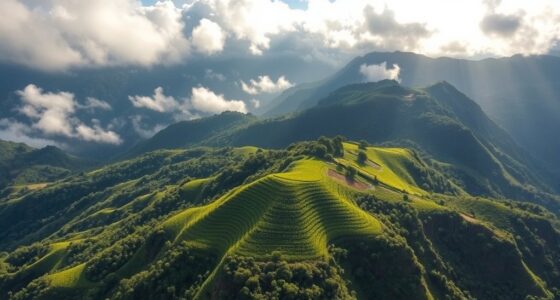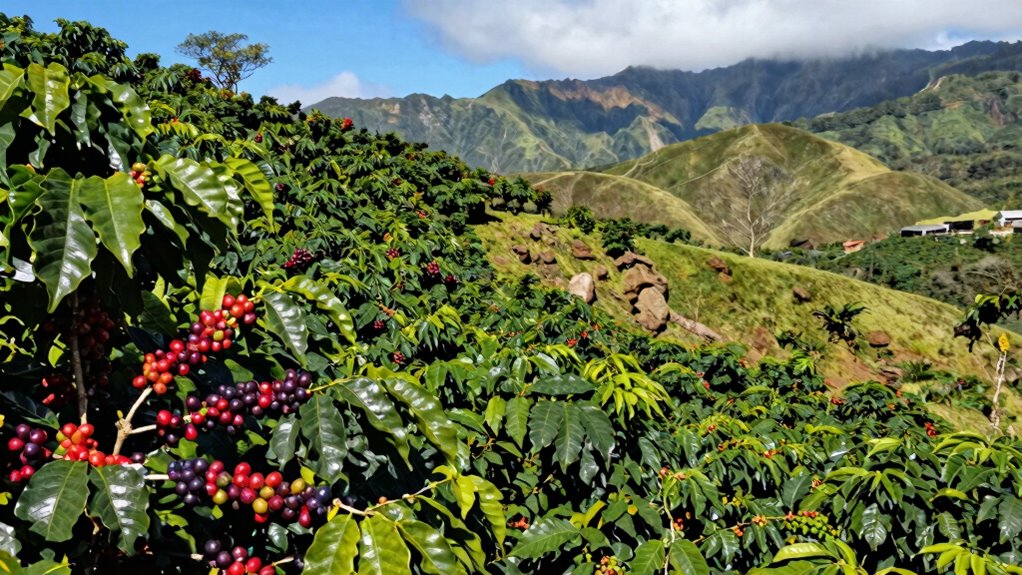

Hawaii’s coffee story is richer than just Kona and Kaʻu, reflecting deep regional roots, unique terroirs, and proud traditions. Kona’s smooth, bright flavor contrasts with Kaʻu’s bold, earthy taste, shaped by their distinct climates and soils. These regions celebrate cultural heritage through their farms, blending history with innovation. By exploring their stories, you’ll discover a vibrant world of Hawaiian coffee you never knew existed—there’s much more to uncover beyond just the names.

Get coffee and tea gear delivered free with Prime
- Fast, free delivery on millions of items
- Prime Video, Amazon Music and more included
- Member-only deals all year
Key Takeaways
- Kona and Kaʻu produce distinct coffee profiles shaped by their unique climate, soil, and terroir.
- Both regions have deep cultural histories that reflect Hawaiian heritage, resilience, and community pride.
- Agricultural practices vary, with Kona favoring established traditions and Kaʻu emphasizing authenticity and rustic methods.
- The Hawaii coffee story encompasses more than flavor—it embodies legacy, community, and sustainable farming practices.
- Understanding regional differences enhances appreciation of Hawaii’s diverse coffee heritage beyond just Kona or Kaʻu names.
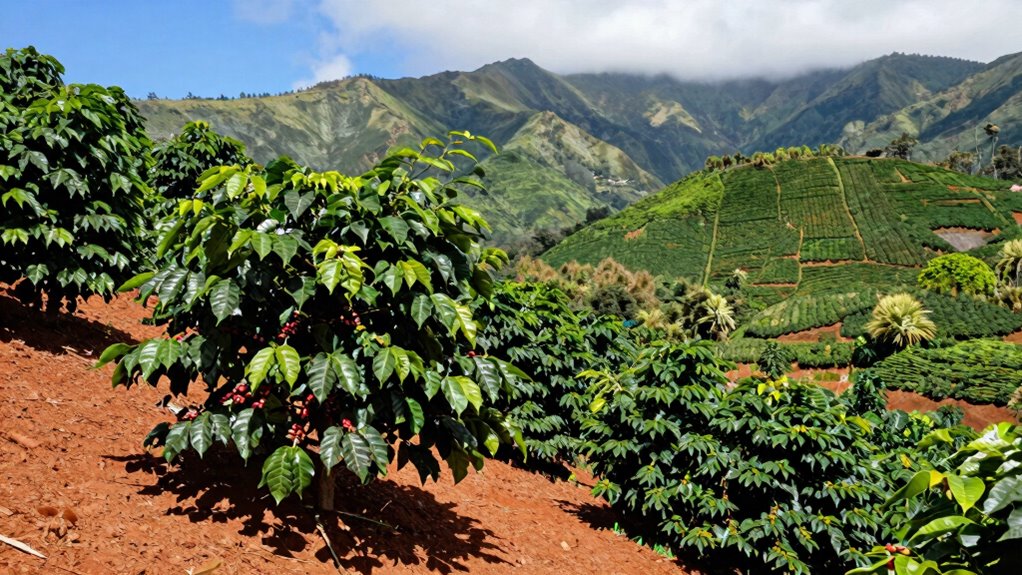
When it comes to Hawaii’s coffee, the story isn’t just about one region—Kona and Kaʻu each offer unique flavors that define the islands’ rich coffee heritage. As you explore these areas, you’ll see that coffee cultivation isn’t just about growing beans; it’s woven into the cultural fabric of the islands. In Kona, the volcanic soil and favorable climate create perfect conditions for coffee plants to thrive. You’ll notice that Kona coffee is known for its smooth, mild flavor, with bright acidity and a hint of nuttiness. Here, coffee cultivation has been a tradition for generations, and it’s more than just an industry—it’s a way of life. The local communities have cultivated these beans with care, passing down knowledge and practices that have shaped the region’s identity. For many, coffee farming in Kona is intertwined with their cultural heritage, representing resilience, pride, and a deep connection to the land. The unique climate and soil conditions of each region play a crucial role in developing their distinctive profiles, highlighting the importance of terroir in coffee production. Additionally, the preservation of these agricultural practices ensures the continued legacy of Hawaii’s coffee culture. Recognizing the impact of sustainable farming can help protect these regions for future generations. Supporting local farmers is essential to maintaining the authenticity and quality of Hawaiian coffee.
Across the island, Kaʻu offers a different but equally compelling coffee story. The region’s volcanic soil and high elevation contribute to a bold, earthy profile that’s distinct from Kona’s more delicate notes. Coffee cultivation here is often characterized by small farms and a more rustic approach, which lends a sense of authenticity and tradition. The cultural significance in Kaʻu runs deep; it’s a place where coffee farming is more than economic activity—it’s part of community life and cultural expression. You’ll find that local farmers take pride in their craft, often blending traditional methods with innovative techniques to produce rich, flavorful beans. The history of coffee in Kaʻu is rooted in resilience, with farmers overcoming challenges posed by the terrain and climate, yet still managing to produce beans that tell a story of perseverance and passion.
Both regions celebrate coffee as a symbol of Hawaiian identity, but each brings its own flavor and cultural nuance. Whether you prefer the smooth elegance of Kona or the bold earthiness of Kaʻu, understanding their stories gives you a deeper appreciation for this beloved crop. It’s not just about the taste—it’s about the history, the hard work, and the cultural significance that each bean carries from farm to cup. As you sip your coffee, remember that each cup is a reflection of generations of farmers who have cultivated their land with dedication and pride, keeping alive a vibrant Hawaiian tradition that’s bigger than just one name.
As an affiliate, we earn on qualifying purchases.
Frequently Asked Questions
How Do Kona and KaʻU Coffee Flavors Differ?
Kona and Kaʻu coffees have distinct flavor profiles due to their cultivation techniques. Kona coffee offers bright, fruity notes with a smooth, mild finish, thanks to its high-altitude, volcanic soil. Kaʻu coffee tends to be bolder and more earthy, with a slightly sweeter, fuller body. The difference in elevation, climate, and soil conditions influences their unique flavors, giving each a special character worth exploring.
Are There Specific Growing Conditions Unique to Each Region?
Yes, each region has unique growing conditions. Kona coffee thrives in volcanic soil with rich, well-drained soil and benefits from elevation differences that provide cooler temperatures, enhancing flavor development. Kaʻu coffee, on the other hand, grows in slightly lower elevations with diverse soil composition, including volcanic ash and loam, which contribute to its distinctive taste. These environmental factors shape each area’s coffee profile, making them uniquely flavorful.
Which Region’s Coffee Is More Sustainable?
You’ll find Kona’s coffee more sustainable, thanks to its strong emphasis on sustainability practices and organic certifications. About 70% of Kona coffee farms implement eco-friendly methods, reducing environmental impact. These practices include water conservation, organic fertilizers, and shade-grown coffee, which support local ecosystems. Kaʻu also adopts sustainable practices, but Kona’s dedicated focus on eco-consciousness makes its coffee a better choice for environmentally minded consumers.
How Do Pricing and Availability Compare Between Kona and KaʻU?
You’ll find Kona coffee generally commands higher prices and has more limited availability compared to Kaʻu, which is often more accessible and affordable. As you explore coffee tourism and local coffee festivals, you’ll notice Kaʻu’s offerings are more widely distributed, making it easier to taste and buy. Kona’s prestige drives up its price, but both regions offer unique flavors, enriching your experience at Hawaii’s vibrant coffee events.
What Are the Historical Origins of Coffee in These Regions?
You’ll find that coffee cultivation in Kona dates back to the early 19th century, influenced by missionaries and early settlers who introduced coffee plants. Kaʻu’s coffee history, however, is rooted in indigenous and immigrant cultural influences, with cultivation beginning later but growing rapidly. Both regions reflect a blend of cultural influences that shaped Hawaii’s coffee tradition, making their origins rich with history and cultural exchange.
Conclusion
As you sip your coffee, imagine the lush, sun-kissed slopes of Kona and Kaʻu, each offering a unique burst of flavor. Feel the warm breeze carry the rich aroma, inviting you into Hawaii’s vibrant coffee story. Whether you prefer the bold, earthy notes or the smooth, nuanced finish, remember it’s more than just a name—it’s a journey through Hawaii’s volcanic heart. Let each cup remind you of the island’s enduring spirit and rich heritage.
Halloween Picks
halloween
As an affiliate, we earn on qualifying purchases.