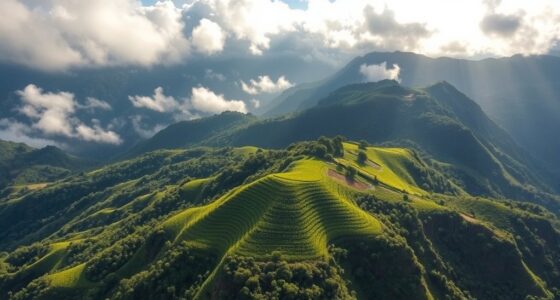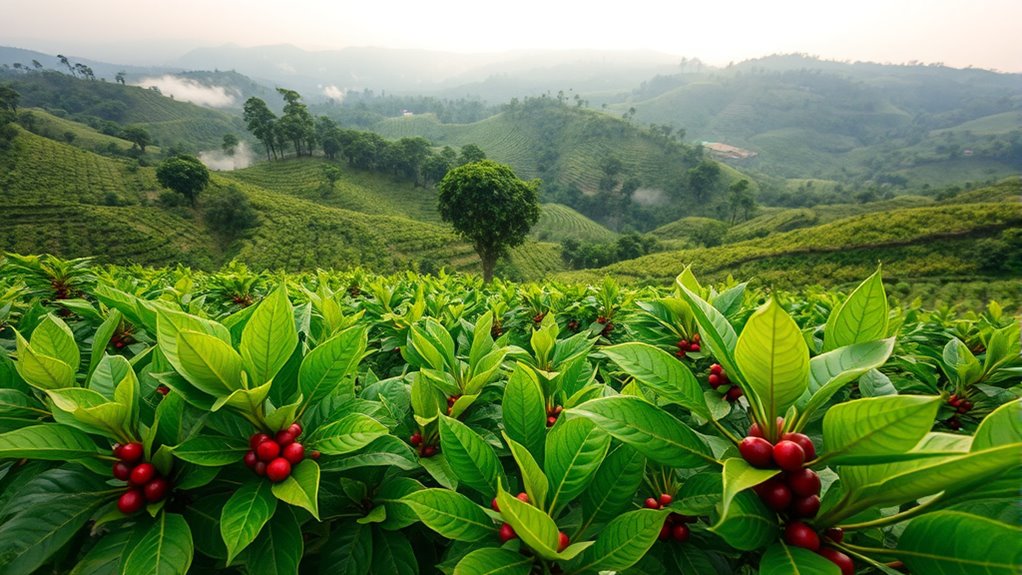

Indian coffee, especially Monsooned Malabar, stands out for its unique process that involves exposing beans to humid monsoon winds, creating mellow, smooth flavors with low acidity. The plantations in India, mainly in the Western Ghats, harness regional climate and soil to produce diverse taste profiles. Traditional processing and roasting techniques enhance these qualities, giving each cup a distinct character rooted in India’s rich coffee heritage. Exploring more reveals how these factors come together to craft exceptional coffee experiences.
Key Takeaways
- Monsooned Malabar coffee undergoes a unique monsoon process that exposes beans to humid air, developing mellow flavor and low acidity.
- Indian coffee plantations, especially in the Western Ghats, cultivate diverse varieties like Arabica and Robusta, influenced by regional climates.
- The region’s climate and soil conditions shape the distinctive flavor profile of Indian coffees, including Monsooned Malabar.
- Traditional processing and roasting techniques in India highlight the rich heritage and regional characteristics of the coffee.
- The journey from plantation to cup reflects India’s deep-rooted coffee heritage, blending environmental factors with craftsmanship.
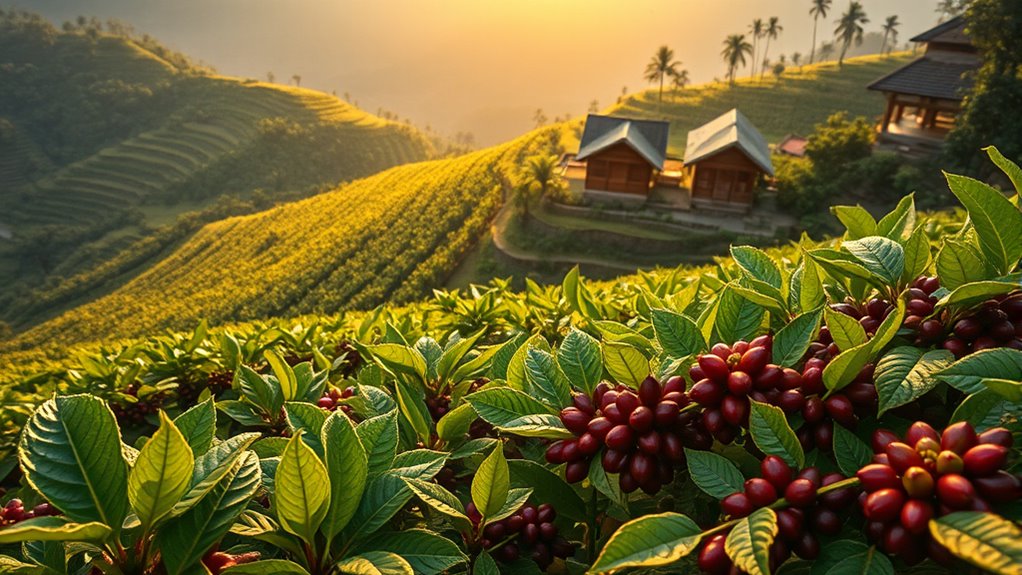
Nestled in the lush landscapes of India, coffee cultivation has become an essential part of the country’s agricultural heritage. You might be surprised to learn that India’s coffee industry isn’t just about growing beans; it’s about mastering a delicate process that influences every cup you enjoy. When it comes to coffee roasting techniques, Indian roasters pay close attention to how they bring out the unique flavors of their beans. Whether they’re roasting Monsooned Malabar or beans from the classic plantations, each method is tailored to enhance the coffee’s natural qualities. The journey from farm to cup begins with careful cultivation, where climate and soil play critical roles. You’ll find that Indian coffee farmers often grow their beans at high altitudes, which leads to dense, flavorful beans with bright acidity. Once harvested, processing methods such as washed or natural fermentation further define the final taste. But it’s during roasting that the magic truly happens, as Indian roasters skillfully manipulate temperature and duration to reveal the beans’ full potential. Additionally, the regional diversity of Indian coffee cultivation contributes to the wide range of flavor profiles available to enthusiasts. Indian coffee cultivation is unique because of its regional diversity and climatic conditions. The Western Ghats, for example, provide the perfect environment for Arabica, while Robusta thrives in the lowlands of Karnataka. The monsoon season, especially in the Malabar region, has a profound impact on the flavor profile of the beans, giving rise to the renowned Monsooned Malabar coffee. This coffee undergoes a special monsoon process—exposed to moist, humid air—which results in a distinct, mellow flavor with a smooth body and low acidity. This process, along with traditional coffee roasting techniques, emphasizes the importance of controlling humidity and temperature to preserve the coffee’s unique characteristics. When you brew Indian coffee, especially the Monsooned Malabar, you’re experiencing a product that’s been carefully processed to capture the essence of its environment.
Understanding the art of coffee roasting techniques allows you to appreciate how Indian roasters access different flavor profiles. Light roasts preserve the beans’ inherent brightness, while medium roasts highlight balanced sweetness and body. Dark roasts, on the other hand, develop richer, bolder notes, sometimes emphasizing smoky or chocolatey undertones. Indian roasters often experiment with these techniques to bring out the best in each batch, guaranteeing that the final cup is perfectly tailored to the beans’ unique qualities. Whether you prefer a bright, lively cup or a deep, robust brew, knowing how coffee cultivation and roasting techniques intertwine helps you choose the right Indian coffee for your palate. Ultimately, the meticulous attention to both growing and roasting guarantees every sip embodies India’s rich coffee heritage.
Top picks for "indian coffee monsoon"
Open Amazon search results for this keyword.
As an affiliate, we earn on qualifying purchases.
Frequently Asked Questions
How Does Monsooning Affect Coffee Flavor Profiles?
When you experience monsooning, you notice a flavor transformation in your coffee, as it develops a unique, mellow profile. The process allows the beans to absorb moisture from the monsoon winds, leading to aromatic enhancement. You’ll find the flavor becomes earthy and spicy, with a smoother, less acidic taste. This natural aging process intensifies the aroma, making each sip richer and more complex, offering a distinctive coffee experience.
What Are the Environmental Impacts of Indian Coffee Plantations?
Ever wondered about the environmental impact of Indian coffee plantations? You might be concerned about deforestation concerns or pesticide usage that threaten local ecosystems. Plantations often lead to habitat loss, affecting biodiversity. Additionally, pesticide use can contaminate soil and water sources, harming wildlife and communities. While coffee cultivation supports local economies, balancing productivity with environmental sustainability remains essential to protect India’s rich natural resources for future generations.
Are There Organic Options for Monsooned Malabar Coffee?
You can find organic options for monsooned Malabar coffee, as some producers pursue organic certification and sustainable farming practices. These coffees are grown without synthetic fertilizers or pesticides, supporting environmental health. Look for certifications like USDA Organic or India Organic on the packaging, which verify the coffee meets strict organic standards. Choosing organic monsooned Malabar helps promote eco-friendly agriculture and supports farmers committed to sustainability.
How Does Indian Coffee Compare to Other Global Coffee Varieties?
Think of coffee as a global tapestry of flavors, each variety weaving its own story. Indian coffee, especially Monsooned Malabar, offers distinct flavor distinctions with its earthy, mellow profile, shaped by unique cultivation differences like monsooning. Compared to African or South American beans, it’s more subdued and nuanced, like a well-worn novel. You’ll find Indian coffee’s rich history and cultivation techniques add a layer of sophistication to its taste, making it a compelling choice worldwide.
What Are the Traditional Methods of Processing Indian Coffee?
You learn that traditional Indian coffee processing involves fermentation techniques that enhance flavor, often followed by sun drying methods. During fermentation, beans are soaked to develop unique taste profiles, then carefully dried in the sun to preserve quality. These methods have been refined over generations, giving Indian coffee its distinctive character, rich aroma, and full-bodied taste that set it apart from other global varieties.
Conclusion
You now know that Indian coffee, especially Monsooned Malabar, offers a unique flavor profile shaped by monsoon winds. Did you know India is the sixth-largest coffee producer worldwide, contributing around 4% of global supply? This highlights the country’s significant role in the coffee industry. So, next time you sip your brew, remember its rich history and the monsoon’s special touch that makes Indian coffee truly distinctive.