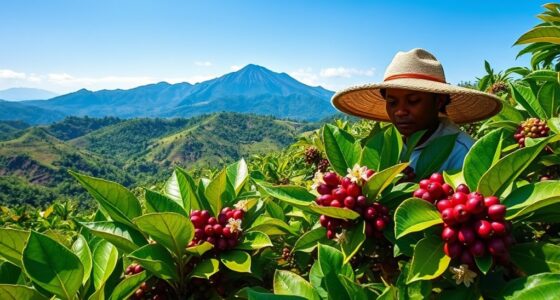
India Monsooned Malabar has a fascinating history shaped by colonial trade and the region’s monsoon climate. During processing, green beans are exposed to monsoon rains and humid air for months, which develops its distinctive flavor—smooth, mellow, with earthy, woody, and spicy notes. This traditional method results in a low-acid, full-bodied coffee with a rich aroma. Curious about how climate and history continue to influence its unique taste? Explore more to discover the full story.

Get coffee and tea gear delivered free with Prime
- Fast, free delivery on millions of items
- Prime Video, Amazon Music and more included
- Member-only deals all year
Key Takeaways
- India Monsooned Malabar is a traditional coffee variety that develops its unique flavor through exposure to monsoon rains and humidity.
- Its process involves aging green beans during the monsoon season, resulting in a smooth, earthy, and less acidic taste.
- The coffee’s flavor features woody, spicy, and mellow notes, appealing to those preferring full-bodied profiles.
- Climate and historical trade practices in the Malabar coast have shaped its distinctive aroma and texture.
- Monsooned Malabar embodies India’s rich coffee heritage, blending environmental influence with centuries-old traditional processing methods.

India Monsooned Malabar is a unique coffee variety that undergoes a special aging process during the monsoon season, giving it distinctive flavor characteristics. To truly appreciate this coffee, you need to understand its rich history and how climate influences its unique profile. Historically, trade played a significant role in shaping India Monsooned Malabar’s story. During colonial times, coffee from the Malabar coast became highly sought after due to its exceptional quality and distinct taste. Traders recognized early on that the region’s climate, combined with traditional processing methods, produced a coffee that stood out in international markets. Over time, merchants began intentionally exposing green beans to the monsoon winds, not just as a natural process but as a method to develop its signature flavor. This practice cemented the coffee’s reputation as a prized commodity in global trade routes, especially during the British colonial period when India was a major player in the coffee trade. The climate of the Malabar coast, with its heavy monsoon rains and high humidity, plays a pivotal role in shaping the coffee’s profile. During the monsoon season, the beans are harvested and then exposed to the intense rains and moist air for several months. This prolonged exposure causes the beans to swell and absorb moisture, altering their chemical composition. The humid environment slows down the natural drying process, allowing the beans to develop a unique flavor profile that’s less bitter and more rounded. It’s this climate influence that makes India Monsooned Malabar stand apart from other coffees. The moisture and temperature fluctuations during the monsoon season lead to a distinct maturation process, resulting in a smooth, mellow cup with a characteristic earthy, woody, and sometimes spicy note. Because of this, you’ll notice that Monsooned Malabar has a less acidic taste, with a more subdued fruitiness, making it ideal for those who prefer a full-bodied, low-acid coffee experience. The influence of the climate doesn’t just affect flavor; it also impacts the bean’s texture and aroma, giving it a richer, more complex character. This process, rooted in tradition and climate, has been carefully preserved to maintain the coffee’s authenticity. Additionally, modern techniques still respect traditional methods to ensure the climate influence continues to define its unique profile. So, when you sip on Monsooned Malabar, you’re tasting a product shaped by centuries of trade history and the unique weather patterns of India’s Malabar coast. It’s a perfect example of how environment and history intertwine to create a coffee with a story as rich as its taste.
India Monsooned Malabar coffee beans
As an affiliate, we earn on qualifying purchases.
As an affiliate, we earn on qualifying purchases.
Frequently Asked Questions
How Does Monsooning Affect Coffee Flavor Profiles?
Monsooning enhances coffee flavor profiles by allowing the beans to absorb moisture, which amplifies their body and smoothness. As you experience the process, you’ll notice a unique flavor enhancement that brings out earthy, woody, and spicy notes. The moisture absorption softens the beans, creating a mellow, well-rounded cup. This traditional method transforms the coffee, giving it a distinctive character and depth that you’re unlikely to find in unprocessed beans.
Are There Specific Regions in India Known for Monsooned Malabar?
Think of the Kerala coastline and Western Ghats as the backdrop where monsooning works its magic. These regions are renowned for producing Monsooned Malabar coffee, thanks to the unique climate and humidity. You’ll find that the humid air and heavy rains in these areas give the beans their distinctive, mellow flavor. So, if you’re exploring monsooned coffee, these regions are where the story begins and the flavor deepens.
What Is the Best Brewing Method for Monsooned Malabar Coffee?
You should use a pour-over or French press for Monsooned Malabar coffee. Keep the grind size medium-coarse for ideal extraction. Brew time should be around 4-5 minutes to balance the rich, earthy flavors. Adjust the grind slightly finer or coarser depending on your taste and brewing method. This approach highlights its unique, mellow profile while ensuring a smooth, satisfying cup.
How Does Monsooned Malabar Compare to Other Indian Coffee Varieties?
You’ll find monsooned Malabar quite the standout among Indian coffees, thanks to its unique monsooning process that imparts a mellow, earthy flavor. While other Indian varieties like Arabica and Robusta boast bright, fruity notes, Malabar’s roasting process creates a smoother, more subdued profile. Its distinct taste has helped boost Indian coffee export, making it a rare gem in the global market—proof that sometimes, slow and steady wins the flavor race.
Is Monsooned Malabar Coffee Suitable for Espresso Brewing?
Yes, monsooned malabar coffee is suitable for espresso brewing. Its unique processing creates a smooth, full-bodied flavor with low acidity, making it ideal for espresso shots. When you use monsooned malabar for espresso, you’ll notice a rich, mellow taste that balances well with milk or cream. Its bold profile enhances your espresso experience, providing a distinct, aromatic cup that stands out compared to other Indian coffee varieties.
Conclusion
As you sip India Monsooned Malabar, imagine a voyage through monsoon clouds, where each bean absorbs the storm’s essence and transforms into a rich, mellow brew. Like a seasoned sailor steering unpredictable waters, this coffee’s unique process brings out a deep, complex flavor that tells a story of resilience and transformation. Embrace its journey—each cup is a reminder that even the wildest storms can create something beautifully memorable.
Fall Picks
fall essentials
As an affiliate, we earn on qualifying purchases.