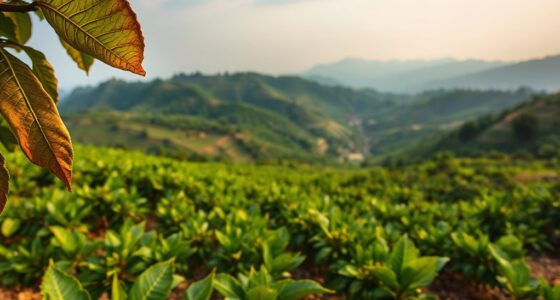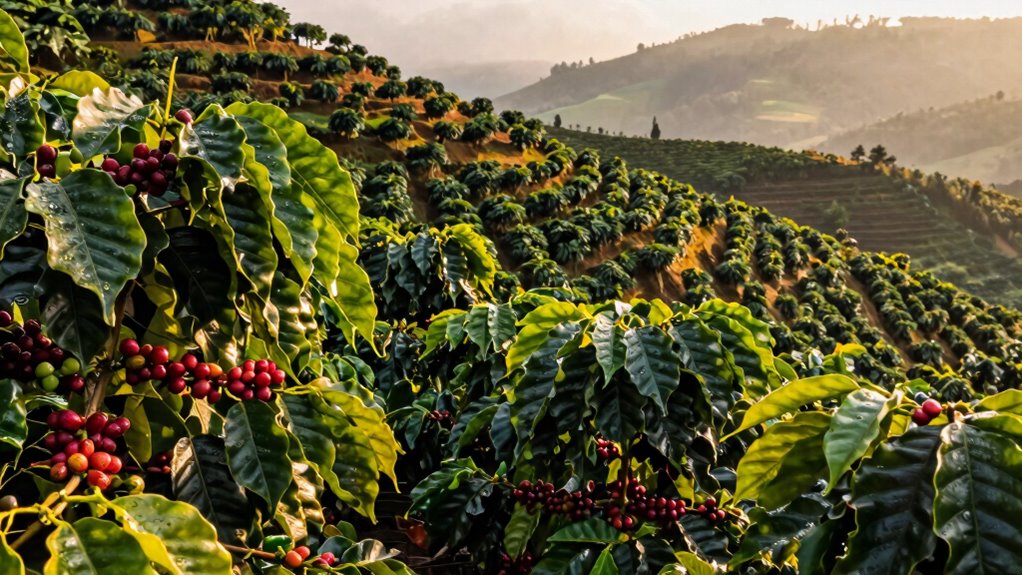

In the Kivu region of DR Congo, you’ll find vibrant Arabica coffee grown in volcanic soil at high altitudes, giving it a rich, fruity, and floral flavor with lively acidity. The community’s sustainable farming practices and cultural traditions help the region recover from past conflicts, fostering resilience and unity. As you explore further, you’ll discover how this coffee embodies a story of revival, tradition, and remarkable flavor—an experience worth savoring.
Key Takeaways
- Kivu Coffee is cultivated in DR Congo’s high-altitude, volcanic soils, producing vibrant, flavorful Arabica beans.
- The region’s coffee industry is recovering through community cooperation and sustainable farming after past conflicts.
- Kivu Coffee features fruity, floral flavors with lively acidity, reflecting its unique growing conditions.
- Coffee plays a vital cultural role, symbolizing unity, hospitality, and community resilience in the Kivu region.
- Support for Kivu Coffee promotes economic recovery, environmental sustainability, and preservation of local heritage.

Nestled in the lush hills of the Kivu region, DR Congo Kivu Coffee stands out as a premium Arabica variety renowned for its rich flavor and vibrant acidity. When you explore its origins, you’ll find that coffee cultivation here isn’t just about producing a beverage; it’s deeply woven into the local culture. Smallholder farmers have cultivated coffee for generations, passing down techniques and traditions that shape the community’s identity. As you taste this coffee, you’re experiencing more than just its bright notes—you’re engaging with a cultural heritage rooted in the land and the people who tend it.
Kivu Coffee embodies generations of tradition, rich flavors, and a deep cultural heritage rooted in the land and community.
The high-altitude climate and volcanic soil of the Kivu region create ideal conditions for coffee cultivation. You’ll notice that the beans develop complex flavor profiles, often characterized by fruity and floral notes. These unique growing conditions contribute to the coffee’s vibrant acidity, which awakens your palate with lively brightness. The careful process of harvesting ripe cherries by hand ensures only the best beans are processed, maintaining the superior quality that Kivu Coffee is known for. This meticulous attention to detail reflects the pride and passion of local farmers, who see coffee cultivation as both an economic opportunity and a cultural tradition. Additionally, the region’s volcanic soil plays a crucial role in enhancing the beans’ flavor complexity. Recognizing the importance of sustainable farming practices, farmers are increasingly adopting methods that protect the land and promote long-term productivity. This approach not only preserves the environment but also supports the long-term sustainability of coffee cultivation. Furthermore, the community’s cooperative efforts have fostered a sense of shared purpose and collective growth among farmers, strengthening the region’s resilience.
Recovery plays a significant role in the story of Kivu Coffee. The region has faced years of conflict and instability, which impacted agricultural practices and local economies. However, recent efforts toward stability and development have helped revitalize coffee production. You can appreciate the resilience embedded in every cup, as farmers rebuild their livelihoods and restore their communities through coffee cultivation. These efforts often involve sustainable farming practices that protect the land and ensure future generations can continue the tradition. When you sip Kivu Coffee, you’re supporting this resurgence, contributing to the region’s economic recovery and social cohesion.
Cultural significance extends beyond farming; coffee is a social glue that brings communities together. It’s common for gatherings, ceremonies, and daily conversations to revolve around coffee, making it a symbol of hospitality and unity. As you enjoy your brew, think of the countless moments these beans have facilitated—shared stories, celebrations, and communal bonds. This cultural dimension transforms your coffee experience from a simple drink into a connection to the people of Kivu. In every cup, you’re tasting a rich history of resilience, tradition, and community that continues to thrive despite challenges, making DR Congo Kivu Coffee truly special.
As an affiliate, we earn on qualifying purchases.
Frequently Asked Questions
How Does Climate Change Impact Kivu Coffee Production?
Climate change impacts Kivu coffee production by increasing unpredictable weather patterns, making drought adaptation essential. You need to build climate resilience by implementing sustainable farming practices that withstand droughts and irregular rainfall. These strategies help protect coffee crops from climate variability, ensuring steady yields. Without adopting drought adaptation techniques, your coffee production could decline, threatening livelihoods and the region’s coffee reputation.
What Sustainable Practices Are Used by Local Kivu Coffee Farmers?
You’re making a meaningful difference by supporting sustainable practices in Kivu. Local farmers embrace organic farming, nurturing their land with care and respect, ensuring healthy soils and vibrant coffee flavors. They also prioritize water conservation, safeguarding water sources for future generations. These gentle efforts help the environment and produce quality coffee, creating a hopeful story of resilience. Your support encourages them to continue these practices, fostering a brighter future for Kivu’s land and community.
Are There Any Fair Trade Certifications for Kivu Coffee?
Yes, Kivu coffee often carries fair trade certifications, ensuring ethical sourcing practices. These certifications guarantee that farmers receive fair wages and work under safe conditions, promoting sustainability. By choosing Kivu coffee with fair trade labels, you support ethical practices and help improve local communities. This not only benefits farmers but also contributes to environmentally friendly farming methods. So, when you buy Kivu coffee, you’re making an ethical choice that supports sustainable development.
How Does Kivu Coffee Influence the Local Economy?
Kivu coffee acts like a crucial heartbeat in the local economy, pumping life through coffee exports and local employment. When you support Kivu coffee, you’re fueling small farms and creating jobs, helping communities thrive. The coffee trade boosts income, encourages sustainable farming, and fosters economic resilience. By choosing Kivu coffee, you’re directly contributing to the region’s recovery and growth, making a real difference in people’s lives.
What Are the Challenges Faced by Coffee Growers in Kivu?
You face numerous challenges as a coffee grower in Kivu. Limited access to modern coffee cultivation techniques hampers your productivity and quality. Farmer livelihoods are threatened by ongoing conflict, pests, and unpredictable weather, making it hard to sustain income. Additionally, inadequate infrastructure and access to markets restrict your ability to sell coffee at fair prices. Overcoming these hurdles requires support, training, and investment to guarantee your success and the region’s coffee industry thrives.
Conclusion
So, next time you sip your Kivu coffee, remember it’s more than just a flavorful brew; it’s a symbol of resilience amidst chaos. Ironically, the region’s turbulent history has brewed a coffee that’s rich in flavor and spirit. You might think chaos spoils everything, but here, it’s created something worth savoring—proof that even in conflict, beauty and strength can flourish. Cheers to coffee that tells a story of hope and perseverance.