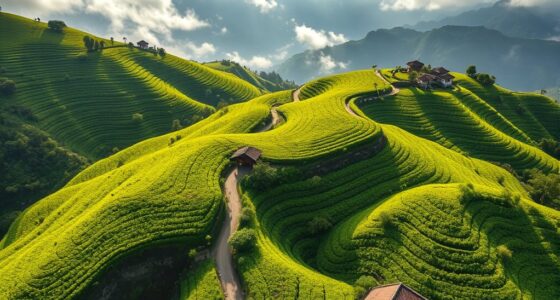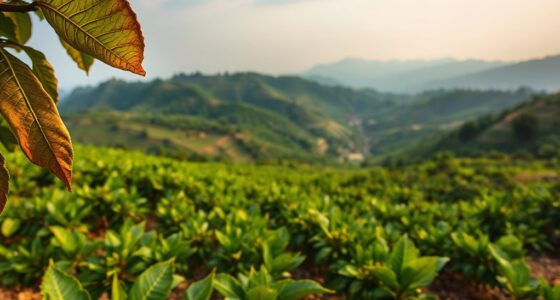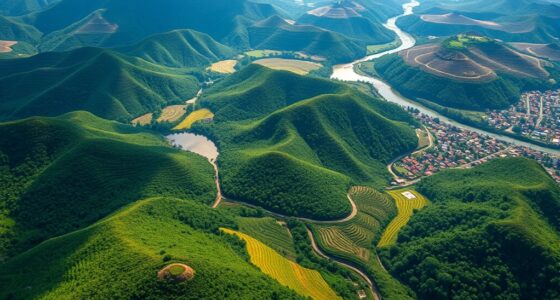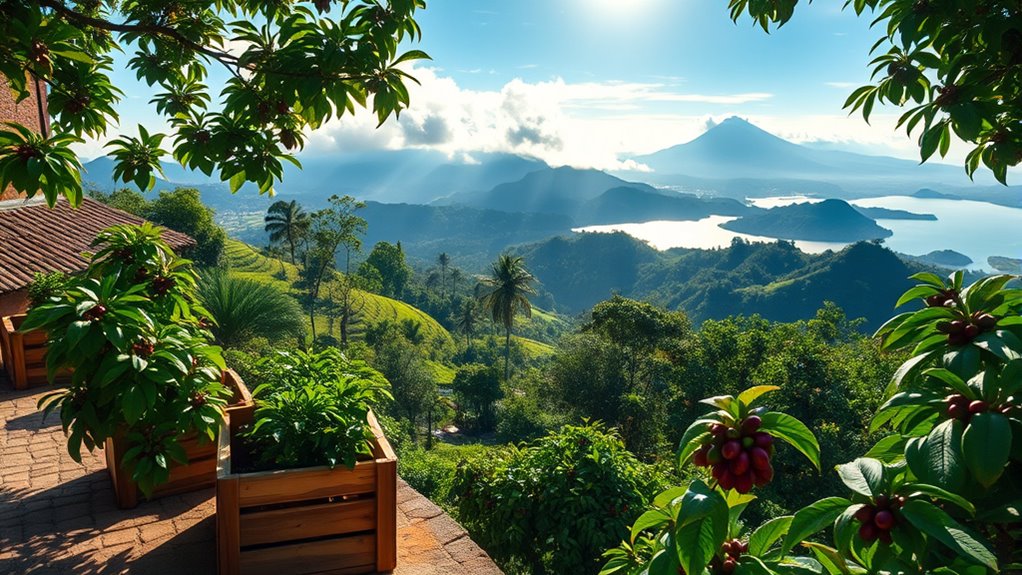

Guatemalan coffee regions like Antigua and Atitlán are famous for their unique flavors and high-quality beans. The volcanic soils and climate influence the rich acidity, vibrant aromas, and complex tastes you’re likely to enjoy. Farmers in these areas use sustainable methods that protect the environment and guarantee fair practices. Beyond Antigua and Atitlán, other regions also produce exceptional coffee rooted in responsible farming. If you want to discover more about these distinctive environments, there’s plenty to explore.
Key Takeaways
- Guatemala’s coffee regions, including Antigua, Atitlán, and Huehuetenango, are renowned for their unique flavors influenced by diverse landscapes and climates.
- Antigua’s volcanic soil produces vibrant, complex beans with bright acidity and full-bodied profiles.
- Lake Atitlán’s small-scale farms focus on eco-friendly, sustainable practices yielding fruity and floral coffee notes.
- Huehuetenango’s rugged terrain fosters high-quality beans with layered, bright flavors through environmentally responsible farming.
- Sustainable cultivation across regions ensures flavorful coffee while supporting environmental health and fair livelihoods.
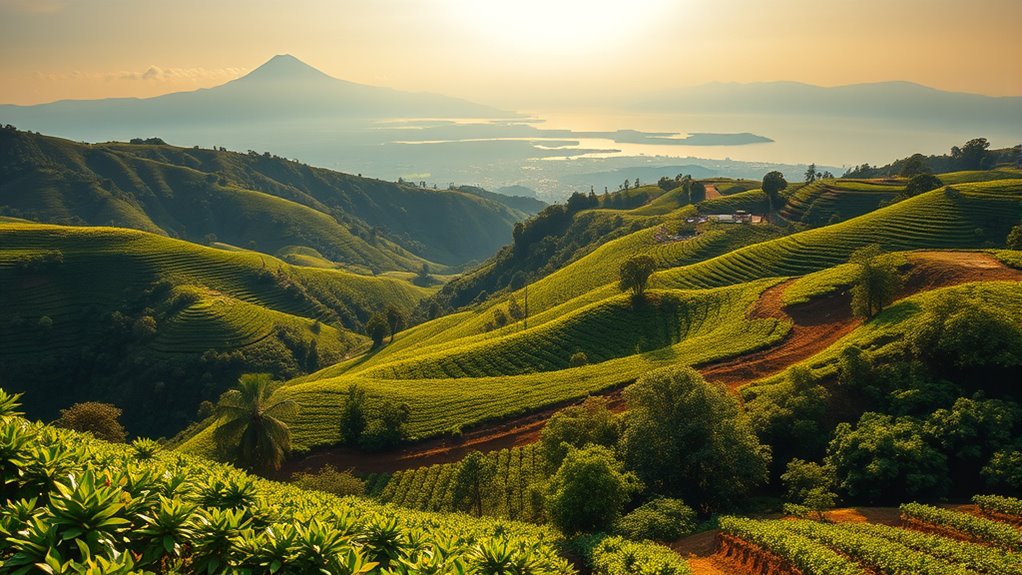
Guatemalan coffee regions are renowned worldwide for their unique flavors and high-quality beans. When you explore these areas, you’ll notice that the landscape and climate play a pivotal role in shaping the coffee’s character. Coffee cultivation here is more than just planting and harvesting; it’s a meticulous process deeply rooted in sustainable farming practices. Growers prioritize the health of the soil, water conservation, and biodiversity to guarantee their beans thrive naturally. This commitment to sustainability not only preserves the environment but also enhances the flavor profile of the coffee. As you taste Guatemalan coffee, you’re experiencing the result of careful cultivation that respects the land and its resources.
Guatemalan coffee benefits from sustainable, eco-friendly practices that preserve flavor and support local communities.
In regions like Antigua, you’ll find that the volcanic soil provides an ideal foundation for coffee cultivation. The rich, mineral-laden earth gives the beans a vibrant acidity and complex aroma. Farmers here often adopt sustainable farming methods, avoiding harmful chemicals and opting for shade-grown techniques that protect local ecosystems. This approach helps maintain the delicate balance necessary for high-quality coffee production. The combination of climate, altitude, and sustainable practices results in beans with a bright, full-bodied taste that’s highly sought after by connoisseurs around the world.
Beyond Antigua, the Lake Atitlán area offers a different profile of coffee. Here, small-scale farmers focus on traditional methods, blending modern sustainability with age-old practices. They often use organic fertilizers and implement water-saving irrigation systems, guaranteeing their coffee cultivation remains eco-friendly. These practices allow them to produce beans with distinct flavor nuances—think hints of fruit, floral notes, and a smooth finish that reflect the region’s rich volcanic soil. Additionally, these farmers often participate in certifications that promote sustainable farming practices, which helps improve market access and fair wages for local communities. As you savor coffee from Atitlán, you’re supporting a community committed to sustainable farming that benefits both the environment and local livelihoods.
Venturing further into Guatemala, you’ll encounter other high-altitude regions like Huehuetenango, where the rugged terrain challenges farmers but results in exceptional beans. Here, sustainable farming is essential to combat soil erosion and conserve water resources. Farmers often work collectively to share knowledge and resources, reinforcing their dedication to environmentally responsible practices. This collaboration ensures that each harvest maintains the region’s reputation for producing coffee with a bright, layered taste that captures the essence of Guatemala’s diverse landscape.
In all these regions, sustainable farming isn’t just a trend—it’s the foundation of quality coffee. It allows you to enjoy a cup that’s not only rich in flavor but also ethically produced. When you choose Guatemalan coffee, you’re supporting farmers who prioritize the land’s health, which is crucial for maintaining high-quality beans, guaranteeing that the vibrant flavors you love continue for generations to come.
Frequently Asked Questions
What Unique Processing Methods Are Used in Guatemalan Coffee?
You’ll find that Guatemalan coffee employs unique processing methods like specialized fermentation techniques to enhance flavor profiles. These beans often undergo meticulous drying methods, such as patio or raised bed drying, to preserve quality. By carefully controlling fermentation and drying, producers develop distinct tastes and aromas, making Guatemalan coffee truly exceptional. These methods highlight the country’s dedication to quality and tradition, setting their coffee apart from others worldwide.
How Does Altitude Affect Coffee Flavor Profiles in Guatemala?
Imagine standing high above lush coffee plantations, where the altitude impact creates a crisp, vibrant aroma. As you taste, you’ll notice flavor variation intensifies with elevation—higher altitudes produce beans with brighter acidity, complex fruity notes, and refined brightness. In Guatemala, this elevation dramatically shapes each cup, giving you a dynamic experience that reflects the unique microclimates and rich volcanic soil, making every sip a journey through mountain peaks and fertile valleys.
Which Coffee Varieties Are Most Common in Guatemalan Regions?
You’ll find a rich coffee varietal diversity across Guatemala, with Arabica being dominant. Popular varieties include Bourbon, Caturra, and Catuai, each contributing unique regional flavor profiles. These varieties thrive in different altitudes and climates, shaping the distinct tastes of each region. By exploring these common coffee types, you’ll experience a wide range of flavors, from bright and fruity to rich and chocolatey, showcasing Guatemala’s diverse coffee landscape.
Are There Sustainable Farming Practices Specific to Guatemalan Coffee?
Thinking of Guatemalan coffee, you’re exploring a lush garden of sustainable practices. You’ll find farmers prioritize water conservation, protecting essential resources like a precious gem. Organic certification is common, ensuring no harmful chemicals poison the soil or beans. These practices help preserve the environment and support fair labor. By choosing coffee with these sustainable methods, you’re helping cultivate a healthier planet and better coffee for generations to come.
How Do Weather Patterns Influence Harvest Seasons Across Regions?
Weather patterns directly impact harvest timing by causing climate variability that can either delay or hasten coffee ripening. When rains arrive early or late, you might see shifts in harvest windows, affecting quality and yield. Temperature fluctuations and rainy seasons influence bean maturation, so you should stay attentive to local weather forecasts. These factors shape when and how you harvest, making climate variability a key consideration for successful coffee farming.
Conclusion
As you explore Guatemalan coffee regions like Antigua and Atitlán, you’ll discover their rich flavors and vibrant landscapes. Did you know that Guatemala ranks as the sixth-largest coffee producer globally, supplying millions of cups worldwide? Next time you sip your brew, remember the passionate farmers and unique terroirs behind each cup. Your appreciation for this remarkable coffee grows with every sip, connecting you to the heart of Guatemala’s lush, mountainous regions.