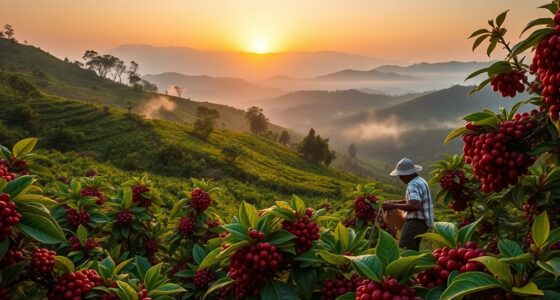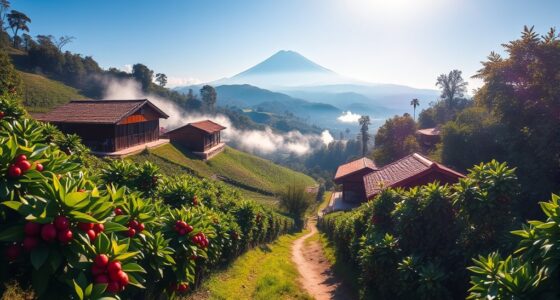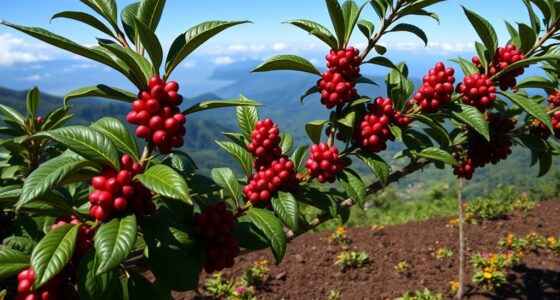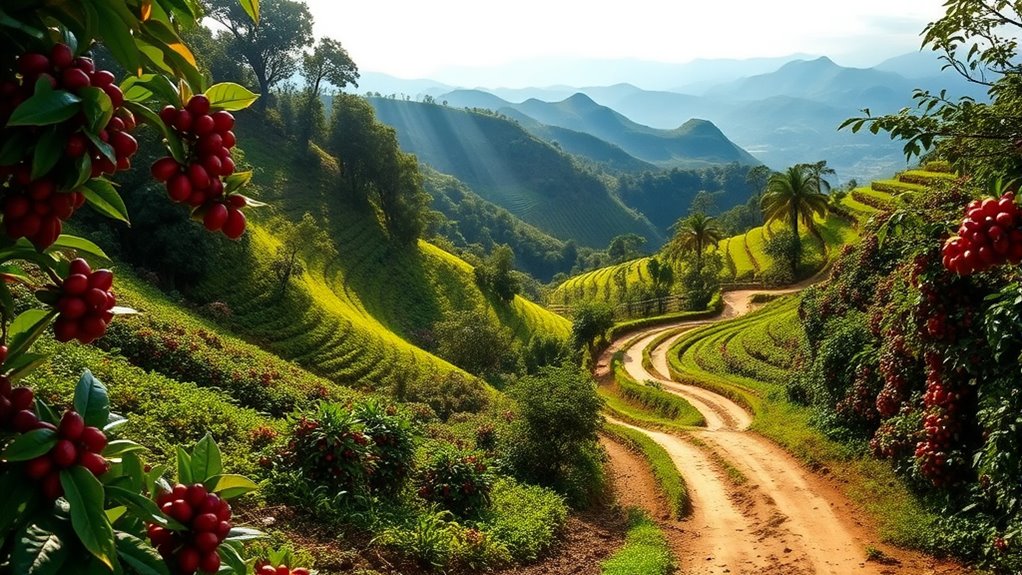

Explore Bolivia’s Yungas and Caranavi regions, where lush valleys and fertile soils produce vibrant, high-altitude coffees with bright acidity and complex flavors like citrus, berries, and floral notes. Farmers use sustainable, shade-grown methods that safeguard the environment and preserve regional characteristics. This eco-conscious approach guarantees rich, authentic tastes rooted in land and tradition. If you keep exploring, you’ll discover how these practices elevate your coffee experience and support local communities.
Key Takeaways
- Yungas and Caranavi regions are renowned for their lush, biodiverse landscapes ideal for high-quality coffee cultivation.
- Sustainable, shade-grown farming practices in these areas preserve soil health and enhance coffee flavor profiles.
- Coffee from Yungas and Caranavi features bright acidity, citrus, berry, and floral notes, reflecting the unique terroir.
- The region’s altitude and organic methods contribute to vibrant, complex beans with earthy and fruity characteristics.
- Supporting regional coffee promotes environmental responsibility and offers an authentic taste rooted in Bolivian land and culture.
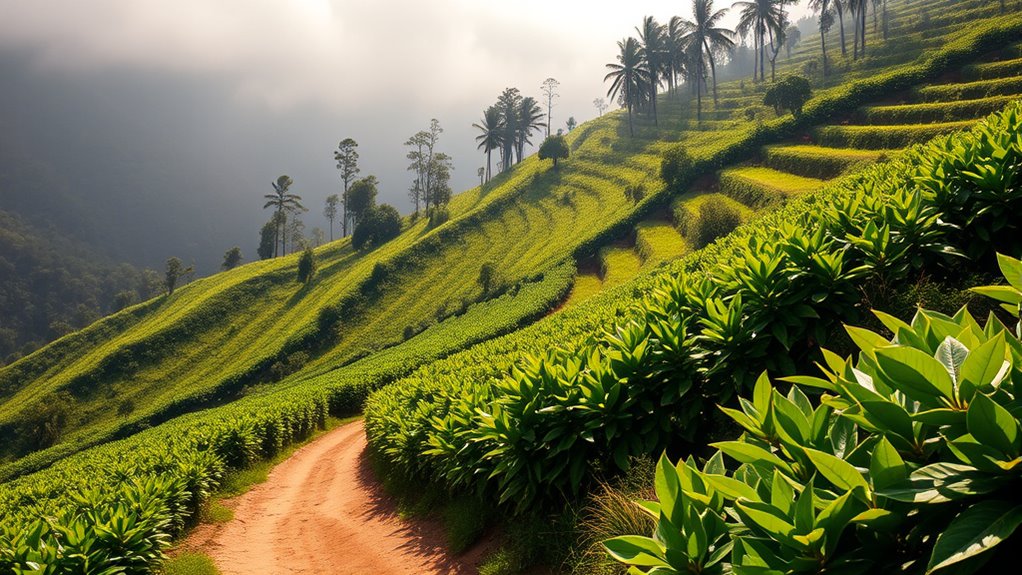
Nestled in Bolivia’s lush valleys, the Yungas and Caranavi regions are renowned for producing some of the finest coffees in South America. As you explore these areas, you’ll notice that their reputation isn’t just based on scenic beauty but also on the quality and uniqueness of their coffee. One of the key factors behind this excellence is sustainable farming practices. Local farmers prioritize eco-friendly methods, ensuring that the land remains healthy and productive for future generations. They often use shade-grown techniques, which protect the environment while fostering rich biodiversity. This approach not only preserves the landscape but also enhances the coffee’s flavor, allowing beans to develop their full potential.
Discover Bolivia’s Yungas and Caranavi, where sustainable, shade-grown coffee cultivates rich flavors amid lush, biodiverse landscapes.
When you taste coffee from Yungas and Caranavi, you’ll find that the flavor profiles are particularly distinctive. The altitude, combined with careful cultivation, creates beans with complex, vibrant notes. Expect a bright acidity that energizes your palate, complemented by a balanced body that isn’t too heavy or too light. The flavor profiles often include hints of citrus, berries, and floral undertones, making each cup a dynamic experience. The farmers’ commitment to quality and sustainable methods means that these unique characteristics are preserved and highlighted in every batch.
Sustainable farming isn’t just about environmental impact; it also influences the overall flavor of the coffee. By avoiding chemical pesticides and fertilizers, farmers allow the natural terroir to shine through. This results in beans that carry the true essence of the region—earthy, fruity, and aromatic. You’ll notice that each sip offers a sense of place, a reflection of the rich soil, high altitude, and careful processing techniques. This connection to the land and the farmers’ dedication to quality make Bolivia’s coffee from Yungas and Caranavi truly special.
As you explore deeper into the coffee culture of these regions, you’ll appreciate the harmony between tradition and innovation. Farmers are continually refining their methods, adopting sustainable practices that protect the environment while enhancing flavor profiles. By choosing coffee from Yungas and Caranavi, you support this balance—encouraging responsible farming and enjoying a brew that’s as complex and vibrant as the landscapes it comes from. Whether you savor it black or with milk, the coffee from these regions promises a rich, authentic experience rooted in sustainability and exceptional taste.
Top picks for "bolivia coffee yunga"
Open Amazon search results for this keyword.
As an affiliate, we earn on qualifying purchases.
Frequently Asked Questions
What Is the Best Time of Year to Visit Yungas and Caranavi for Coffee Tours?
The best visiting seasons for coffee tours in Yungas and Caranavi are from May to September, during the dry season when the weather is cooler and more stable. Peak coffee months are June and July, when coffee cherries are ripe for harvesting. Visiting during these months lets you experience the lush landscapes and vibrant coffee culture at its best, ensuring an authentic and memorable tour.
Are There Sustainable and Eco-Friendly Coffee Farms in the Yungas Region?
Yes, you’ll find many sustainable and eco-friendly coffee farms in the Yungas region. These farms prioritize sustainable farming practices, such as organic cultivation, water conservation, and biodiversity preservation. By visiting these farms, you support environmentally conscious efforts and learn how they minimize their ecological impact. Many growers focus on eco-friendly practices to protect the region’s lush landscape, ensuring coffee production remains sustainable for future generations.
How Do Altitude and Climate Affect Coffee Flavor Profiles in Yungas and Caranavi?
Think of altitude and climate as the artist’s brush strokes shaping coffee flavor. In Yungas and Caranavi, higher altitudes boost acidity and complex notes, while the cool, moist climate enriches sweetness and body. Altitude effects create a vibrant, lively profile, and climate influence adds depth and balance. You’ll notice these factors craft unique, nuanced coffees, making each sip a symphony of taste inspired by nature’s artistry.
Can Visitors Participate in Coffee Harvesting or Processing Activities?
Yes, you can participate in coffee harvesting or processing activities during your visit. Many plantations offer coffee plantation tours that include hands-on coffee harvesting experiences, allowing you to pick ripe cherries and learn about processing methods firsthand. This immersive activity gives you a deeper appreciation for the coffee journey, making your trip memorable. Be sure to book in advance, as these experiences are popular and often limited to small groups.
What Local Traditions or Festivals Celebrate Coffee in Yungas and Caranavi?
Imagine vibrant mornings filled with lively music and the aroma of freshly brewed coffee—this is what you’ll experience during local coffee festivals and ceremonies in Yungas and Caranavi. These celebrations honor coffee’s importance, featuring colorful parades, traditional dances, and shared stories. You get to join in the festivities, tasting local brews and learning about the cultural significance of coffee, making your visit truly immersive and unforgettable.
Conclusion
As you explore Bolivia’s Yungas and Caranavi coffee regions, remember that they produce over 50,000 metric tons of coffee annually, showcasing their essential role in the global coffee market. With their rich soils and unique climate, these areas offer a truly authentic coffee experience. So, next time you sip your cup, think of the dedicated farmers and the vibrant landscape that make each brew special. Your appreciation deepens with every flavorful, locally grown sip.