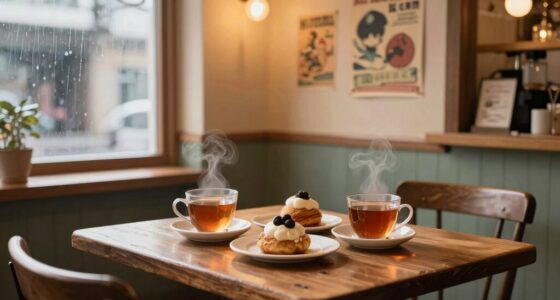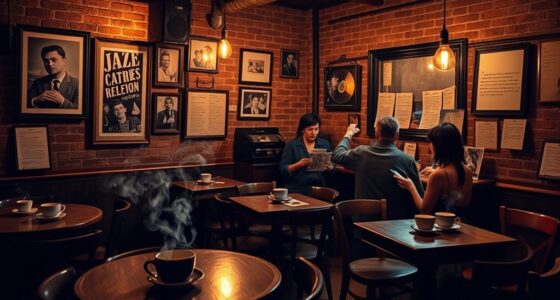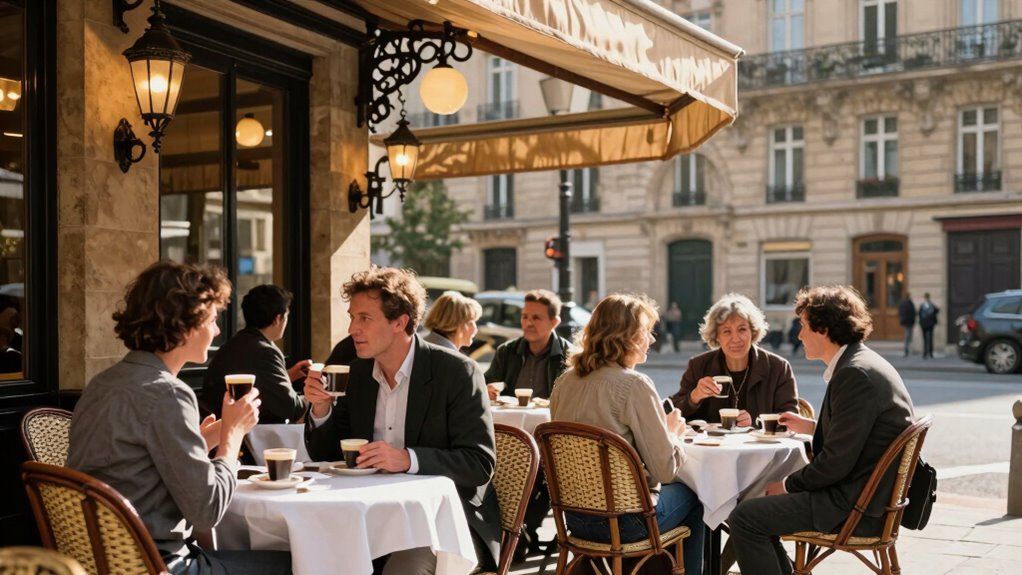

Paris cafés, often romanticized as Hemingway’s secluded retreats, were lively hubs of creativity and collaboration. While the myth paints him as a solitary thinker, these spaces buzzed with artists, writers, and ideas, shaping literary movements. The reality reveals vibrant social scenes that inspired groundbreaking work, though they were not always glamorous or quiet. To uncover how these cafés truly influenced Hemingway and the broader artistic community, there’s more to discover beyond the surface.

Get coffee and tea gear delivered free with Prime
- Fast, free delivery on millions of items
- Prime Video, Amazon Music and more included
- Member-only deals all year
Key Takeaways
- Hemingway’s association with Paris cafés is iconic but often romanticized, overlooking their crowded, noisy, and tourist-filled realities.
- Cafés served as vibrant hubs for creative exchange, fostering literary movements despite the myth of solitary inspiration.
- The myth of Hemingway alone contemplating in cafés simplifies a social scene that was complex and dynamic.
- Paris cafés historically shaped artistic ideas and cultivated a thriving creative community beyond their romanticized image.
- Today, these cafés remain cultural landmarks, symbolizing Paris’s enduring role in literary and artistic innovation.
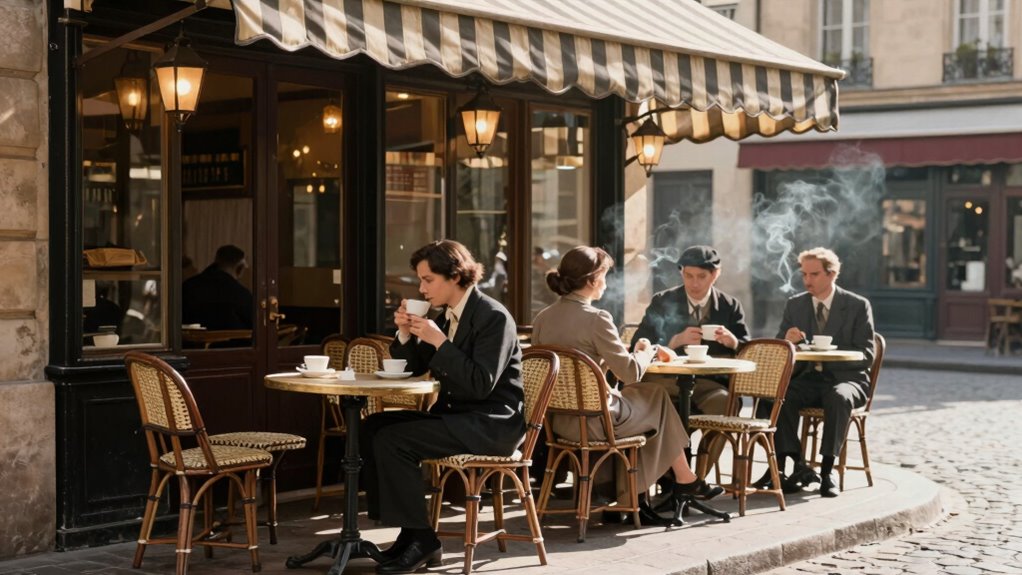
Paris’s cafés have long been a haven for writers and artists, and none is more famously associated with them than Ernest Hemingway. When you think of Parisian cafés, you might imagine sitting at a small table, sipping coffee, and soaking in the creative energy that once fueled Hemingway’s writing. These cafés weren’t just places to relax; they were essential spaces for literary inspiration, where ideas flowed freely and collaborations sparked. The myth of Hemingway’s Café de Flore or Les Deux Magots as the epicenters of bohemian life has persisted, but the reality is more nuanced. Yes, these cafés played a significant role in shaping literary history, but they also symbolize the broader cultural landscape of Paris during the early 20th century—an era of innovation, upheaval, and artistic expression.
As you walk into these historic spots, you can almost feel the weight of their past. Hemingway’s frequent visits, along with other luminaries like F. Scott Fitzgerald and Gertrude Stein, helped cement their reputation as hubs of literary inspiration. These cafés weren’t just places to meet; they were spaces where ideas gained momentum. They fostered a sense of community among writers, artists, and intellectuals, creating a collective energy that fueled creative breakthroughs. The historic significance of these cafés lies in their role as catalysts for groundbreaking work and as symbols of a vibrant Parisian intellectual scene. Furthermore, the ambiance and social dynamics of these venues contributed to the creative community, which was an essential part of what made these cafés so influential in fostering literary innovation. The social environment within these spaces was crucial in nurturing the exchange of ideas that propelled artistic development.
However, it’s important to recognize that the myth can sometimes overshadow the reality. The cafés of Hemingway’s time weren’t always glamorous or accessible. They were often crowded, noisy, and filled with tourists even then. The romantic image of Hemingway sitting alone, contemplating his next masterpiece over a cup of coffee, simplifies a much more complex social scene. Still, the atmosphere of these cafés contributed to the mythos, inspiring countless writers to seek their own moments of brilliance within their walls. In fact, the development of café culture in Paris created an environment that nurtured creativity and dialogue, shaping literary movements and artistic ideas. This environment also contributed to the cultural vibrancy that Paris was renowned for during that period. Today, when you visit, you’re stepping into a space layered with history—an environment that helped shape modern literature. The cafés’ significance endures, not only because of Hemingway but because they continue to symbolize the enduring power of creative community and inspiration that transforms a simple gathering place into an essential chapter of cultural history.
As an affiliate, we earn on qualifying purchases.
Frequently Asked Questions
Did Hemingway Invent the Concept of the Paris Café?
Hemingway didn’t invent the concept of the Paris café, but he certainly popularized its literary symbolism and cultural legacy. You see, he captured the vibrant café scene as a hub for writers and artists, shaping how people view these spaces. His stories and lifestyle made the Paris café a symbol of creativity, resilience, and bohemian spirit, leaving a lasting impression on both literature and cultural history.
Which Café Was Hemingway’s Absolute Favorite?
You might think Hemingway’s favorite café was the famous Café de Flore, but it’s actually the Closerie des Lilas. This spot, with its rich artistic ambiance, served as his haven for literary inspiration. He loved the lively atmosphere, where writers and artists gathered. The café’s charm fueled his creativity, making it a true sanctuary. So, if you seek Hemingway’s artistic inspiration, Closerie des Lilas remains the authentic choice.
Are There Any Cafes Hemingway Never Visited?
You might wonder if Hemingway never visited certain Paris cafés, and it’s possible. Some cafés are surrounded by historical inaccuracies or exaggerated stories, blending literary symbolism with reality. Hemingway’s favorites, like Café de Flore, are well-documented, but he likely never set foot in every popular spot. As a reader or visitor, you should see beyond myths and enjoy the authentic history, understanding that not every café’s story is entirely accurate.
How Did Hemingway Influence Modern Café Culture?
Hemingway profoundly influenced modern café culture through his literary inspiration, making cafés vibrant hubs for writers and artists. His stories depict cafés as spaces for conversation, creativity, and reflection, shaping cultural legacy today. You can see this impact in how contemporary cafés serve as social and artistic centers, encouraging connections and storytelling. Hemingway’s portrayal of cafés continues to inspire the way people experience and value these communal spaces.
Are Hemingway’s Favorite Cafés Still Open Today?
Yes, Hemingway’s favorite cafés in Paris are still open today, offering authentic café ambiance that captures the spirit of his time. When you visit, you can soak in the literary inspiration that once fueled his creativity. These historic spots let you experience the same vibrant atmosphere he loved, making them perfect for writers and fans enthusiastic to connect with his enduring legacy.
Conclusion
While Hemingway’s Paris cafés evoke a romantic allure, the reality whispers of a more nuanced charm. Behind the myth lies a tapestry of quiet moments, subtle conversations, and understated elegance. You may find that the true magic isn’t in grand gestures but in the delicate, often unnoticed details that quietly shape the city’s timeless spirit. Embrace these nuances, and Paris’s cafés will reveal their authentic, enduring grace—an understated masterpiece waiting to be discovered.
Evergreen bestsellers Picks
bestsellers
As an affiliate, we earn on qualifying purchases.