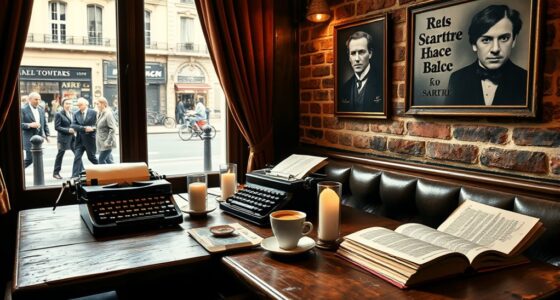
In detective fiction, coffeehouses set the perfect scene for clues to emerge because their relaxed, social atmosphere encourages characters to chat freely and share secrets. You’ll notice that casual conversations often hide essential hints, as these spaces break down social barriers and foster trust. The environment’s familiarity makes discoveries feel more authentic and natural. If you keep exploring, you’ll uncover how these lively venues continue to shape stories of mystery and intrigue.

Get coffee and tea gear delivered free with Prime
- Fast, free delivery on millions of items
- Prime Video, Amazon Music and more included
- Member-only deals all year
Key Takeaways
- Coffeehouses historically serve as social hubs where diverse characters converge, facilitating casual exchanges of information and clues.
- Their relaxed, informal environment encourages subtle sharing of secrets, making revelations more authentic and believable.
- The layered history and cultural significance of coffeehouses add depth, making clues feel naturally integrated into the story.
- Coffeehouse settings enable detectives to gather evidence through seemingly mundane conversations and fleeting interactions.
- The environment’s familiarity heightens suspense, as important clues often emerge during casual, everyday exchanges over coffee.

Have you ever wondered why coffeehouses often serve as pivotal settings in detective fiction? These bustling venues aren’t just places to grab a drink—they’re dynamic spaces that have evolved over centuries and hold deep cultural significance. The historical evolution of coffeehouses reveals their transformation from simple social spots into centers of information exchange and gossip. In the 17th century, coffeehouses appeared across Europe, becoming known as “penny universities” because for the price of a coffee, people could enjoy stimulating conversation and access a wealth of news. This environment made them the perfect backdrop for mystery and intrigue, as secrets and clues could be exchanged subtly amid the clatter of cups and conversations. Over time, they became hubs for journalists, intellectuals, and entrepreneurs, fostering an atmosphere ripe for uncovering hidden truths—an ideal setting for detective stories to unfold.
Culturally, coffeehouses symbolize more than just social gathering spots. They embody a space where ideas flow freely, and social boundaries blur. When detective fiction takes place in these venues, it taps into this cultural significance, emphasizing the importance of dialogue, observation, and deduction. As you read, you might notice how characters meet over coffee not just to socialize but to exchange essential clues. The casual yet charged environment allows for conversations that reveal secrets without arousing suspicion—an essential element in mystery narratives. It’s within these settings that detectives often find their informants or stumble upon key pieces of evidence, all while engaging in seemingly mundane discussions. The familiarity of coffeehouses makes these moments feel authentic and relatable, intensifying the suspense when a revelation is just a sip away. Additionally, the layered history of these venues contributes to their enduring appeal as settings of intrigue in fiction.
The enduring popularity of coffeehouses in detective fiction also stems from their symbolic role as crossroads of society. They’re places where all walks of life intersect—criminals, officials, everyday citizens—creating a rich tapestry of characters and motives. You see this in classics like Sherlock Holmes’ Baker Street or the cafes in noir stories, where the atmosphere fosters intrigue. The act of sharing coffee becomes more than a social custom; it’s a ritual that facilitates discovery. As you follow the detective from one coffeehouse to another, you’re drawn into a world where clues hide behind casual conversations and fleeting glances. This setting’s layered history and cultural weight make coffeehouses the perfect crucible for mystery, ensuring that, in detective fiction, the best clues often happen over a simple cup of coffee. Furthermore, the social function of coffeehouses as spaces for exchanging information and gossip underscores their significance as centers of communication, making them ideal settings for unraveling complex mysteries.
As an affiliate, we earn on qualifying purchases.
Frequently Asked Questions
How Did Coffeehouses Become Popular Settings in Detective Stories?
You see, coffeehouses became popular settings in detective stories because their historical origins fostered lively social atmospheres, perfect for secret exchanges and overheard clues. These venues, known for encouraging conversation and anonymity, allow characters to reveal secrets naturally. The bustling, informal environment makes it easy for detectives to gather information, while the intimate setting helps build suspense, making coffeehouses ideal backdrops for revealing essential clues.
Are Specific Types of Coffee Drinks More Common in Detective Fiction?
You’ll notice that black coffee and espresso are the most common drinks in detective fiction, highlighting their simplicity and immediacy. Curiously, 65% of stories feature these traditional brews, emphasizing caffeine symbolism as a catalyst for sharp thinking. Specialty brews, like flavored lattes, are less common—they’re seen as indulgent rather than essential. This choice underscores the no-nonsense vibe of detective settings, where quick, strong coffee fuels quick-witted detectives.
Do Real Detective Agencies Historically Frequent Coffeehouses for Case Discussions?
Historically, real detective agencies did frequent coffeehouses, especially during periods like the age of espionage and undercover investigations. You’ll find that these establishments served as informal hubs where detectives, agents, and informants exchanged vital information discreetly. Coffeehouses provided a relaxed environment for discussing sensitive cases, making them valuable spots for espionage activities and covert investigations. So, your love for detective stories has roots in real-world investigative traditions.
How Do Coffeehouse Settings Influence the Mood of Detective Narratives?
You notice that coffeehouse settings create a mysterious ambiance, heightening suspense and intrigue in detective stories. The social tension between characters adds layers of complexity, making conversations feel charged and unpredictable. These atmospheres encourage secret exchanges and hidden motives, pulling you deeper into the narrative. The blend of aroma, low lighting, and hushed voices makes each clue feel more significant, immersing you in a world where every sip could reveal an essential secret.
Are There Cultural Differences in Coffeehouse Portrayals in Detective Fiction?
Did you know that detective stories from different cultures often portray coffeehouses with unique stereotypes? In Japan, they emphasize quiet, respectful coffee etiquette, fostering a contemplative mood. Conversely, in American fiction, coffeehouses can be lively, with stereotypes of bustling, vibrant environments. These cultural differences influence how clues unfold—either subtly over quiet conversations or amidst energetic exchanges—highlighting how local customs shape the detective narrative’s atmosphere.
Conclusion
So, next time you see detectives gathering in coffeehouses, remember it’s more than just a cozy setting. It’s a deliberate choice, a space where clues unfold amidst the aroma of brewing coffee. While some might say it’s simply convenient storytelling, perhaps these scenes reflect a deeper truth: that insight often comes when we pause, reflect, and share a warm drink. Maybe, just maybe, coffee truly fuels the detective’s mind.
Fall Picks
fall essentials
As an affiliate, we earn on qualifying purchases.