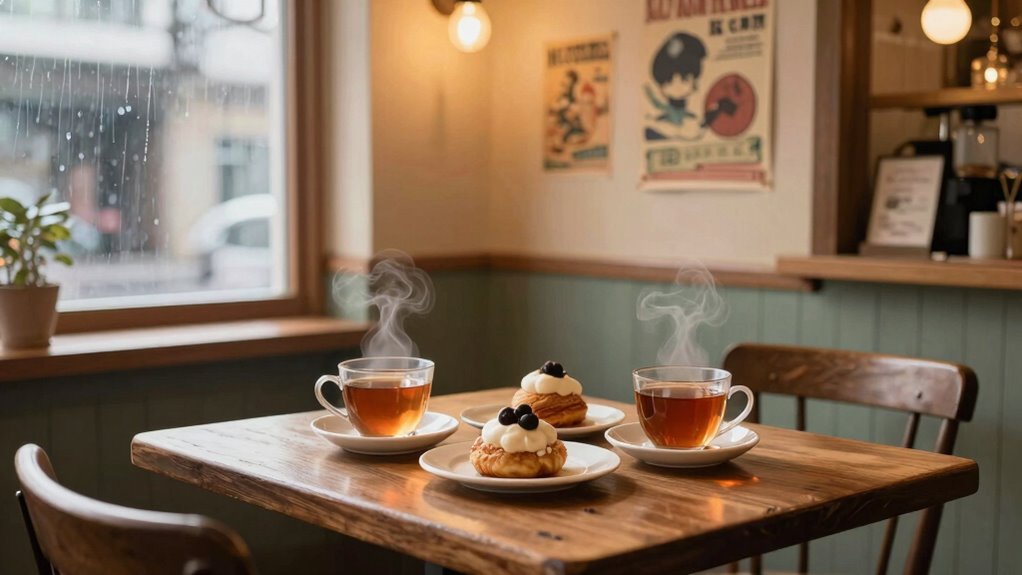

You notice anime often return to café scenes because they serve as intimate, versatile spaces where characters reveal their true selves and build connections. These settings symbolize comfort, nostalgia, and emotional shifts, making them perfect for deepening character development and exploring important themes. The cozy atmosphere encourages genuine conversations, breaking social barriers naturally. If you keep exploring, you’ll see how these scenes beautifully blend storytelling with emotional resonance, adding layers to the stories you love.

Get coffee and tea gear delivered free with Prime
- Fast, free delivery on millions of items
- Prime Video, Amazon Music and more included
- Member-only deals all year
Key Takeaways
- Cafés serve as neutral, intimate settings for character development and meaningful conversations.
- The warm, cozy atmosphere symbolizes safety, nostalgia, and emotional vulnerability.
- Café scenes visually reinforce themes like hope, transition, and personal growth through lighting and decor.
- They act as narrative devices to explore diverse relationships and break social barriers.
- Repeated use emphasizes their significance in fostering emotional depth and storytelling continuity.
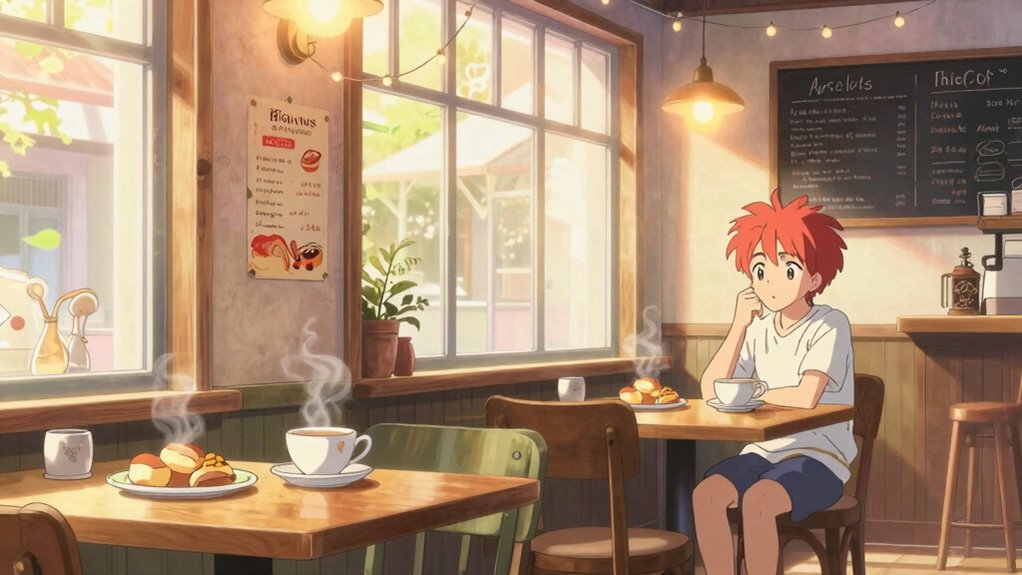
Anime has long depicted cafés as lively, charming spaces where characters gather to share secrets, dreams, and everyday moments. These scenes are more than just backdrops; they’re essential to character development, revealing inner conflicts, hopes, and relationships. When characters sit across from each other over steaming cups of coffee or tea, it’s a moment of intimacy that shows their true selves. You notice how their expressions soften or tense up, how they hesitate or speak confidently—these subtle cues deepen your understanding of their personalities. The café environment acts as a mirror, reflecting their growth or struggles, making it a perfect setting for pivotal conversations and revelations. Moreover, these settings often symbolize emotional shifts, reinforcing the story’s thematic depth. Visual symbolism plays a significant role in why anime keeps returning to cafés. The cozy, warm atmosphere often symbolizes comfort, safety, or a retreat from chaos. When characters step into a café, it can represent a moment of pause or shift—an oasis amid the turmoil of their lives. The gentle clinking of cups, soft lighting, and inviting decor serve as visual cues that influence your emotional response. These elements evoke feelings of nostalgia, hope, or tenderness, helping you connect with the characters on a deeper level. The setting’s visual symbolism isn’t accidental; it’s carefully crafted to emphasize emotional shifts or thematic messages. For example, a dimly lit café might symbolize loneliness or introspection, while a bustling, brightly lit one could indicate newfound excitement or connection. You also observe how cafés serve as a visual motif that ties together various storylines. They often act as a neutral ground where characters from different worlds meet, breaking down barriers of social status, age, or background. This shared space fosters dialogue and understanding, making it a natural stage for characters to evolve. Beyond their visual appeal, these scenes often emphasize character interactions, which reveal deeper layers of personality and relationships. The use of Visual symbolism in these scenes helps convey complex themes without words, enriching the story’s emotional depth. Understanding the power of visual symbolism in these scenes enhances your appreciation of how subtle cues shape your emotional experience. Ultimately, the recurring café scene in anime isn’t just a stylistic choice; it’s a storytelling device that uses character development and visual symbolism to deepen your emotional engagement. Whether it’s a quiet moment of reflection or a lively exchange of hopes, these scenes create a space where characters grow and your connection to their journey intensifies. That’s why, time after time, anime returns to the comforting charm of cafés—they’re timeless stages for personal stories to unfold.
As an affiliate, we earn on qualifying purchases.
Frequently Asked Questions
How Did the Café Scene Originate in Anime?
You might notice that the café scene in anime originated from Japan’s rich café culture, capturing a nostalgic ambiance. Creators use these scenes to evoke warmth and comfort, highlighting social interaction among characters. These settings offer a relaxed space for conversations, helping viewers connect emotionally. Over time, the café scene became a beloved trope, symbolizing friendship, introspection, and everyday life, making it a recurring and iconic element in anime storytelling.
Are There Cultural Reasons for the Café Setting?
You might notice that cafés symbolize more than just a cozy setting—they’re a cultural hub for social gathering and connection. This backdrop taps into cultural symbolism, representing a space where characters share secrets, dreams, or confront challenges. The warmth and familiarity evoke nostalgia and intimacy, making cafés the perfect setting for pivotal moments. It’s no surprise anime keeps returning to this scene—because beneath its simplicity lies a universe of emotional depth.
Which Anime Popularized the Café Scene?
You’ll find that *Clannad* popularized the café scene, enchanting fans with its warm, inviting aesthetic appeal. This anime’s detailed setting encourages fan engagement, making viewers feel like part of the cozy café environment. Its success inspired many others to incorporate similar scenes, emphasizing comfort and community. As a result, the café setting became a staple in anime, resonating deeply with audiences and reinforcing its nostalgic charm.
Do Different Genres Use Café Scenes Differently?
You’ll notice that different genres use café scenes like a painter chooses colors—tailored to fit their story’s mood. Romantic tropes often create cozy settings for heartfelt conversations, while slice-of-life shows use cafés to highlight everyday life. Meanwhile, mystery or supernatural genres might use cafés for secret meetings or revelations. Each genre’s conventions shape how they craft these scenes, making them versatile tools for storytelling, like a chameleon adapting to its environment.
How Do Café Scenes Influence Character Development?
Café scenes influence character development by fostering meaningful character interaction, revealing personalities, and deepening relationships. You notice how the cozy ambiance creates a relaxed environment, encouraging characters to open up and share their thoughts. These scenes often serve as moments of reflection, helping you understand characters’ motivations and vulnerabilities. The warm, inviting setting amplifies emotional depth, making character growth feel authentic and relatable to you as a viewer.
Conclusion
You see, the café scene is more than just a backdrop; it’s where anime characters open up and reveal their true selves, making it a safe haven for storytelling. It’s a classic case of “the more things change, the more they stay the same.” As long as audiences crave comfort and familiarity, this cozy setting will keep making a comeback. Sometimes, sticking to the tried-and-true is what keeps a story close to our hearts.
Fall Picks
fall essentials
As an affiliate, we earn on qualifying purchases.