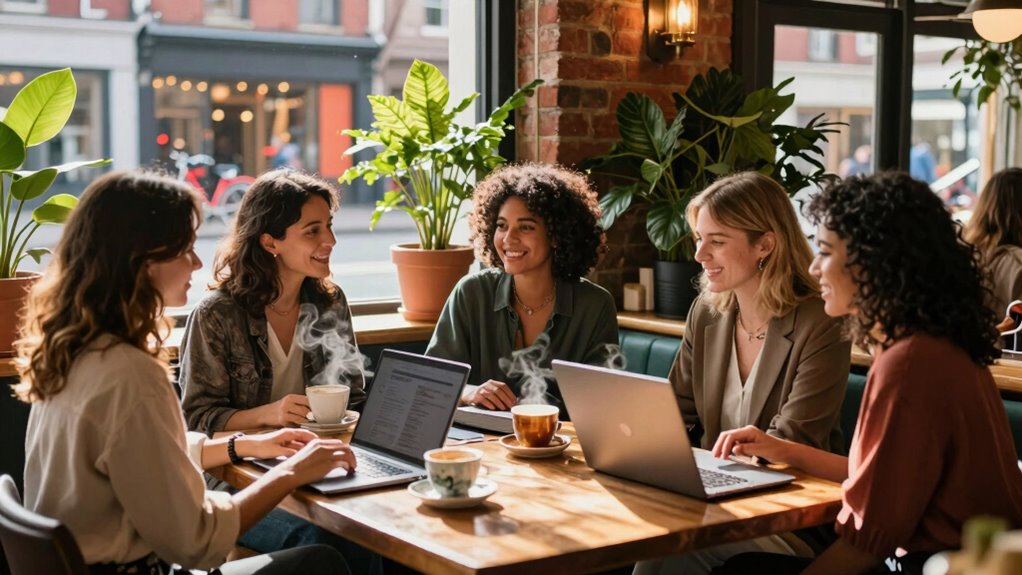

Women’s cafés are more than just coffee spots; they transform public spaces into safe, empowering environments where women can gather without fear. These cafés challenge traditional norms by offering spaces for women to express themselves, discuss issues, and build community. They serve as acts of resistance against male-dominated spaces and inspire social change. If you keep exploring, you’ll discover how these venues continue to shape gender equality and community resilience in surprising ways.
Key Takeaways
- Women’s cafés serve as gendered spaces that reclaim public areas for women’s social empowerment and community building.
- Historically, these spaces challenge male dominance in public environments, fostering safety and inclusivity for women.
- They function as platforms for civic engagement, promoting women’s participation in societal discourse and leadership.
- Women’s cafés act as symbols of resistance, inspiring societal shifts toward gender equality and social justice.
- These cafés reshape coffee history by emphasizing the social and political roles women play in public space development.
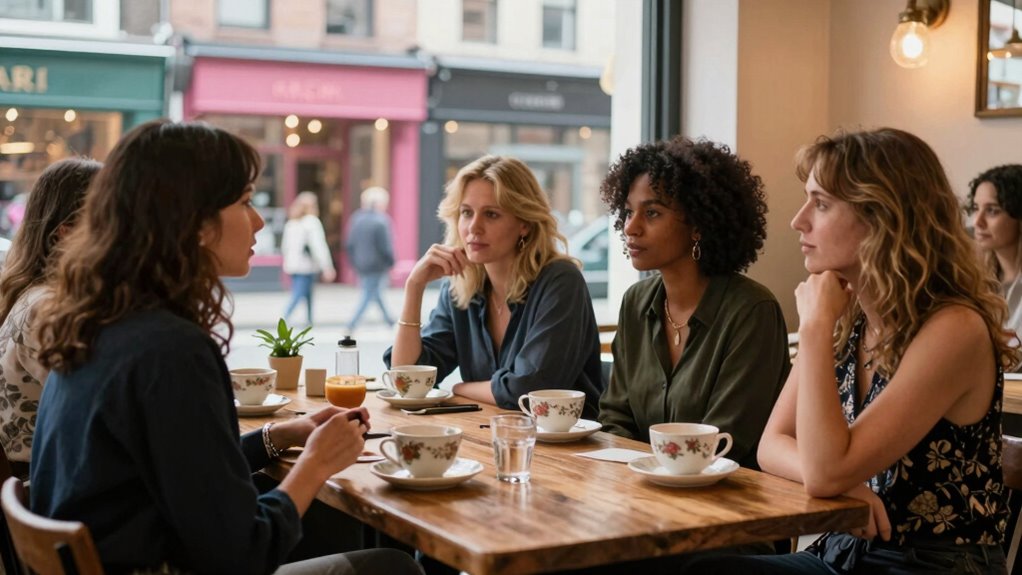
Have you ever wondered how women carve out safe, welcoming spaces within the bustling public domain? Women’s cafés serve as prime examples of gendered spaces created to foster social empowerment. These establishments aren’t just about coffee and conversation; they’re deliberate acts of reclaiming public space for women, offering environments where they can gather without fear or judgment. Historically, public spaces have often been male-dominated, leaving women feeling excluded or vulnerable. Women’s cafés challenge this norm, transforming the café into a haven where women can express themselves freely, discuss issues openly, and build community.
In many ways, women’s cafés act as acts of resistance against traditional gendered spaces. They turn the idea of the public sphere on its head by creating environments tailored to women’s needs and experiences. These spaces promote social empowerment by providing a platform for women to share stories, challenge stereotypes, and support each other. They foster a sense of solidarity that can be hard to find elsewhere. When women gather in these cafés, they’re not just drinking coffee—they’re engaging in acts of social activism that reinforce their presence in public life and challenge societal expectations about femininity and public participation.
Furthermore, women’s cafés serve as catalysts for community development. They often host workshops, discussions, and cultural events that focus on women’s issues, giving attendees a voice and a sense of agency in shaping their surroundings. These activities help break down barriers, encouraging women to take on leadership roles and become more engaged in civic life. Creating gendered public spaces like these is vital for fostering inclusive communities, as they provide a platform where diverse voices can be heard and valued. Recognizing the gendered nature of public spaces is essential for understanding how to reclaim and transform them for greater inclusivity and fairness. These efforts are also part of a broader movement to address the social dynamics and power relations that shape public environments. Additionally, these efforts can inspire broader societal shifts toward gender equality by highlighting the importance of safe and supportive environments. By creating spaces where women feel safe and supported, these cafés nurture confidence and foster a collective identity rooted in shared experiences. Over time, they contribute to broader social change by demonstrating that women can and should be active participants in public spaces.
The significance of women’s cafés extends beyond individual empowerment. They challenge societal norms that confine women to private spheres, advocating for gender equality and social justice. These venues remind us that public space isn’t neutral—it’s shaped by social dynamics and power relations. When women organize and gather in such spaces, they assert their right to belong and influence the public domain. Women’s cafés become symbols of resilience, illustrating how the simple act of sharing a cup of coffee can be a powerful gesture of social empowerment and a step toward more inclusive, equitable public spaces.
As an affiliate, we earn on qualifying purchases.
Frequently Asked Questions
How Did Women’s Cafés Influence Gender Roles Historically?
Women’s cafés historically fostered gender empowerment by creating safe spaces for women to gather and discuss issues openly. You’d see these cafés becoming hubs of social activism, where women challenged traditional roles and pushed for equality. By breaking societal barriers, they influenced public perceptions of women’s independence, encouraging more active participation in civic life. These cafés played a crucial role in reshaping gender roles and advancing women’s voices in public spaces.
Sure, women’s cafés weren’t exactly open to everyone, especially not if you belonged to the lower social class. You’d quickly find yourself excluded by social class distinctions and limited economic accessibility. Only the privileged could sip coffee in these spaces, leaving working-class women dreaming of such luxuries. So, these cafés reinforced class divides under the guise of offering women a space, making it clear privilege dictated who could join the coffee club.
How Did Women’s Cafés Impact Local Community Dynamics?
You see, women’s cafés fostered social integration by creating safe, inclusive spaces where women could gather freely. They encouraged cultural expression, allowing women to share ideas, art, and activism, which strengthened community bonds. These cafés challenged traditional gender roles and promoted solidarity, transforming public spaces into empowering environments. As a result, women’s cafés profoundly impacted local community dynamics by promoting equality and cultural exchange, shaping a more inclusive social landscape.
What Challenges Did Women Face When Establishing These Cafés?
Can you imagine the hurdles women faced to create gendered spaces like women’s cafés? They often encountered societal resistance, restrictions on women’s independence, and skepticism from male-dominated communities. Establishing these cafés was a form of social activism, challenging traditional norms. Women had to navigate legal barriers, financial struggles, and social stigma, all while asserting their right to share space and voice in public life.
Are Women’s Cafés Still Prevalent Today Worldwide?
Yes, women’s cafés are still prevalent today worldwide. You’ll find them thriving in many cultures where they challenge traditional norms by promoting women’s economic independence and social empowerment. These spaces often reflect changing cultural perceptions, creating safe environments for women to gather, discuss, and build community. While they may vary in size and style, their core purpose remains to foster women’s participation and challenge societal boundaries.
Conclusion
You step into the world of women’s cafés, where every sip is a rebellion and each table a battleground for freedom. These spaces didn’t just serve coffee—they brewed revolutions, igniting sparks that set entire societies ablaze with change. Imagine a tiny café transforming into a roaring wildfire of empowerment, spreading wildly across history’s pages. In this caffeinated chaos, women didn’t just gather—they reshaped the very fabric of public space, turning quiet corners into epicenters of unstoppable revolution.