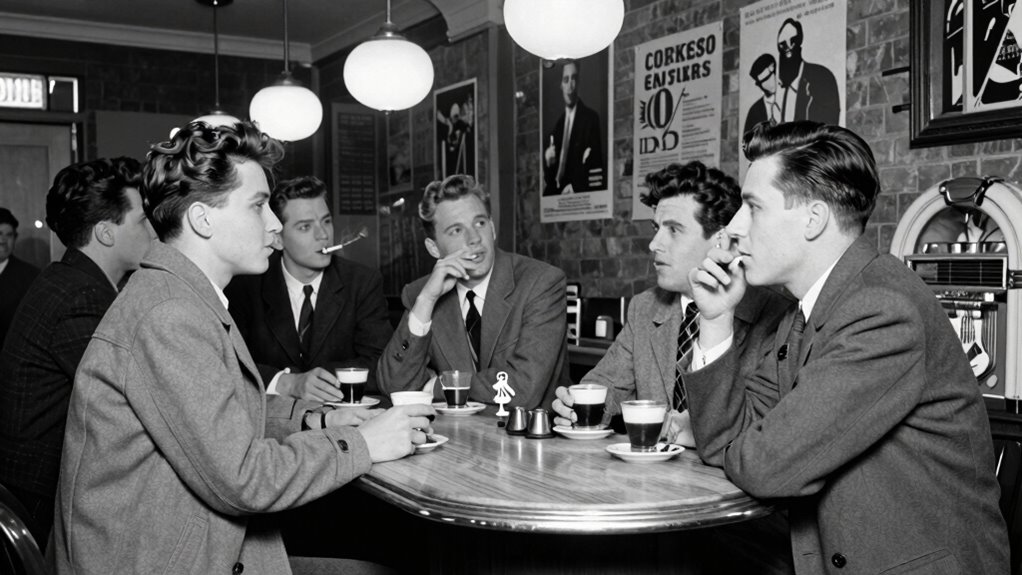

In 1950s Britain, espresso bars became lively hubs where you could connect with other young people, artists, and musicians. These casual spaces fostered a sense of community, breaking down social barriers and encouraging self-expression. They showcased modern aesthetics, music, and cultural trends that shaped youth identity. If you keep exploring, you’ll discover how these vibrant venues sparked social change and helped define a new, inclusive youth scene.

Get coffee and tea gear delivered free — and shop member deals
- Fast, free delivery on millions of items
- Access to Prime Big Deal Days deals on October 6–7
- Prime Video, Amazon Music and more included
Key Takeaways
- Espresso bars in 1950s Britain became informal gathering spots for young people, fostering social interactions and community building.
- They promoted modern, minimalist aesthetics that appealed to youth seeking contemporary, stylish environments.
- These venues showcased cultural exchange through music and posters, influencing emerging youth identities.
- They attracted diverse social groups, encouraging inclusivity and breaking traditional class barriers.
- Espresso bars served as catalysts for cultural and social change, supporting new artistic and musical movements among youth.
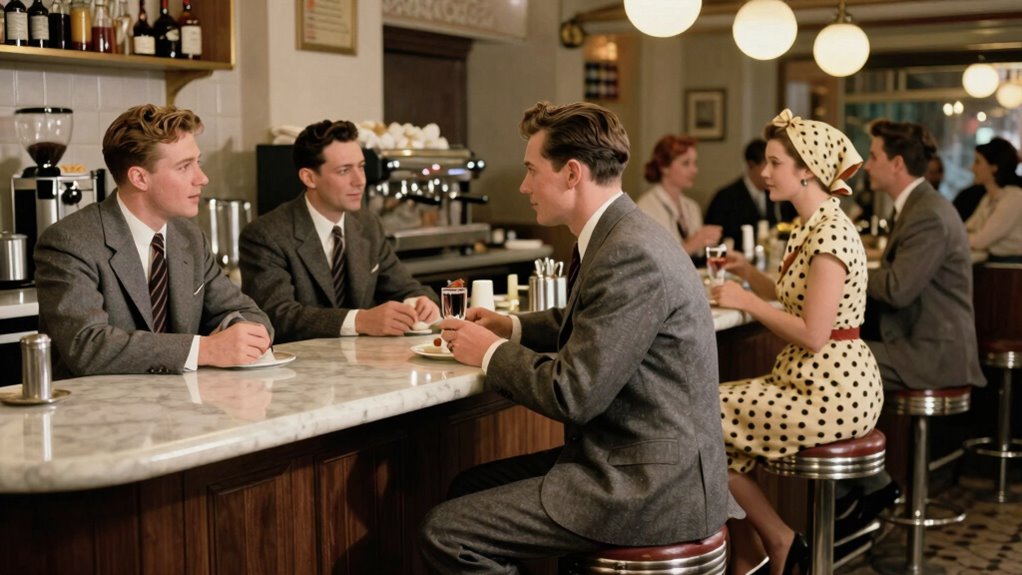
Within these bustling spaces, social dynamics evolved. Unlike the more formal and reserved settings of traditional pubs, espresso bars encouraged casual conversations and a sense of community among young people. You find yourself striking up conversations with strangers over shared interests, whether it’s jazz records or the latest films. The informal, stylish environment fosters a feeling of belonging, especially for the youth who are enthusiastic to carve out their own identity separate from older generations. These bars became gathering spots for students, artists, and musicians, helping to forge a new social scene rooted in creativity and rebellion against conventional norms. The scene was also influenced by emerging youth culture, which emphasized independence and self-expression.
Cultural influence runs deep in these establishments. They not only promote a modern aesthetic but also serve as platforms for cultural exchange. You might notice posters of American jazz musicians or British artists, reflecting a blending of influences that broadens your perspective. The decor, often sleek and minimalist, echoes contemporary trends, and the music you hear—swing, bebop, or emerging British jazz—sets a lively tone. These elements reinforce a sense of belonging to a new, vibrant youth culture that values individuality and innovation. The venues also helped to shape modern youth identity by fostering an environment that celebrated new styles and ideas. Moreover, the relaxed atmosphere allowed young people to express themselves more freely than in traditional settings.
The social dynamics in these espresso bars also challenge traditional class distinctions. They attract a diverse crowd—students, working-class youth, middle-class creatives—breaking down the barriers typically associated with more formal venues. You observe how everyone mingles freely, sharing ideas and experiences without the stiff social hierarchies of older Britain. This shared sense of modernity and cultural openness helps forge a community where young people feel seen and heard. The espresso bar, consequently, doesn’t just serve coffee; it becomes a catalyst for social change, shaping attitudes and fostering a new generation’s identity rooted in cultural influence and dynamic social interactions. Additionally, the interplay of modern aesthetics and social diversity made these venues vital in shaping a more inclusive youth culture. These spaces also played an essential role in cultural innovation, providing platforms for emerging artistic movements and new musical styles.
Furthermore, these venues played a crucial role in emerging youth culture, acting as catalysts for social change and cultural innovation.
vintage espresso machine 1950s style
As an affiliate, we earn on qualifying purchases.
As an affiliate, we earn on qualifying purchases.
Frequently Asked Questions
How Did Espresso Bars Influence British Youth Culture?
You see, espresso bars reshaped British youth culture by becoming vibrant hubs where you could enjoy vintage decor and connect with friends. They encouraged social activism, inspiring young people to discuss ideas and challenge norms. These bars fostered a sense of identity and independence, making them more than just places to drink coffee. Instead, they became symbols of youthful rebellion, creativity, and the beginning of a more expressive, engaged generation.
Were Espresso Bars Popular Among All Social Classes?
It might surprise you, but espresso bars weren’t just for the wealthy; they attracted a mix of social classes. While some luxury clientele enjoyed the social exclusivity, many working-class youths also flocked to these spots, seeking a taste of modern sophistication. You’d find a vibrant scene where different social backgrounds blended, making espresso bars a unique space of cultural exchange and youthful rebellion.
What Types of Music Were Played at These Venues?
You’d hear jazz nights and lively live performances at these venues. The music played a essential role, often featuring jazz bands, swing, and emerging rhythm and blues styles that attracted young people. These performances created vibrant atmospheres, encouraging socializing and dancing. The combination of jazz nights and live acts helped define the energetic, youthful spirit of the scene, making the espresso bars more than just coffee spots—they became cultural hubs.
Did Espresso Bars Serve Alcohol or Only Coffee?
You find yourself in a cozy espresso bar, where the warm glow from the bar interior design invites you in. These venues typically served only coffee, with alcohol rarely available, emphasizing a focus on caffeine and conversation. The atmosphere’s lively yet intimate, with smooth jazz filling the air. Alcohol availability was minimal or nonexistent, allowing the youthful crowd to gather around steaming cups, fostering a vibrant, creative scene without the haze of spirits.
How Did Espresso Bars Compare to Traditional British Cafes?
You’ll find that espresso bars differed from traditional British cafes through their innovative coffee offerings and modern decor styles. Unlike the cozy, often traditional decor of British cafes, espresso bars embraced sleek, contemporary designs. They focused on coffee innovations like espresso shots, appealing to youth seeking a stylish, energetic atmosphere. You’d notice these bars fostered a more vibrant, social scene, contrasting with the quieter, more conventional British cafes of that era.
Conclusion
As you step back into 1950s Britain, imagine the espresso bar as a tiny lighthouse in a foggy sea—guiding the youth toward new horizons, igniting their passions, and shaping a vibrant scene. Just like a beacon of hope piercing the gloom, these bars sparked a cultural awakening, inviting you to see the dawn of a fresh, fearless generation. Embrace this moment as the start of something brighter—a spark that still burns today.
Fall Picks
fall essentials
As an affiliate, we earn on qualifying purchases.