
Third Wave Coffee focuses on highlighting the unique flavors and origins of high-quality beans, often sourced from specific regions or farms. It emphasizes craftsmanship and innovative brewing techniques like pour-over and siphon to release subtle notes such as fruitiness or floral hints. This movement promotes ethical sourcing, sustainability, and a deeper connection to the coffee’s story. If you want to explore how these ideas shape the modern coffee experience, there’s more to discover ahead.
Key Takeaways
- The Third Wave emphasizes highlighting unique regional flavors through single-origin beans and precise brewing techniques.
- It views coffee as an artisanal craft, focusing on technical mastery and nuanced extraction methods.
- Sustainability and ethical sourcing are core, promoting fair wages and environmentally responsible practices.
- Innovation in brewing methods like pour-over, Chemex, and AeroPress elevates the tasting experience.
- The movement fosters storytelling, presentation, and exploration to deepen appreciation for coffee’s complexity.
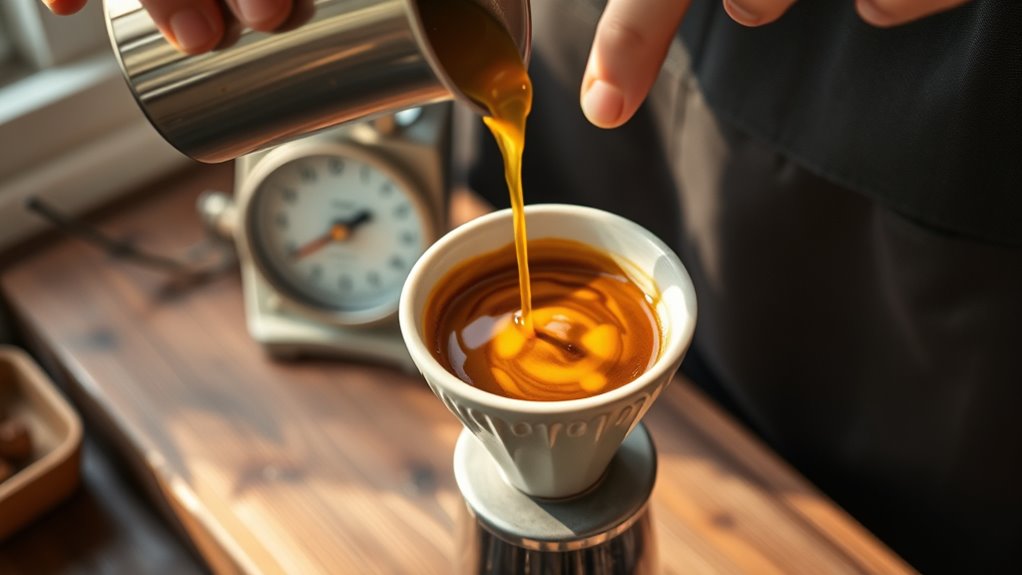
Have you ever wondered what sets third wave coffee apart from traditional brewing methods? The answer lies in its focus on highlighting the unique flavors and qualities of high-quality beans. Unlike conventional coffee, which often emphasizes convenience or mass production, third wave coffee celebrates the artistry behind each cup. At its core, this movement emphasizes the use of single origin beans, meaning the coffee comes from a specific region, farm, or cooperative. By spotlighting these beans, brewers can showcase the distinct characteristics that differentiate one region’s flavor profile from another. This approach allows you to appreciate subtle notes—like fruitiness, floral hints, or earthy undertones—that might be lost in more generic blends. It’s about connecting you to the story behind your coffee, from the soil it grew in to the hands that harvested it.
Brewing innovations are a hallmark of third wave coffee. Baristas and enthusiasts experiment with various extraction techniques to reveal the full potential of each bean. Pour-over, Chemex, AeroPress, and siphon brewing are just a few methods that have gained popularity for their ability to produce a cleaner, more nuanced cup. These methods often require precise control over variables such as water temperature, grind size, and brew time, allowing you to tailor each cup to your taste. The emphasis on technical mastery and precision elevates coffee brewing from a routine task to a craft. It’s about appreciating the complexity of the process and understanding that small adjustments can dramatically influence flavor.
Third wave coffee also champions transparency and sustainability. Coffee farmers are increasingly paid fair wages, and their practices are scrutinized to guarantee environmental responsibility. As a consumer, this awareness might influence your choices, encouraging you to seek out beans that are ethically sourced and environmentally friendly. This movement promotes a deeper connection between you and the entire coffee supply chain, fostering a sense of community and respect for the people and ecosystems involved. Additionally, the use of specialized tableware enhances the overall tasting experience by elevating the presentation and allowing flavors to be appreciated more fully.
In essence, third wave coffee invites you to experience coffee in a new way—one that emphasizes quality, craftsmanship, and storytelling. By choosing single origin beans and appreciating brewing innovations, you’re not just drinking coffee; you’re savoring a carefully crafted product that reflects a specific place and process. It’s about celebrating diversity in flavor, respecting the farmers’ work, and engaging with coffee as an art form rather than just a morning routine. This movement transforms a simple beverage into a meaningful experience, one that encourages curiosity, exploration, and appreciation for the complexities behind every cup.
Frequently Asked Questions
How Does Third Wave Coffee Differ From Specialty Coffee?
Third wave coffee differs from specialty coffee by emphasizing artisanal techniques and a focus on transparency, quality, and sustainability. You get to enjoy carefully sourced beans, often single-origin, brewed with precision. As a consumer, you’re encouraged to engage in education about coffee’s nuances, allowing you to appreciate flavor profiles and the craft behind each cup. This approach elevates your coffee experience beyond standard brews, making it more intentional and connected to the farmers and producers.
What Are Key Brewing Methods Associated With Third Wave Coffee?
You’ll find pour-over techniques and cold brew methods are key brewing styles in third wave coffee. With pour-over, you control variables like grind size and pour rate to enhance flavor clarity. Cold brew involves steeping coarsely ground beans in cold water for hours, producing a smooth, nuanced taste. These methods emphasize precision and highlight the coffee’s unique characteristics, aligning perfectly with third wave coffee’s focus on quality and craftsmanship.
How Has Third Wave Coffee Impacted Global Coffee Markets?
Imagine you’re steering a ship through changing seas—that’s how third wave coffee has impacted global markets. It champions economic sustainability by promoting direct trade and transparency, aligning with your evolving consumer preferences for ethically sourced, high-quality brews. This movement influences international trade flows, elevates local coffee economies, and shifts global demand, steering markets toward more responsible, transparent practices that you, as a consumer, can support with each thoughtful purchase.
What Role Do Baristas Play in Third Wave Coffee Culture?
As a barista, you play a crucial role in third wave coffee culture by showcasing craftsmanship and enhancing the customer experience. You carefully prepare each cup, emphasizing quality, precision, and technique. Your knowledge about beans and brewing methods helps customers appreciate the nuances of different coffees. By engaging with customers, you create a connection that elevates their understanding and enjoyment, making each visit memorable and fostering a deeper appreciation for specialty coffee.
Are There Specific Regions Leading the Third Wave Coffee Movement?
You’re standing at the forefront of a global coffee revolution, where regions like Ethiopia, Colombia, and Kenya lead with vibrant coffee terroir and regional innovation. These areas craft beans with unique stories, flavors, and traditions, shaping the Third Wave movement’s soul. Their passionate farmers and roasters transform local character into a tapestry of excellence, inspiring you to savor each cup as a journey through diverse coffee landscapes.
Conclusion
As you explore the world of third wave coffee, you’re like a traveler discovering a new landscape—full of vibrant flavors and rich stories. This movement transforms simple beans into a work of art, inviting you to savor each sip with appreciation. Embrace the journey, and let your appreciation for quality, craftsmanship, and sustainability grow. Just as a well-tended garden blooms, your coffee experience will flourish, revealing the depth and beauty behind every cup.