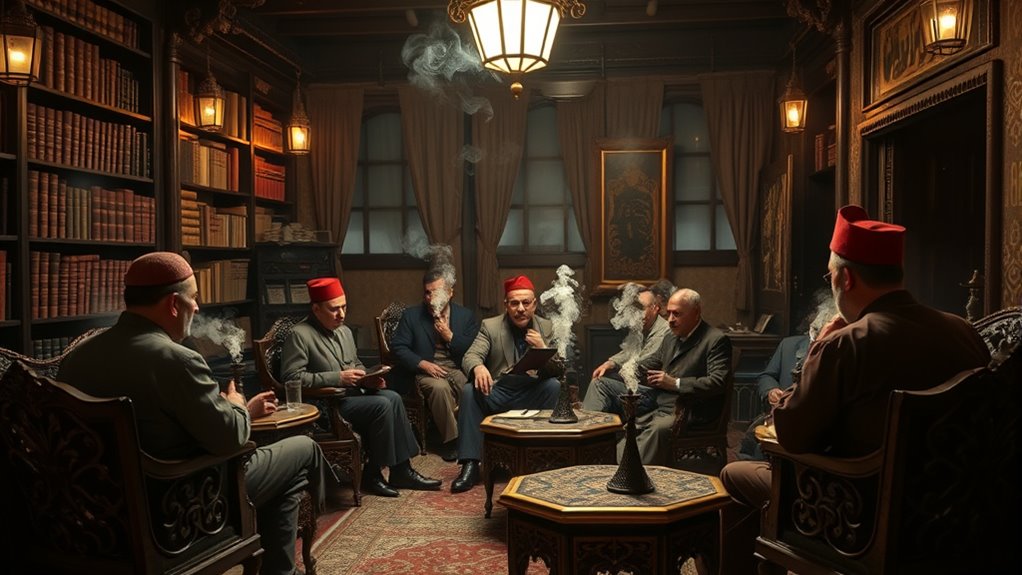

Ottoman coffeehouses were lively spaces where politics, poetry, and social ideas intertwined despite restrictions. They fostered vibrant debates, helping shape public opinion and cultural identity. These spaces broke down class barriers, encouraged literacy, and hosted discussions on governance and morality. Though subject to censorship, they remained essential for free expression and social change. If you want to understand how these unique environments influenced Ottoman society, keep exploring their fascinating history and cultural significance.
Key Takeaways
- Ottoman coffeehouses were vital centers for political debate, social interaction, and the exchange of ideas, often challenging authority.
- They fostered poetic and literary expression, serving as informal educational spaces for cultural and intellectual pursuits.
- Coffeehouse discussions frequently touched on governance, morality, and reform, influencing public opinion and social change.
- Prohibition efforts aimed to suppress coffeehouse gatherings due to their role in political activism and free expression.
- Despite restrictions, coffeehouses remained influential, embodying cultural identity and facilitating cross-class social and political dialogues.
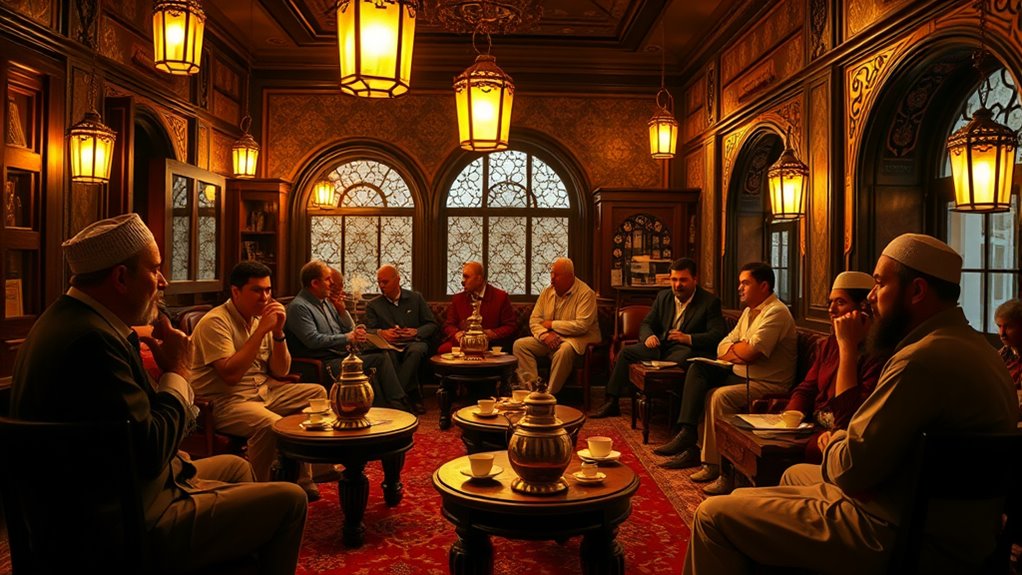
Ottoman coffeehouses, known as “kahvehane,” played an essential role in social life and cultural exchange across the empire. These venues weren’t just places to drink coffee; they served as vibrant hubs where ideas, stories, and traditions intertwined. As you step into a kahvehane, you immediately sense the dynamic atmosphere—lively conversations, the clatter of cups, and the hum of voices from diverse social groups. This setting fostered a unique cultural influence, shaping the way people interacted and shared knowledge. Coffeehouses became spaces where social dynamics thrived, breaking down class barriers and creating a more interconnected community. Men from different backgrounds gathered to discuss politics, philosophy, or poetry, making the kahvehane a melting pot of perspectives and a catalyst for intellectual exchange.
In these social sanctuaries, you’d notice how the cultural influence extended beyond mere conversation. Coffeehouses promoted literacy and education, with patrons often engaging in debates or listening to poetry readings. They became informal schools, where ideas about governance, morality, and society circulated freely. The social dynamics within a kahvehane fostered a sense of camaraderie but also sometimes sparked tension. Political discussions could turn lively, especially when sensitive issues like governance or reform emerged. Despite occasional censorship or restrictions, these venues remained crucial for fostering a shared cultural identity across the empire, influencing public opinion and even inspiring political movements. Moreover, the architecture and design of these establishments often reflected the cultural influences that shaped Ottoman social spaces, blending tradition with contemporary tastes.
As you observe the role of coffeehouses in Ottoman society, it’s clear they were more than just social spots. They embodied a cultural influence that shaped the intellectual and social fabric of the empire. The interactions held within these walls helped forge connections that crossed social boundaries, allowing ideas to circulate among different classes. This democratization of conversation transformed the social landscape, making the coffeehouse a space of both leisure and political discourse. The social dynamics often reflected the larger shifts within the empire, serving as microcosms of Ottoman society itself. Whether discussing poetry, politics, or daily life, patrons found in the kahvehane a place to connect, influence, and be influenced—a reflection of the profound role these establishments played in shaping Ottoman cultural and social history.
Aakriti Gallery Indian Pouf Footstool Ethnic Embroidered Pouf Cover, Indian Cotton Round Pouffe Ottoman Pouf Cover Pillow Ethnic Decor Art – Cover Only (White, 18×13)
Size : 18×13 inch
As an affiliate, we earn on qualifying purchases.
As an affiliate, we earn on qualifying purchases.
Frequently Asked Questions
How Did Ottoman Coffeehouses Influence Political Movements?
You see, Ottoman coffeehouses played a key role in shaping political movements by creating spaces for revolutionary networks to form and flourish. They fostered civic engagement, where people discussed ideas, shared news, and organized protests. This open environment empowered citizens to challenge authorities and mobilize for change. Coffeehouses became hubs of political discourse, fueling revolutionary energy and helping to spread new ideologies across the empire.
What Types of Poetry Were Commonly Recited in Coffeehouses?
You hear classical poetry and Sufi poetry recited in coffeehouses, each echoing the cultural soul of the Ottoman era. Classical poetry, with its structured meters and refined themes, offers elegance and tradition. Sufi poetry, filled with spiritual longing and divine love, inspires introspection and devotion. Both forms thrive in coffeehouses, inviting you to reflect, connect, and immerse yourself in the rich poetic tapestry of Ottoman society.
Were Coffeehouses Exclusive to Certain Social Classes?
You might think coffeehouses were exclusive to the upper classes, but they actually welcomed diverse social classes. While access restrictions existed, especially for women and the lower classes, many coffeehouses were open to the broader public. You could find a mix of social backgrounds sharing poetry, politics, and conversation. The appeal of coffeehouses lay in their accessibility, fostering a lively, inclusive atmosphere despite some social class limitations.
How Did Authorities Enforce the Prohibition of Coffeehouses?
Authorities enforced the prohibition of coffeehouses through strict enforcement tactics, including raids and surveillance. They often used legal penalties like fines, imprisonment, or closures to discourage participation. You’d find officials actively patrolling areas, shutting down unlicensed venues, and punishing offenders to uphold the ban. These enforcement tactics aimed to suppress coffeehouse culture, making it difficult for people to gather and drink coffee publicly, effectively curbing its influence.
What Role Did Women Play in Ottoman Coffeehouse Culture?
Imagine a delicate flower in a bustling garden—women played a subtle yet essential role in Ottoman coffeehouse culture, symbolizing the quiet strength of women’s social roles. Though gender participation was limited, women’s involvement was often behind the scenes, influencing conversations and culture indirectly. They helped shape the social fabric, offering a nuanced layer to the lively, male-dominated spaces, and subtly asserting their presence in Ottoman society.
DEMMEX Turkish Greek Arabic Coffee Making and Serving Full Set with Cups Saucers Lids Sugar Bowl Tray and Copper Coffee Pot, Hand Decorated with Gold Crystals, 12 Pcs
DEMMEX 12 Pcs Turkish coffee Full Set for 2.
As an affiliate, we earn on qualifying purchases.
As an affiliate, we earn on qualifying purchases.
Conclusion
You see, Ottoman coffeehouses were more than places to drink coffee; they were hubs of politics, poetry, and protest. They shaped society, sparked ideas, and challenged authority. They fostered conversations, inspired creativity, and defied restrictions. They brought people together, fueled debates, and created communities. So, next time you sip your coffee, remember how these early spaces sparked change, inspired voices, and challenged rules—reminding us all that even a simple cup can hold power.

Alisveristime (1 Pc Turkish Greek Arabic Coffee Espresso Cup Saucer (Lale) (Antique Copper)
Authentic Turkish Design: Embrace the vibrant Turkish culture with the intricately designed tulip and dome motifs on zamac…
As an affiliate, we earn on qualifying purchases.
As an affiliate, we earn on qualifying purchases.

Zihanhome 30 Inch Round Storage Ottoman Coffee Table, Modern Boucle Ottoman with Lift-Off Lid and Solid Wood Legs for Living Room, Bedroom, Corners, Apartments (Brown)
Stylish and Modern Design: The 30-inch round storage ottoman features a contemporary boucle fabric upholstery, adding a chic…
As an affiliate, we earn on qualifying purchases.
As an affiliate, we earn on qualifying purchases.