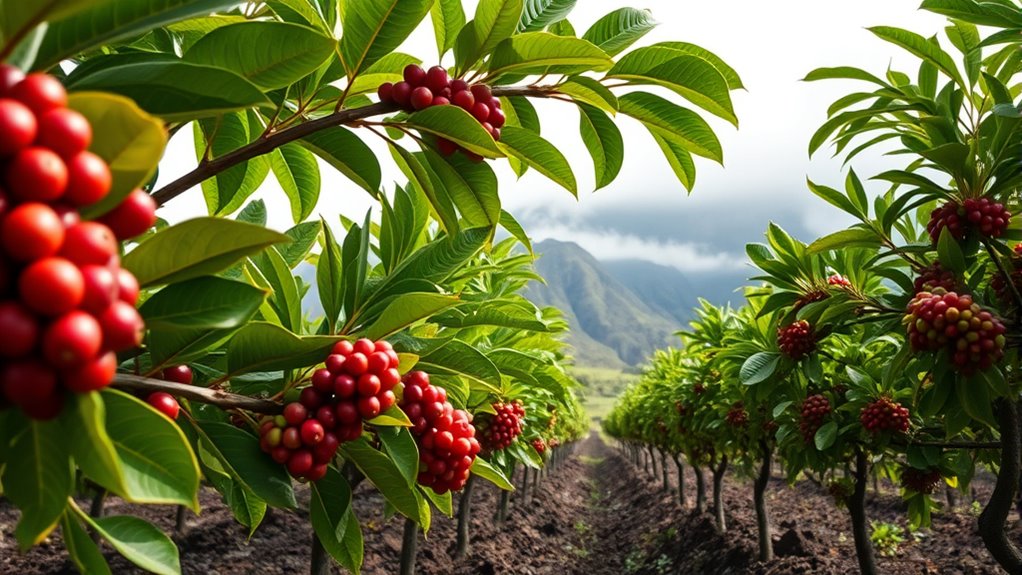

Kona coffee’s rich history stems from Hawaii’s volcanic landscape, with farmers cultivating beans on the slopes of Mauna Loa and Hualalai. The volcanic soil, high altitudes, and mild climate create perfect conditions, giving Kona coffee its distinctive smooth, aromatic flavor. Sustainable farming and careful processing preserve its quality and unique profile. If you’re curious, discover how Hawaii’s environment and traditions shape every cup of this exceptional coffee.
Key Takeaways
- Kona Coffee is grown on the volcanic slopes of Mauna Loa and Hualalai in Hawaii, benefiting from volcanic soil and unique climate conditions.
- The coffee’s history dates back to the early 19th century, with cultivation evolving alongside Hawaiian cultural and agricultural development.
- Its distinctive flavor profile results from Hawaii’s high-altitude environment, volcanic soil, and sustainable farming practices.
- Kona Coffee’s quality is preserved through traditional processing methods like wet processing, highlighting Hawaii’s commitment to craftsmanship.
- The combination of Hawaii’s landscape, climate, and eco-friendly farming practices makes Kona Coffee a globally renowned and sustainable product.
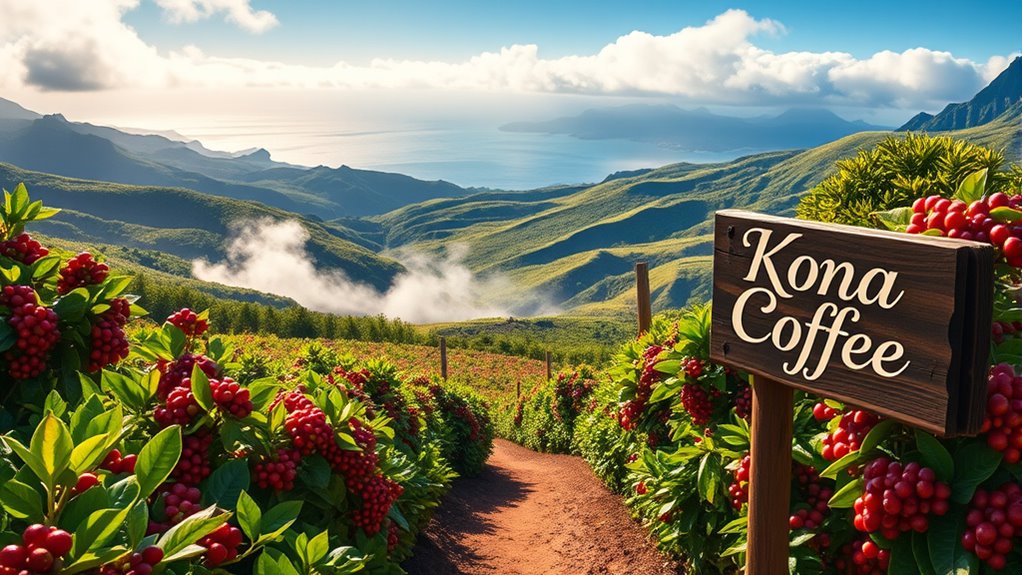
Have you ever tasted Kona Coffee? If not, you’re missing out on a truly unique experience. Kona Coffee is renowned for its smooth, rich flavor and aromatic profile, and part of what makes it special is how it’s grown and processed. When you think about Kona Coffee, you should consider the dedication to sustainable farming practices that farmers in Hawaii embrace. These farmers prioritize environmental health, using methods that protect the land and water resources. They often employ shade-growing techniques, which not only help preserve native ecosystems but also create a balanced microclimate that benefits the coffee plants. This commitment to sustainability guarantees that Kona Coffee remains a high-quality product while minimizing its ecological footprint.
Kona Coffee’s unique flavor is crafted through sustainable farming and careful processing on Hawaii’s volcanic slopes.
The coffee processing techniques used in Kona are equally essential to its exceptional quality. After harvesting, the beans undergo careful processing to preserve their distinctive flavor. Many farmers use traditional methods, such as wet processing, where the cherries are pulped and fermented before drying. This approach helps develop the coffee’s bright acidity and clean taste. Modern innovations also come into play, with some producers adopting advanced drying techniques to guarantee consistency and freshness. The focus on precise processing methods helps maintain the beans’ integrity, giving Kona Coffee its signature smoothness and complexity.
Geographically, Kona Coffee is grown on the slopes of Mauna Loa and Hualalai volcanoes in Hawaii’s Big Island. The volcanic soil, combined with the island’s ideal climate—mild temperatures, high humidity, and abundant rainfall—creates perfect conditions for coffee cultivation. This unique environment contributes profoundly to the beans’ distinctive flavor profile, which features bright citrus notes, subtle nuttiness, and a sweet finish. The elevation also plays an essential role, as higher altitudes slow the maturation of the coffee cherries, allowing them to develop more nuanced flavors.
Your appreciation of Kona Coffee is incomplete without understanding its roots in this rich landscape. The combination of sustainable farming practices, meticulous coffee processing techniques, and the island’s unique geography all work together to produce a cup that’s unlike any other. When you sip Kona Coffee, you’re tasting not just a carefully cultivated bean but also the history and geography of Hawaii embedded in every drop. This harmony between environment and craft is what elevates Kona Coffee to a level of excellence that keeps coffee lovers returning for more.
Frequently Asked Questions
How Does Kona Coffee Differ From Other Hawaiian Coffees?
You’ll notice Kona coffee has a distinct flavor profile, featuring bright acidity, smooth body, and hints of nuttiness and fruitiness. Compared to other Hawaiian coffees, it’s often more balanced and refined. Its unique growth environment influences its taste, making brewing methods like pour-over or drip ideal to highlight its nuances. You’ll appreciate Kona coffee’s clean, crisp flavor that sets it apart from other regional varieties.
What Are the Unique Environmental Factors Affecting Kona Coffee Growth?
You’ll notice that Kona coffee benefits from unique environmental factors like rich volcanic soil composition and favorable microclimate conditions. The volcanic soil provides essential nutrients, promoting healthy coffee plants, while the microclimate, characterized by gentle breezes and perfect temperatures, creates ideal growing conditions. These factors combine to produce the distinctive flavor profile of Kona coffee, making it stand out among other Hawaiian coffees.
How Has Kona Coffee Impacted Hawaii’s Local Economy Historically?
You’ve seen how coffee tourism and export markets have shaped Hawaii’s economy, especially around Kona. Historically, Kona coffee boosted local incomes and created jobs, turning the region into a global coffee hub. Coincidentally, this growth fostered a vibrant community and preserved local traditions. The export markets brought wealth, while coffee tourism attracted visitors, ensuring Kona’s economic impact continues to thrive today.
Are There Specific Harvesting Techniques Unique to Kona Coffee?
You’ll find that Kona coffee uses specific harvesting methods, mainly hand-picking, to guarantee quality. Skilled pickers use selective picking techniques, harvesting only ripe cherries to maintain flavor. These techniques are unique to Kona’s steep terrain and climate, which require careful and precise handling. This careful approach helps preserve the beans’ freshness and quality, distinguishing Kona coffee from other varieties and contributing to its renowned reputation.
What Are the Future Challenges Facing Kona Coffee Production?
You’ll face future Kona coffee challenges, especially with climate change threatening the region—temperatures are rising, impacting coffee growth. An interesting statistic shows that by 2050, up to 50% of Kona’s coffee-growing areas could be unsuitable for cultivation. To survive, adopting sustainable practices becomes essential, like shading coffee plants and conserving water. These efforts help protect the unique flavor and quality that make Kona coffee so prized.
Conclusion
As you taste Kona coffee, imagine the lush, emerald slopes of Hawaii’s volcanic mountains, where rich soil and gentle breezes create the perfect environment. Feel the warmth of the sun on your skin and the aroma of roasted beans filling the air. Each sip transports you to this vibrant landscape, where history and geography blend into a cup of perfection. Kona coffee isn’t just a beverage; it’s a journey through Hawaii’s stunning, fertile lands.