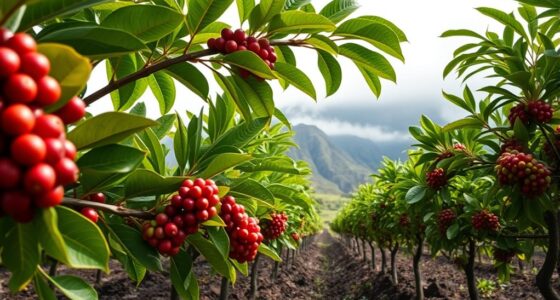

Decaf’s story begins in the early 20th century when Ludwig Roselius discovered a method to remove caffeine from coffee beans, initially using seawater and benzene, though safety concerns soon arose. Over time, the industry shifted to safer, more efficient techniques like water-based Swiss Water Processes and solvent methods with chemicals like methylene chloride. Today’s methods carefully preserve flavor while removing caffeine, reflecting over a century of innovation—if you keep exploring, you’ll uncover how these advances shape your decaf experience.
Key Takeaways
- Ludwig Roselius pioneered early decaffeination in 1903 by soaking beans in seawater, leading to the first chemical-based process.
- Initial methods used toxic solvents like benzene, raising safety concerns and prompting searches for safer techniques.
- Modern decaffeination relies on water-based (Swiss Water Process) and solvent methods (methylene chloride, ethyl acetate) to preserve flavor.
- Continuous technological advances aim to maintain coffee’s original taste while effectively removing caffeine.
- Today’s decaf industry balances scientific innovation with consumer safety, reflecting a centuries-long evolution.
Have you ever wondered how decaf coffee manages to keep the rich flavor of regular brew without the caffeine punch? The story of decaffeinated coffee is a fascinating journey rooted in coffee history and the quest for caffeine removal. Coffee has been cherished worldwide for centuries, with its origins dating back to Ethiopia and its spread across continents over hundreds of years. As coffee gained popularity, people also began to notice its stimulating effects, which led to the desire for a version that could be enjoyed without the jitters. That’s where the history of decaffeination begins—an ongoing effort to preserve coffee’s beloved taste while reducing its caffeine content.
Decaffeination began as a quest to preserve coffee’s flavor while removing caffeine’s jitters.
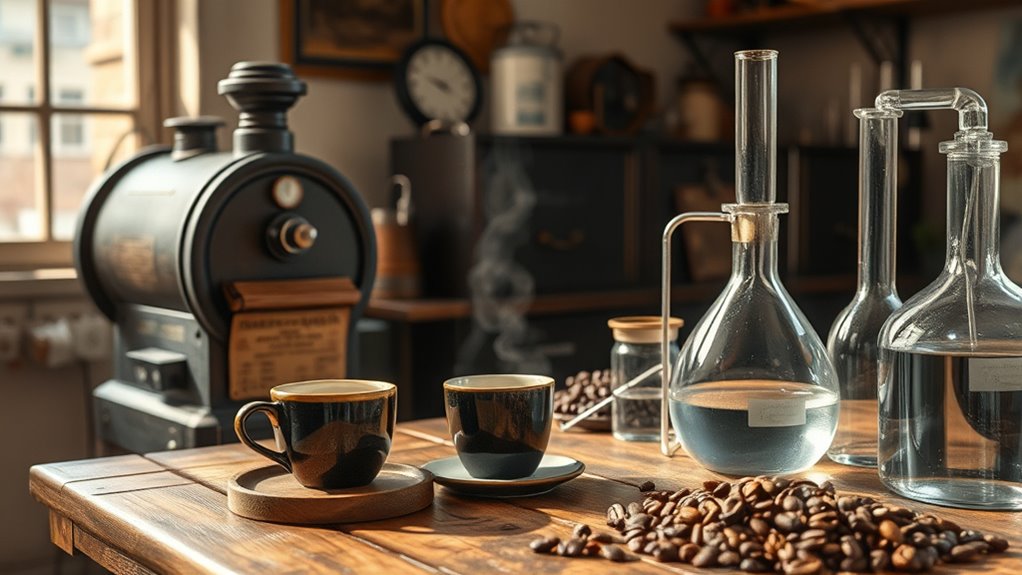
The earliest attempts at caffeine removal date back to the early 20th century. In 1903, a German coffee merchant named Ludwig Roselius stumbled upon a method after a shipment of coffee beans was accidentally soaked in seawater, resulting in beans with less caffeine. Recognizing a commercial opportunity, he developed the first known decaffeination process, called the “Swiss Water Process,” which used benzene to extract caffeine from the beans. Although effective, this method raised safety concerns due to the toxic nature of benzene. Over time, the industry sought safer, more efficient ways to remove caffeine.
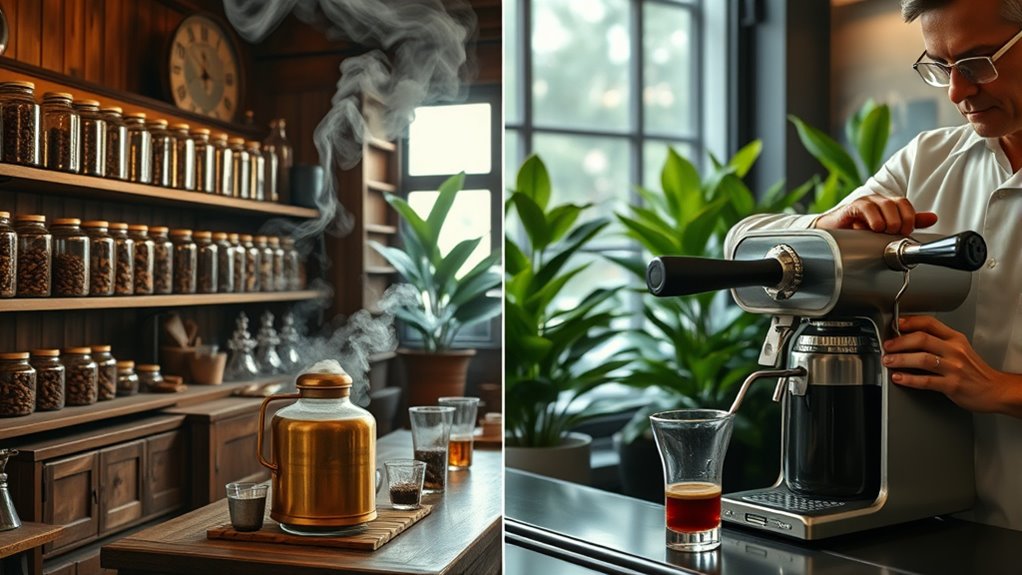
Modern methods of caffeine removal have considerably advanced since Roselius’s early experiments. Today, decaffeination relies on several techniques, most notably the direct and indirect solvent methods, as well as the Swiss Water Process. The solvent methods typically involve steaming the beans to open their pores and then washing them with chemicals like methylene chloride or ethyl acetate to extract caffeine. These processes are carefully regulated to guarantee no harmful residues remain in the final product. Alternatively, the Swiss Water Process uses only water and osmosis, making it an all-natural, chemical-free approach. This method is favored by those seeking a more organic decaf experience. Additionally, ongoing research into payment processing technologies ensures that coffee businesses can securely and efficiently manage transactions, supporting the global coffee trade.
Each method aims to strip caffeine from the beans while maintaining as much of the original flavor profile as possible. Despite these technological advances, the core challenge remains: how to effectively remove caffeine without sacrificing the coffee’s nuanced aroma and taste. That’s why today’s coffee producers continually refine their decaffeination techniques, blending science and tradition to create decaf coffee that satisfies both health-conscious consumers and purists alike. So, the next time you enjoy a cup of decaf, you can appreciate the centuries of innovation and dedication behind its caffeine removal process—an effort to make coffee accessible for everyone without compromising its essence.

Kicking Horse Coffee, Decaf, Swiss Water Process, Dark Roast, Whole Bean, 10 Oz – Certified Organic, Fairtrade, Kosher Coffee
TASTING NOTES: Roasted hazelnuts, chocolaty balanced body and a long lasting finish.
As an affiliate, we earn on qualifying purchases.
As an affiliate, we earn on qualifying purchases.
Frequently Asked Questions
How Does Decaffeination Affect Coffee Flavor?
Decaffeination can alter your coffee’s flavor by impacting flavor retention, often making it milder or slightly different. The processing impact varies depending on the method used, such as water, solvent, or CO2 extraction. While some nuances may be lost, quality decafs aim to preserve as much of the original flavor as possible. You might notice subtle differences, but choosing high-quality decaf can help guarantee a satisfying, flavorful cup.
Are Decaf Coffees More Expensive Than Regular Coffee?
Did you know decaf coffees can be up to 20% more expensive than regular brews? This price difference mainly comes from the more complex caffeine removal techniques involved in decaf brewing. You’ll often find that decaffeination adds extra steps and costs, which get passed on to you. So, if you’re choosing decaf, expect to pay a little more because of the specialized processes used to remove caffeine while preserving flavor.
Can Decaf Coffee Cause Withdrawal Symptoms?
Yes, decaf coffee can cause withdrawal symptoms if you’re caffeine dependent. Even though it contains less caffeine, your body may still react to the small amounts, leading to headaches, irritability, or fatigue when you stop drinking it suddenly. If you’re used to regular coffee, switch gradually to decaf to reduce withdrawal symptoms. Staying hydrated and getting enough rest can also help ease any discomfort.
What Are the Health Benefits of Drinking Decaf?
Drinking decaf offers health advantages like reducing your caffeine intake, which can lower anxiety and improve sleep quality. It also helps you enjoy the rich flavor of coffee without the jitters or increased heart rate associated with caffeine. By choosing decaf, you can maintain your daily coffee ritual while supporting your overall well-being through caffeine reduction, making it a smart choice for health-conscious coffee lovers.
How Sustainable Are Decaffeination Processes Today?
Decaffeination processes today are like a gust of fresh air for the environment, making them quite sustainable. You’ll find that many brands now prioritize sustainable practices, reducing environmental impact through methods like carbon dioxide extraction and water processing. These eco-friendly techniques use fewer chemicals and less energy, helping you enjoy your coffee guilt-free while supporting environmental health. Overall, modern decaffeination aims to balance quality with sustainability, making your coffee habit more eco-conscious.

McCafe Premium Roast Decaf Coffee, Single Serve Keurig K-Cup Pods, Decaffeinated, 96 Count (4 Packs of 24)
TASTE: Brew the deliciously familiar taste from McCafé into the comfort of your own home. This medium roast…
As an affiliate, we earn on qualifying purchases.
As an affiliate, we earn on qualifying purchases.
Conclusion
As you savor that last sip, imagine the journey your decaf has traveled—from the lush, sun-dappled roselius fields to the precise dance of modern extraction methods. Each cup holds a quiet story of innovation and patience, a bridge between nature’s bounty and human ingenuity. You’re not just drinking coffee; you’re experiencing centuries of craft and care, wrapped in a gentle, soothing warmth that lingers like a whispered secret in the quiet morning air.
Kicking Horse Coffee, Decaf, Swiss Water Process, Dark Roast, Whole Bean, 10 Oz – Certified Organic, Fairtrade, Kosher Coffee
TASTING NOTES: Roasted hazelnuts, chocolaty balanced body and a long lasting finish.
As an affiliate, we earn on qualifying purchases.
As an affiliate, we earn on qualifying purchases.

Amazon Fresh Decaf Colombia Ground Coffee, Medium Roast, 12 Ounce
Balanced, full-bodied medium roast with a smooth finish
As an affiliate, we earn on qualifying purchases.
As an affiliate, we earn on qualifying purchases.