Since the 17th century, coffee advertising has transformed from simple texts emphasizing health and social benefits to vibrant visual campaigns that catch your eye. Early ads used propaganda and detailed descriptions, while 19th-century posters incorporated patriotic themes and eye-catching images. Weather-inspired messages and creative branding made coffee more appealing and memorable. If you keep exploring, you’ll discover how these marketing strategies shaped coffee’s image and kept it popular across generations.

Get coffee and tea gear delivered free with Prime
- Fast, free delivery on millions of items
- Prime Video, Amazon Music and more included
- Member-only deals all year
Key Takeaways
- The earliest coffee ads in 17th-century London promoted health benefits and social appeal, blending propaganda with detailed descriptions.
- 19th-century visual advertising used postcards and patriotic themes to attract attention and shape coffee’s image.
- Weather-inspired campaigns highlighted coffee’s comforting qualities, creating emotional connections with consumers.
- Packaging advancements shifted focus to branding, emphasizing quality and affordability to foster consumer recognition.
- Creative tactics like whimsical imagery and publicity made brands memorable and helped distinguish coffee products in a crowded market.
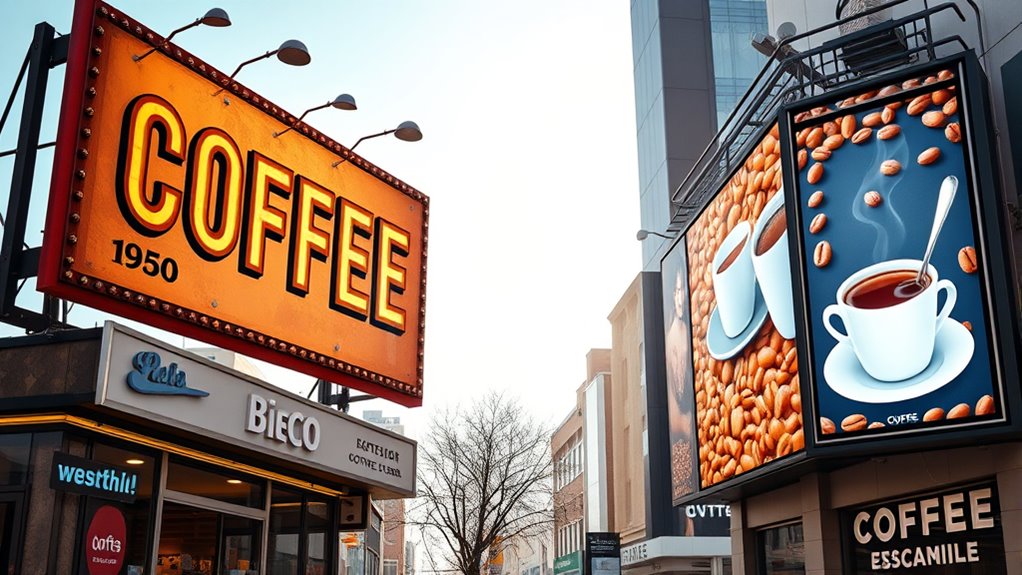
Coffee advertising has evolved remarkably since the 17th century, reflecting changes in society and marketing techniques. When you look back at the history of coffee, you’ll see how early advertising efforts laid the foundation for modern branding strategies. The first printed coffee advertisement appeared in 1652 in London, where it promoted coffee’s health benefits and social appeal. These initial ads often mixed propaganda with detailed descriptions of coffee’s medicinal and social uses, emphasizing its virtues and creating a sense of necessity around this exotic beverage.
This approach aimed to persuade consumers that coffee wasn’t only beneficial but also essential for social and personal well-being.
As the centuries progressed, particularly in the 19th century, visual advertising tactics became more prominent. During this period, marketing campaigns moved beyond simple text to include postcards, optical illusions, and patriotic themes designed to catch your eye and evoke emotional responses. Visual advertising in the 19th century played a *vital* role in shaping the image of coffee and making it more appealing to a broad audience.
Unplanned weather changes and unexpected outdoor conditions also inspired creative advertising messages that highlighted coffee’s comforting qualities in any weather, further enhancing its appeal.
Meanwhile, the marketing of package coffee shifted *notably* during this era. Instead of just selling roasted coffee in stores, brands began to focus on creating distinct identities through packaging. This shift allowed companies to emphasize quality and affordability directly on the product, making it easier for you to recognize and choose your preferred brand.
Package coffee marketing also played a key role in establishing branding, turning coffee into a branded commodity with messages that highlighted its prestige and value.
Unusual promotional elements added further uniqueness to vintage coffee advertising. You might’ve seen ads featuring frogs or whimsical imagery, intentionally designed to make the brand memorable and stand out from competitors. These creative publicity efforts helped differentiate products in a crowded marketplace and fostered loyalty among consumers.
Frequently Asked Questions
What Were the Coffee Brands in the 1920S?
You’re asking about coffee brands in the 1920s. Back then, Maxwell House, Eight O’Clock Coffee, and Lion Coffee dominated the market.
Maxwell House, founded in 1883, celebrated its heritage and quality through advertising.
Eight O’Clock Coffee, created in 1859, was known for affordability and in-store grinding.
Lion Coffee, established in 1864, promoted purity and quality with visual campaigns.
These brands heavily invested in ads to boost recognition and loyalty.
When Did the Coffee Craze Start?
You wonder when the coffee craze began, and it really took off in the 17th century. As you learn, it started with European and American enthusiasm, especially after coffeehouses opened in cities like London and Paris.
These social hubs made coffee a popular beverage, and over time, mass marketing and innovations like instant coffee after WWII made it a global phenomenon, fueling the ongoing coffee craze.
What Is the History of Coffee Culture?
You’re curious about the history of coffee culture. It all started in Ethiopia and Yemen around the 1500s, where markets promoted its social importance.
By the 17th century, coffee became a daily staple in Europe and America, with coffeehouses serving as social hubs.
Over time, different regions developed unique traditions, like Italian espresso and Middle Eastern ceremonies, shaping the global coffee experience you enjoy today.
When Did Coffee Become Popular in the US?
You’re curious about when coffee became popular in the US. It started gaining traction early in the 18th century, with Boston ads mentioning it by 1714.
By 1790, a dedicated newspaper ad shows growing commercial interest. The 19th century saw a surge in popularity thanks to advertising campaigns promoting health and social benefits.
Instant coffee’s introduction in the early 1900s and wartime boosts cemented its place in American culture.
Conclusion
As you’ve seen, coffee advertising has evolved from simple, traditional messages to creative campaigns that capture your attention today. Each era reflects changing tastes, cultures, and technologies, shaping how you perceive and enjoy coffee. By understanding this history, you can appreciate the clever ways brands connect with you across generations. So next time you see a coffee ad, remember it’s part of a long, fascinating story that keeps brewing through the ages.
Halloween Picks
halloween
As an affiliate, we earn on qualifying purchases.